 Lawrenceville Slab Leak Detectors
What Is a Slab Leak? Lawrenceville, GA Guide
A slab leak in Lawrenceville, GA, is a leak in a water or drain pipe under your home's concrete slab. Red clay, aging copper, and high water pressure cause most breaks in ZIPs 30043 and 30046, from Downtown to Collins Hill — detection finds the break before any floor opens.
What this looks like in a Lawrenceville home
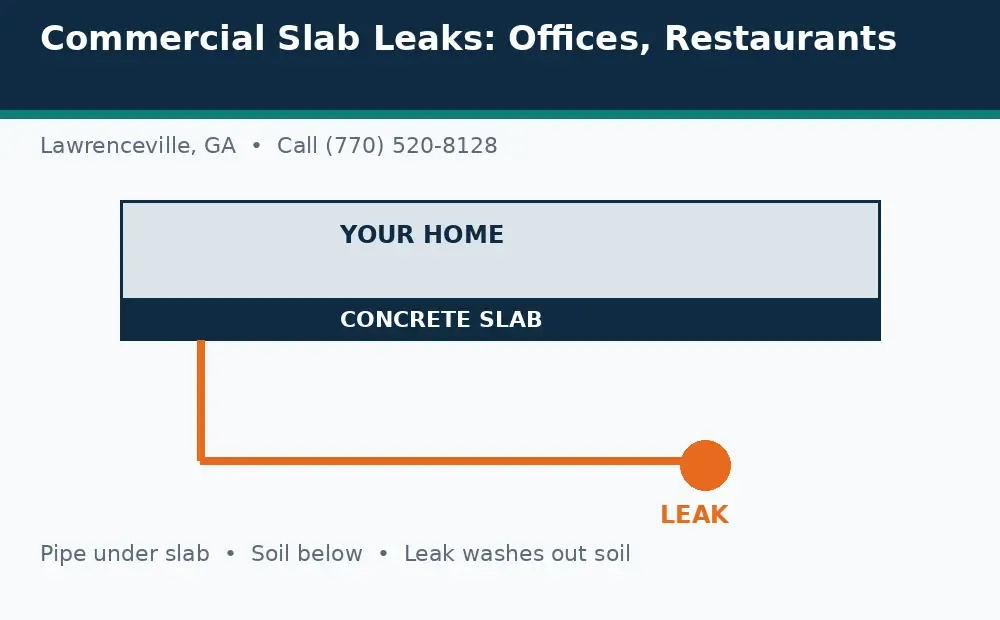
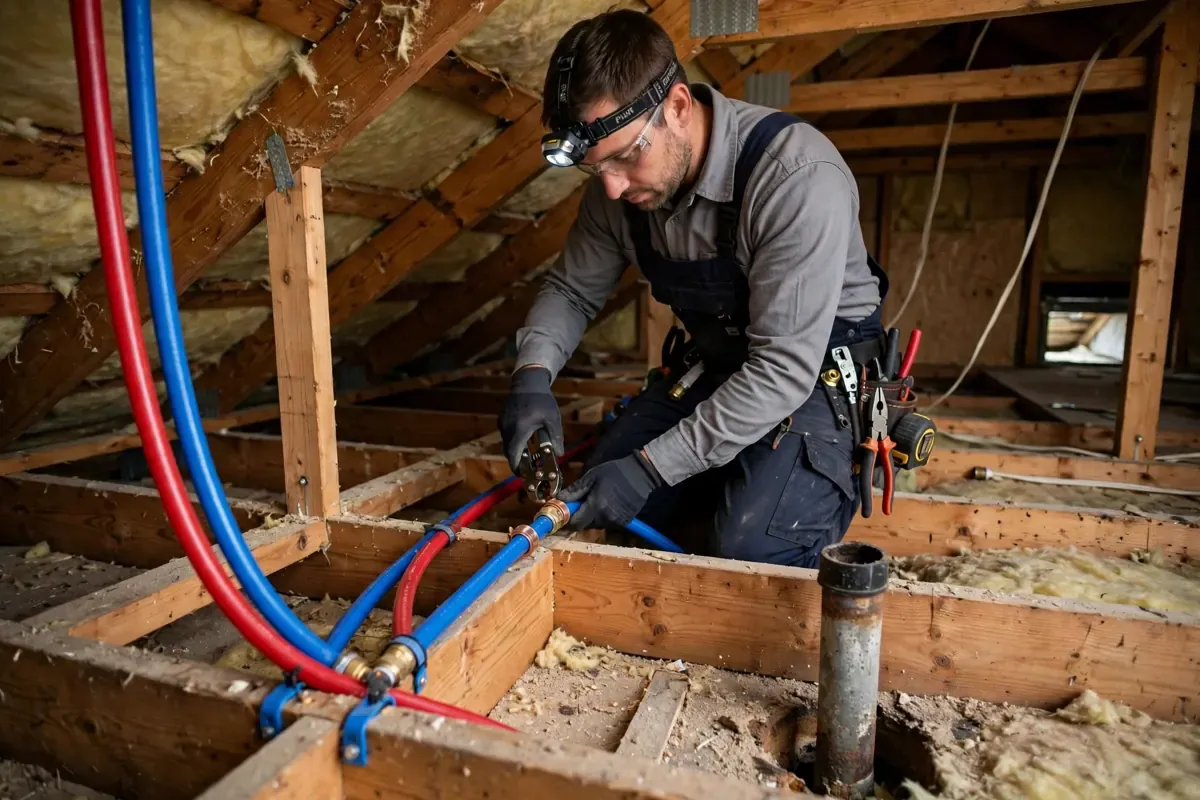
The images on this page are illustrative diagrams, not photos of a specific job at a specific address, and they are not presented as this business's own work. Call us at (770) 520-8128 if you are unsure what you are seeing.
The short answer: a leak in a pipe you cannot see, under a floor you stand on
A slab leak is a leak in a water pipe — or a drain pipe — that runs under the concrete slab your home sits on. Most Lawrenceville homes are built on a slab: a thick concrete foundation poured on the ground, with the pipes that carry water to your kitchen, bathrooms, and laundry run underneath it or through it before the concrete sets. When one of those pipes cracks, corrodes, or splits at a joint, water escapes into the soil and fill beneath the slab. The concrete itself is not leaking; the pipe under it is. That distinction matters, because the fix is plumbing, not concrete — although concrete may need opening to reach the pipe, and putting it back is part of the job.
Two kinds of pipes can leak under a slab, and they behave differently. A supply line — hot or cold water under pressure — leaks 24 hours a day, whether anyone is using water or not, which is why a supply leak shows up on the water meter and the water bill. A drain line is not pressurised: it only carries water when a fixture drains, so a drain leak tracks with use — after showers, laundry, or flushing — and it often smells. A hot-water supply leak warms the floor above the break, which is the one symptom that points at the leak's location; a cold-water leak gives off no heat, so it produces no warm spot at all. The hot-water versus cold-water symptoms guide compares the two, and the sewer versus supply guide explains how to tell a drain leak from a supply leak.
What causes a slab leak in Lawrenceville
The causes are ordinary, and Lawrenceville has its own mix of them. Georgia red clay is the first: the soil under Lawrenceville slabs shrinks when it dries and swells when it wets, and that movement pushes and pulls on the pipes buried in it, stressing joints and bends until one gives way. The Georgia red clay soil guide explains the shrink-swell cycle in full. The second is age: many Lawrenceville homes were built when copper under the slab was standard, and copper corrodes from the inside over decades — pinhole leaks are the result, tiny holes that weep for months before anyone notices. The copper pinhole guide covers that failure, and the older homes guide explains which eras of Lawrenceville housing carry the most risk.
The third is water pressure. Pressure that runs too high strains every joint in the system, and the under-slab runs take the same strain as the visible ones — the high water pressure guide covers the signs and the rule-outs. Abrasion is the fourth: a pipe that rubs against concrete or stone as the ground moves wears thin at the contact point. Settlement and construction stress are the fifth: the ground under a slab is never perfectly still, and a slab that settles unevenly loads the pipes with it. Cold snaps add a sixth — water expands by about nine percent as it freezes, and a pipe already weakened by corrosion can split during a freeze; the winter slab leak guide covers the cold-weather pattern. None of these causes needs a flood or a dramatic event. Most slab leaks start quietly, as a pinhole or a stressed joint, and the first sign is usually the bill.
The signs that point at a slab leak
A slab leak rarely announces itself directly. The most reliable early sign is a water bill that jumps without any change in how the household uses water — a leak runs around the clock, so the meter keeps counting while you sleep, and the high water bill guide covers the rule-outs, including a running toilet and a meter misread. A warm patch on the floor that never dries points at a hot-water line, and the warm spot guide explains why heat is the one symptom that locates itself. The sound of running water with every tap off is a leak you can hear before you can see it — the running-water sound guide explains what to listen for.
Damp flooring, warped boards, or a musty smell near a baseboard mean water has been arriving from below for a while — the musty smell and warped floors guide covers those early warnings. Cracks in walls or floors can be a sign too, though most cracks are ordinary settlement, and the cracks guide explains which ones matter. Low water pressure across the whole home can mean a supply line is losing water before it reaches your taps — the low pressure guide covers that. And a sewer smell, gurgling, or slow drains everywhere point at the drain side, covered in the sewer smell guide. One sign on its own can have several causes, so weigh them together: two signs at once are worth a meter test the same day, and the signs guide lists all ten in one place.
How detection finds the break without opening the floor
Detection starts with the simplest test: the meter. Turn off every tap and appliance, including the ice maker and any irrigation, and watch the meter dial for 15 to 30 minutes. If it moves, water is escaping from a pressurised line. The water meter leak test guide walks through the check step by step, and the meter test post explains how to read the result. Pressure testing comes next: isolating the hot side from the cold side, and the supply lines from the drains, narrows the leak to one run. The detection methods guide explains how the methods combine, and the detection method finder matches the methods to your symptoms.
Acoustic listening follows the sound of escaping water through the slab, and thermal imaging maps warm areas for hot-water leaks — a cold-water leak gives off no heat, so it produces no thermal signal at any stage. The acoustic and thermal detection guide covers the two main tools. For drain lines, a camera inspection sees inside the pipe — roots, cracks, breaks — and the sewer camera guide explains what the camera can and cannot show. Tracer gas and smoke testing are methods a technician may use in some situations; they are not services this business offers, and detection here is built on the meter, acoustic, thermal, pressure, and camera methods above. A detection visit follows a pattern — symptom notes, meter and pressure tests, listening and imaging, then a marked location and next steps — and the detection visit guide explains how to prepare. The published planning range for detection is $300-$600, a planning range only, with a written price following inspection.
Repair routes — and what they cost in planning terms
Repair depends on where the break is and what condition the pipe is in, not on the season or the symptom. A single leak in otherwise healthy pipe is usually a spot repair: a small, targeted opening in the slab, the pipe fixed, and the concrete and flooring put back. A line that has failed before, or pipe that is worn along its length, may suit a reroute — a new line run through a wall or ceiling that bypasses the bad under-slab section — or a lining, where a new pipe is formed inside the old one without breaking the slab. Repeated failures point toward a whole-home repipe, and the recurring leaks guide explains when spot repair stops making sense.
The spot repair versus reroute versus repipe guide compares the routes, and the fix without breaking the floor guide covers the options that avoid opening the slab at all. The published planning ranges are: detection $300-$600, spot repair $500-$4,000, lining $800-$3,000, reroute $1,500-$5,500, repipe $4,500-$15,000+ — the repair cost guide carries the full table. Those are planning ranges only, never a quote, and never a price for your home until it has been inspected. Whatever route is chosen, the concrete and flooring need putting back properly, and the concrete and floor restoration service page covers what that step includes. And the one rule that never changes: detection comes first, because the break is often rooms away from where the water surfaces, as the wet spot guide explains — a cut in the wrong place is a bill for a hole that needs restoring while the leak keeps running.
What to tell us when you call
When you call, tell us what you have noticed — the bill, a warm patch, a sound, a damp floor — and what the meter did with everything off. Mention your ZIP code, which rooms are affected, and whether the water is pooling anywhere. That short list lets us plan detection around your home, not around a guess.
Call (770) 520-8128 and describe your situation in plain words. We will talk through detection first, then a repair plan that fits your home.
Call Us Today
Fast local slab leak detection and repair in Lawrenceville, GA, ZIPs 30043–30046.
Call Now to Speak to a SpecialistFrequently asked questions
What is a slab leak, exactly?
A slab leak is a leak in a water supply pipe or a drain pipe that runs under the concrete slab your home sits on. The concrete itself is not leaking; a pipe beneath it has cracked, corroded, or split at a joint, and water is escaping into the soil and fill under the slab. A supply leak runs under pressure 24 hours a day, while a drain leak only runs when a fixture drains.
Is a slab leak an emergency?
It depends on what you are seeing. Pooling water, water near electrics, or a meter spinning fast is a same-day situation: shut off the main if you can do so safely and call. A bill jump with no visible water is urgent but not same-day — book detection promptly. A vague suspicion with no sign at all is a meter test first, then detection if the meter moves.
Can a slab leak go away on its own?
No. A pressurised supply leak runs 24 hours a day and only stops if the water is shut off; a pinhole that weeps today can split tomorrow, and the water keeps spreading through the soil and fill meanwhile. A drain leak continues every time a fixture is used. Waiting does not fix the pipe — it gives the water more time to damage flooring, baseboards, and the soil under the slab.
How do you find a slab leak without tearing up the floor?
Detection starts with the meter and pressure tests that confirm water is being lost and narrow the leak to one run — hot or cold, supply or drain. Acoustic listening follows the sound of escaping water through the slab, thermal imaging maps warm areas for hot-water leaks, and a camera inspects drain lines from inside. The break is marked before any concrete is opened.
How much does slab leak repair cost in Lawrenceville?
The published planning ranges are detection $300-$600, spot repair $500-$4,000, lining $800-$3,000, reroute $1,500-$5,500, and whole-home repipe $4,500-$15,000+. Those are planning ranges only, never a quote. The route that fits depends on where the break is and what condition the pipe is in, and a written price follows inspection, not a phone call.