 Lawrenceville Slab Leak Detectors
Can High Water Pressure Cause a Slab Leak in Lawrenceville?
High water pressure can contribute to a slab leak in Lawrenceville because constant excess force strains joints, fittings, and aging copper under the slab. Sugarloaf and Gwinnett Place homes, ZIPs 30044 and 30045, should check their pressure, watch for warning signs, and book detection if a leak is suspected.
What this looks like in a Lawrenceville home
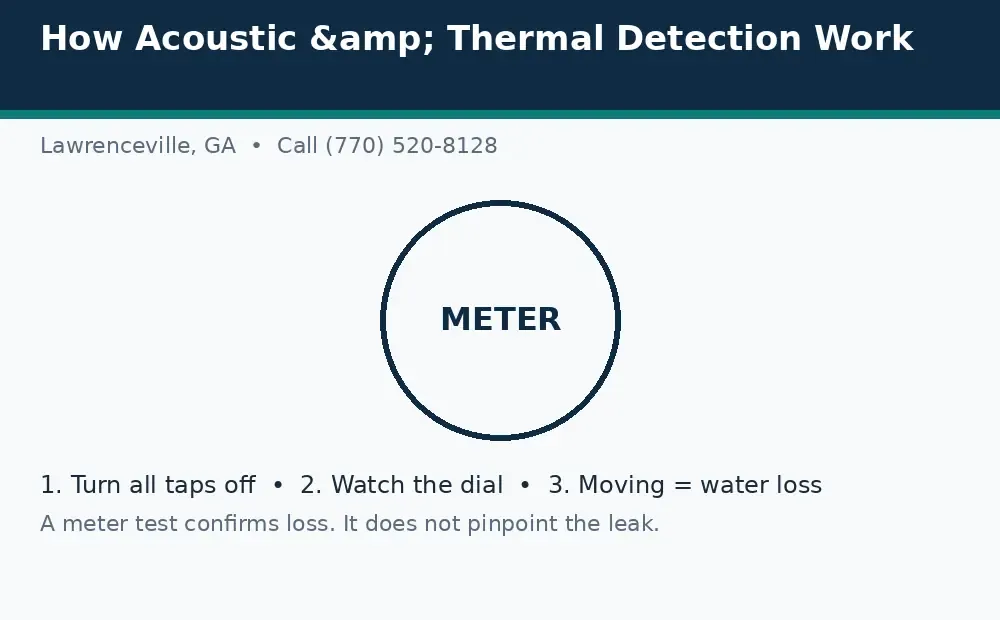
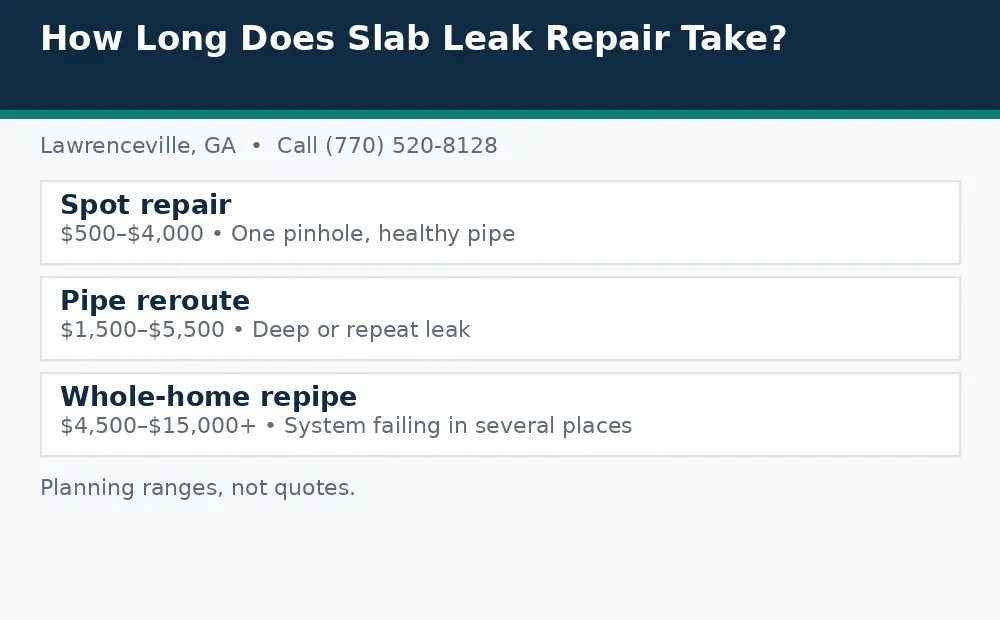
The images on this page are illustrative diagrams, not photos of a specific job at a specific address, and they are not presented as this business's own work. Call us at (770) 520-8128 if you are unsure what you are seeing.
The short answer: pressure is a stressor, not the whole story
Yes, high water pressure can contribute to a slab leak, but it rarely acts alone, and that distinction matters for what you do next. Think of pressure as a constant load on every joint, fitting, and stretch of pipe in your home. At a normal load, a healthy pipe carries it for decades. At an excessive load, year after year, the same pipe wears faster: joints loosen, fittings fatigue, and a pipe already weakened by corrosion, age, or soil movement reaches its failure point sooner. Competitor guides for other cities describe the same mechanism — a pipe over-inflated until it fails — and the what causes slab leaks guide lists pressure alongside the other causes rather than above them. So a high-pressure reading is a reason to act, but it is not by itself proof that a leak exists, and a normal reading does not by itself rule one out.
The practical consequence is a two-track response. If you suspect a leak — a bill jump, a warm floor, running water with everything off — the leak comes first, and detection comes before any discussion of pressure, because only detection can say whether water is actually escaping and where. If you have no leak signs but you know your pressure runs high, the pressure comes first, as a preventive question for your plumber. Mixing the two tracks up is the common mistake: homeowners either chase a pressure reading while a leak runs under their floor, or panic about a leak that does not exist because a gauge read high. This guide keeps the tracks separate, and the signs guide is the checklist to use when deciding which track you are on.
Signs your home's pressure may be running high
High pressure often announces itself in small, everyday annoyances long before it causes a leak, and competitor pressure guides list the same cluster of clues. Faucets that spray aggressively or splash when opened gently, toilets whose fill valves fail repeatedly, and fixtures that drip or leak at their connections are all consistent with a system under more force than it was designed for. The most distinctive clue is water hammer: a bang, thud, or humming from the pipes when a tap or appliance shuts off suddenly, as moving water is forced to stop and its energy has nowhere to go. Any one of these on its own can have another explanation — a worn washer, a failing valve — but several together, especially in a home where a slab leak has already happened once, are worth a pressure check rather than a series of one-off fixture repairs.
The clue that changes the conversation is a slab leak itself, or a pattern of pipe failures. A home that has had a pinhole leak under the slab, covered in the copper pinhole guide, and then another, may be showing pressure damage rather than bad luck, particularly if the pipe material is older copper and the home sits on shifting ground. That is why the recurring leaks guide treats repeat leaks as a system question, not a series of isolated accidents. Pressure does not explain every repeat leak — soil movement and material age matter too — but it is one of the first system factors a careful investigation checks, because it is measurable in minutes and fixable without opening a floor. If your home's story is "another leak", ask about pressure before approving another spot repair.
How to check your pressure, and what the numbers mean
Checking pressure is a simple homeowner test: a pressure gauge screwed onto an outdoor hose bib, with all taps closed, gives a static reading for the home. Plumbing guides commonly describe a comfortable residential range around 40 to 60 or 50 to 70 pounds per square inch (PSI), with readings above 80 PSI widely treated as too high for a home system. Those ranges vary by source, and this guide does not present any single figure as a Lawrenceville rule — what matters is the pattern, not a decimal point. A reading well above 80 PSI, especially one that stays high across more than one check at different times of day, is a clear prompt to talk to a plumber. A reading in the comfortable range does not clear a home of leak risk, since corrosion and soil movement cause leaks at normal pressure too, as the Georgia red clay soil guide explains.
Two cautions keep the test honest. First, test more than once: municipal supply pressure can vary through the day, and a single evening reading may not represent the home's usual load. Second, a static reading is not a leak test. It tells you the force on the system, not whether water is escaping it. The leak question is answered separately, by the meter: turn off every tap and appliance and watch whether the dial moves, as the water meter leak test guide explains, or by the water meter test post. If the meter moves, you have a loss to locate, whatever the pressure gauge says, and detection — acoustic listening, thermal imaging, pressure testing of isolated lines, explained in the detection methods guide — is the next step. Pressure and meter readings answer different questions, and a home with a suspected leak needs both, in that order.
What a pressure regulator does — and what it does not do
A pressure reducing valve, also called a pressure regulator, is a valve fitted on the home's main water line that steps high incoming pressure down to a steadier, lower level before it reaches the home's plumbing. Competitor guides describe it the same way: a spring-loaded valve that holds outgoing pressure steady even as the supply fluctuates, so the home's pipes, joints, and appliances stop carrying the full force of the main. In a home whose pressure runs high, a regulator reduces the daily strain that accelerates wear, and it is one of the standard preventive measures those guides recommend alongside monitoring pressure and watching for leaks. It is a sensible conversation to have with a plumber if your readings run high, particularly after a leak, because it addresses a cause rather than only a symptom.
Three limits need stating plainly. First, a regulator does not repair a leak that already exists: it lowers the force on the system, but water escaping through a crack keeps escaping until the pipe itself is repaired, by spot repair, reroute, lining, or repipe, as compared in the spot repair versus reroute versus repipe guide. Second, a regulator does not reverse corrosion or soil damage already done, so a home with aging pipe may still need a system decision even after pressure is controlled. Third, and importantly for this site: installing a pressure regulator is not a service this business lists — our services are detection and repair of the leak itself, from slab leak detection through slab leak repair — so regulator work is a separate plumbing job to discuss with your plumber, not something to expect from a detection visit. What a detection visit can do is confirm whether a leak exists, locate it, and give you the evidence your plumber needs to discuss pressure, material, and repair together.
Pressure plus Lawrenceville's other leak factors
Pressure never acts in isolation in a Lawrenceville home, and a fair assessment weighs it against the home's other factors. Georgia's red clay soil expands when wet and shrinks when dry, shifting against buried pipe runs, and that movement is a leak factor in its own right. Older copper under a slab, the subject of the pipe materials guide and the older homes guide, corrodes and thins with age, so the same pressure that a new pipe carries easily can fail an old one. Hot-water lines add expansion and contraction with every heating cycle, which is why the hot versus cold symptoms guide treats hot lines as a distinct case. A home with several of these factors — older copper, clay soil, high pressure — carries more risk than a home with any one of them, and that combined picture, not a single gauge reading, should drive decisions about reroute or repipe versus another spot repair.
That combined picture also sets the right urgency. A high reading with no leak signs calls for a plumber conversation about regulation, not an emergency call. A high reading plus leak signs — bill jump, warm floor, running-water sound, or the low pressure that a significant leak itself can cause, covered in the low water pressure guide — calls for detection promptly, because the leak is already doing damage while the pressure discussion waits. If you are unsure which situation you are in, run the symptom checker tool and the meter test, and let the results decide. And whatever the repair turns out to be, the published planning ranges on the repair-cost guide apply — detection $300-$600, spot repair $500-$4,000, lining $800-$3,000, reroute $1,500-$5,500, repipe $4,500-$15,000+ — as planning ranges only, never a computed quote for your home.
What to tell us when you call
When you call, tell us your pressure reading if you have one, whether you have leak signs such as a bill jump, a warm floor, or running water with everything off, and whether the home has leaked before. Mention your ZIP code and whether the signs point to a hot-water or cold-water line. That short list lets us plan detection around both the leak and the pressure behind it.
Call (770) 520-8128 and describe your situation in plain words. We will talk through detection first, then a repair plan that fits your home.
Call Us Today
Fast local slab leak detection and repair in Lawrenceville, GA, ZIPs 30043–30046.
Call Us: (770) 520-8128Frequently asked questions
Can high water pressure really cause a slab leak?
It can contribute to one. Constant excess force strains joints, fittings, and aging pipe under the slab, so a pipe already weakened by corrosion, age, or soil movement fails sooner than it otherwise would. Pressure rarely acts alone, though: soil movement, pipe material, and age matter too, and a normal pressure reading does not rule a leak out. Detection, not a gauge reading, confirms whether a leak exists.
What pressure is too high for a home?
Plumbing guides commonly describe a comfortable residential range around 40 to 60 or 50 to 70 PSI, with readings above 80 PSI widely treated as too high for a home system. Ranges vary by source, so treat the pattern as the signal, not a single decimal point. A reading well above 80 PSI that stays high across checks at different times of day is a clear prompt to talk to a plumber.
How do I check my home's water pressure?
Screw a pressure gauge onto an outdoor hose bib with all taps closed for a static reading, and test more than once, since municipal pressure can vary through the day. A gauge reading answers the force question only; it is not a leak test. To check for a leak itself, run a water meter test with everything off and watch whether the dial moves.
Will a pressure regulator fix a slab leak I already have?
No. A pressure reducing valve steps high incoming pressure down to a steadier level, which reduces the daily strain that accelerates wear, but water escaping through a crack keeps escaping until the pipe itself is repaired. A regulator is a preventive measure to discuss with a plumber, and installing one is not a service this business lists — our services are detection and repair of the leak itself.
My pressure is high but I have no leak signs — what should I do?
Talk to a plumber about regulation rather than treating it as an emergency, and keep watching for leak signs such as a bill jump, a warm floor, or running water with everything off. If leak signs appear, detection comes first, because the leak is already doing damage while the pressure discussion waits. A high reading plus repeat leaks is a system question, not a series of one-off fixture repairs.