 Lawrenceville Slab Leak Detectors
Copper Pinhole Leaks Under the Slab: Why Tiny Holes Matter
Copper pinhole leaks are tiny corrosion holes in copper pipe under the slab that lose water slowly at first, then steadily, and they are common in older Lawrenceville homes. Homeowners in Downtown Lawrenceville and Bethesda, ZIPs 30046 and 30045, notice a rising bill, a damp patch, or a moving meter.
Key takeaways
- A pinhole is a corrosion failure, not a crack from impact — the pipe wall thins from the inside until water finds a way through.
- Early pinholes lose little water, so the bill and the meter test are usually the first evidence, not a flood.
- One pinhole can mean neighbours: the same water and pipe age that thinned one spot may be thinning others.
- Detection locates the hole; the repair choice then depends on whether the run is failing in one place or several.
What this looks like in a Lawrenceville home
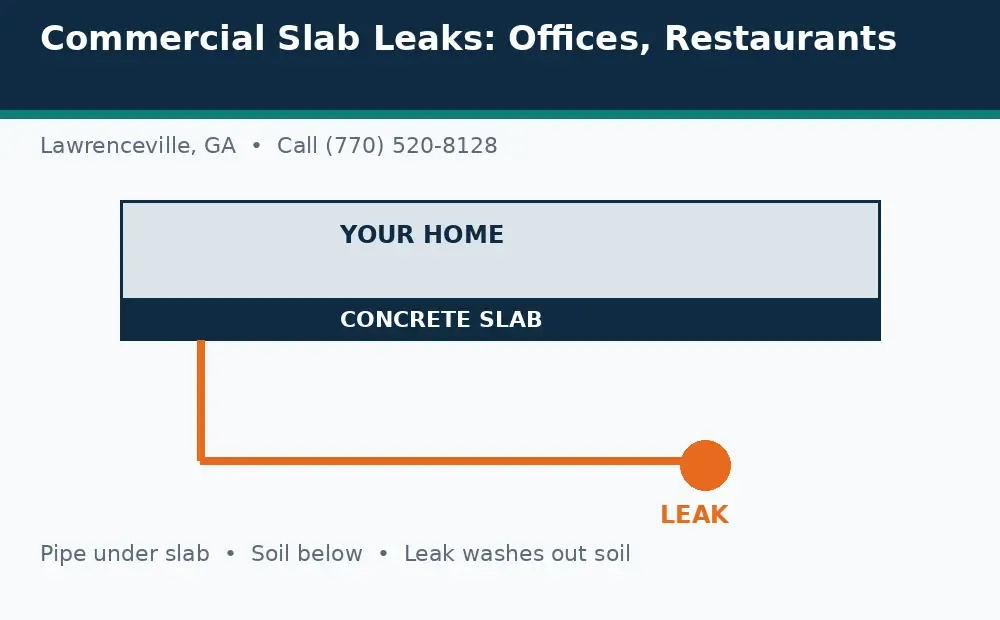
The working photo on this page is an illustrative working photo, not a photo of a specific job at a specific address. The diagrams are schematics, not to scale, made to explain the signs, process, options, or costs on this page in plain words. Call us at (770) 520-8128 if you are unsure what you are seeing.
What is a pinhole leak, and why does copper get them?
A pinhole leak is exactly what the name suggests: a hole so small it is hard to see on the pipe, through which water escapes under pressure. In copper pipe the usual mechanism is corrosion that thins the wall from the inside over years, often unevenly, until one spot gives way. The pipe can look sound a foot away and be paper-thin at the failure point. That unevenness is why a pinhole is rarely a story about a single bad inch of pipe in isolation — it is a story about the condition of the run, and sometimes the system, that the pinhole belongs to.
Homeowners often ask whether something they did caused it. The honest answer is usually no single act: water chemistry, pipe age, and installation details all play a part over a long period, and none of them can be read off a web page for a specific Lawrenceville home. What matters for the homeowner is not assigning blame to a cause but recognising the pattern: a slow loss that grows, a bill that creeps up, a damp patch that returns after drying. If that pattern sounds familiar, the next step is not a chemistry lesson but a water meter test, which shows whether water is actually leaving the system while everything is off.
How do you notice a pinhole leak under concrete?
You almost never see a pinhole leak directly, because it sits under concrete. What you notice is its effects, and they arrive gradually. The water bill is the most common first clue: a slow pinhole may add only a little at first, so the jump is easy to dismiss as seasonal use until the comparison with the same period last year makes it undeniable. A damp patch that returns, a musty smell in one room, a warm spot on a hot-water line, or a faint sound of running water when the house is quiet are the other early clues, and any two together deserve a meter test the same day.
The meter test is the right first check because it measures loss rather than guessing at causes. Everything off, read the dial, wait, read again: a moving dial means water is going somewhere, and the size of the movement hints at whether the loss is a pinhole trickle or something larger. It cannot say the loss is under the slab — a running toilet or an outdoor tap can move a meter too — which is why the test is followed by rule-outs and then by detection. The site's symptom checker helps organise those clues before you call, and the mimics guide in this batch walks the look-alikes that must be ruled out first.
How does detection find something as small as a pinhole?
Detection finds a pinhole the same way it finds larger leaks: by narrowing, not by looking. Pressure testing first confirms which side of the system loses pressure — hot-water, cold-water, or drain — which immediately halves the search. Acoustic listening then follows the sound of pressurised water escaping, and even a pinhole makes a detectable sound under pressure when the listening equipment is placed well and the house is quiet. Thermal imaging helps on hot-water lines, where the escaping warm water leaves a heat pattern in the slab. The combination, not any single tool, is what turns a house-wide suspicion into a marked spot on the floor.
That precision matters more for a pinhole than for a large failure, because the repair that follows is usually local: a spot repair over a marked point, or a reroute of the run if the pattern suggests more holes coming. Opening the floor without that precision risks missing the hole entirely and opening a second area, which is the most expensive way to learn that detection should have come first. The slab leak detection service page explains the sequence, and the detection methods guide in this batch explains what each method can and cannot do, including the honest limit that a meter test confirms loss exists but cannot place it under the slab.
Is one pinhole a repair, or a sign the whole run is failing?
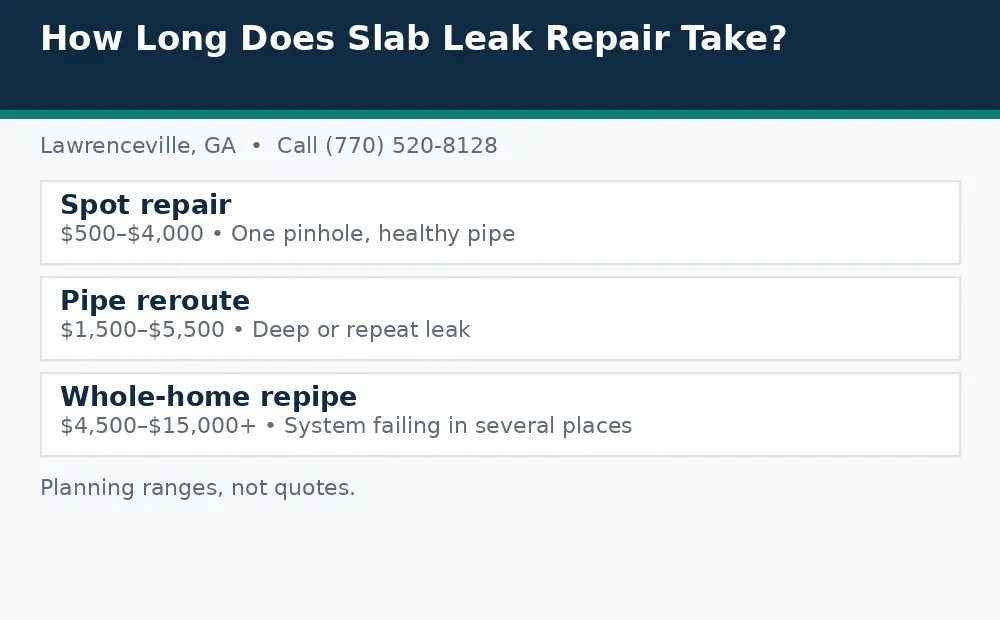
This is the most important question a pinhole raises, and the answer comes from evidence, not from the hole itself. A single pinhole in a run that tests sound elsewhere, with no other thin spots found, is a spot repair candidate: open above the marked point, replace the failed section, restore the concrete and flooring. A pinhole that arrives with a history — a previous leak on the same run, discoloured water, or a camera or pressure picture showing general thinning — points the other way, toward rerouting that run or, if the system as a whole is aging, toward repiping. The planning ranges on this site frame that decision: spot repair $500–$4,000, reroute $1,500–$5,500, repipe $4,500–$15,000+, all planning ranges, not quotes, with a written price after inspection.
The decision rule is simple to state and hard to shortcut: fix the hole, but judge the run. A homeowner who repairs a pinhole and ignores the run's condition may be back for the next hole in the same run, while a homeowner who repipes an entire house for one isolated hole has overspent. Ask the technician what the rest of the run looks like, what evidence supports that view, and what would change the recommendation — and get the reasoning with the written price, not instead of it. Homes in Bethesda and Downtown Lawrenceville with older copper lines face this question most often, and the answer is always house-specific, never a rule of thumb from a web page.
What should I do if I suspect a pinhole leak?
Run the meter test first, today, not next week. If the meter moves, rule out the simple look-alikes — a running toilet, a dripping outdoor tap, a hose left on — and if the movement persists with everything genuinely off, call for detection and say you suspect a slow under-slab loss. Mention the bill pattern, the damp patch or warm spot if there is one, and how long the signs have been present, because duration helps the technician judge urgency. Do not wait for a flood to confirm it: a pinhole that is losing water today is washing soil from under the slab today, slowly, whether or not anything looks dramatic.
While you wait for the visit, keep the routine that protects the house: note the meter readings and dates, photograph any damp patch before it is dried or covered, and avoid covering a damp area with rugs or new flooring. If the loss is large or growing, shutting the supply when the house is empty is a sensible precaution to discuss with the technician. And if the visit finds the run failing in several places, read the recurring leaks guide in this batch before deciding between another spot repair and a reroute or repipe — it lays out the trigger points that separate a one-off fix from a system decision.
Pinhole leak: from suspicion to decision
| Stage | What you learn | What it rules in or out |
|---|---|---|
| Bill comparison | Loss over a billing period | Rules in a real loss vs seasonal use |
| Meter test | Loss right now, with everything off | Rules in pressurised-side loss; cannot place it |
| Rule-outs | Toilet, taps, hoses clear | Rules out the simple look-alikes |
| Pressure test | Which side loses pressure | Narrows to hot, cold, or drain |
| Listening / imaging | Marked location | Places the hole before any floor opens |
| Run judgement | One hole vs failing run | Decides spot repair vs reroute vs repipe |
Each stage answers a different question. Skipping straight to opening the floor skips every answer except the most expensive one.
Compare Bill vs same period last year — a creeping jump is the classic pinhole clue.
Test Meter with everything off — movement means loss, size hints at severity.
Rule out Toilet, outdoor taps, hoses — clear the simple causes first.
Detect Pressure test, then listening or imaging to mark the hole.
Judge the run One hole or a failing run — the repair follows that judgement, not the hole alone.
What to tell us when you call
When you call, tell us what you noticed, when it started, and where in the house it shows. Mention your ZIP code, whether the water meter moves with everything off, and whether the sign is on a hot-water or cold-water line if you know. That short list helps the technician bring the right equipment and plan the visit. You do not need to know the cause before you call — that is what detection is for.
Call (770) 520-8128 and describe what you are seeing in plain words. We will talk through the next step and arrange a detection visit.
Call Us Today
Fast local slab leak detection and repair in Lawrenceville, GA, ZIPs 30043–30046.
Call Us: (770) 520-8128Frequently asked questions
How small is a pinhole leak?
Small enough to be hard to see on the pipe, but large enough to lose water steadily under pressure. Early pinholes show up as a creeping bill or a returning damp patch, not a flood.
Can a pinhole leak fix itself?
No. Corrosion thinning does not reverse, and water keeps escaping through the hole. A pinhole left alone grows the loss and the soil washout beneath the slab.
Does one pinhole mean I need a whole repipe?
Not necessarily. One hole in an otherwise sound run is a spot repair candidate. Repiping enters the conversation when the run shows a pattern — previous leaks, general thinning, or repeated failures.
How is a pinhole under concrete actually found?
By narrowing: pressure testing to pick the side, acoustic listening or thermal imaging to mark the spot, and only then any floor opening. The meter test confirms loss exists but cannot place it.
Should I worry about other pinholes after one repair?
Watch the run, not just the repaired spot. Bill comparisons and yearly meter tests are the routine that catches the next hole early, if the run is aging.