 Lawrenceville Slab Leak Detectors
Why the Wet Spot Isn't Over the Slab Leak in Lawrenceville
The wet spot is rarely over the slab leak in Lawrenceville: water spreads through soil and fill under the slab, then surfaces at a joint, crack, or pipe opening in another room. Downtown homes in ZIPs 30044 and 30045 should trust detection, not the wet patch, to find the break.
What this looks like in a Lawrenceville home
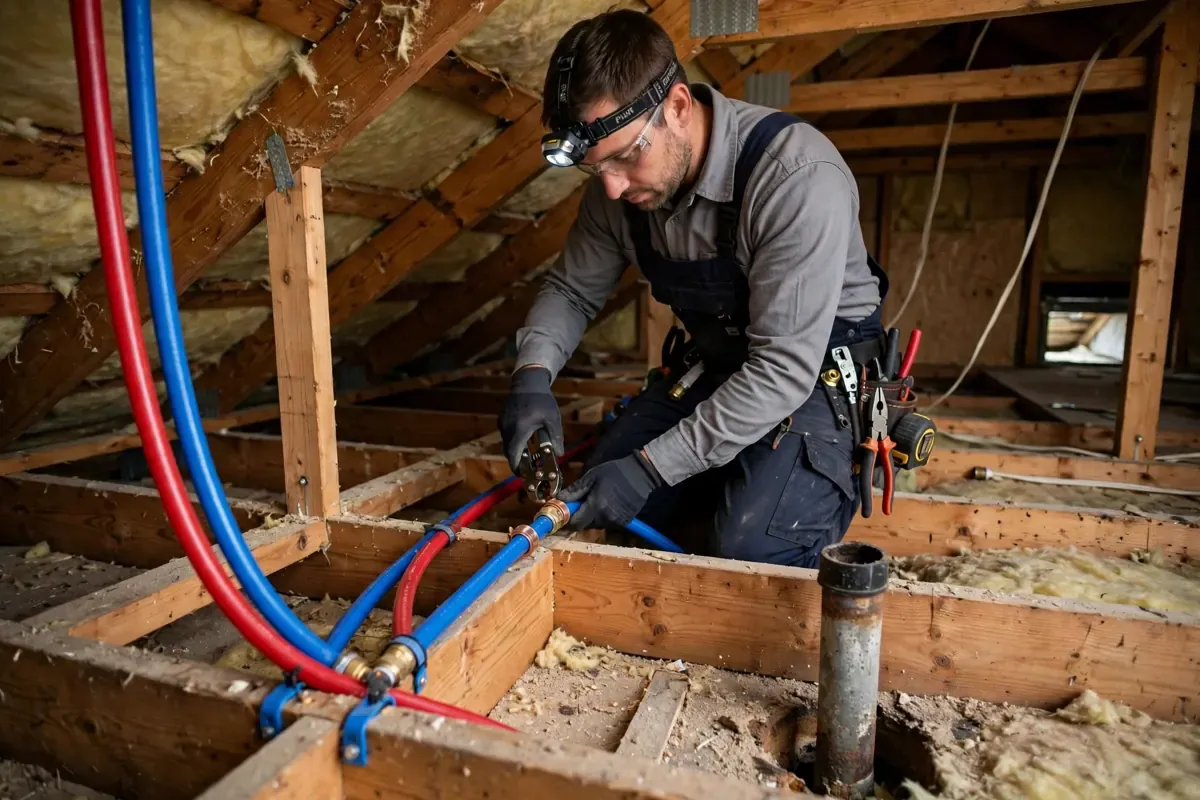
The images on this page are illustrative diagrams, not photos of a specific job at a specific address, and they are not presented as this business's own work. Call us at (770) 520-8128 if you are unsure what you are seeing.
The short answer: the wet patch marks where the floor gave up, not where the pipe failed
A wet patch on the floor feels like a map pin dropped on the leak. It is not. Water escaping from a pipe under a concrete slab almost never rises straight up through the concrete to the floor above the break. Concrete is dense, and the fill and soil beneath the slab give the water easier routes sideways than upward. So the water spreads, follows the path of least resistance, and only surfaces where something lets it through — a control joint, a crack, a pipe penetration, or the gap where the slab meets the bottom of a wall. Then it travels on top of the slab, underneath the flooring, until it reaches something absorbent enough to show. The visible wet patch marks where your flooring gave up first, not where the pipe failed, and the two can be in different rooms. That is why cutting the floor open where it is wet is the most expensive mistake a homeowner can make with a suspected slab leak, and why detection exists: electronic methods narrow the location before any concrete is touched.
This matters in Lawrenceville for a practical reason. Homes here sit on concrete slabs over Georgia red clay, and the same soil movement that stresses pipes also shapes how water moves once it escapes. The Georgia red clay soil guide explains the shrink-swell cycle. A leak under a slab in a Collins Hill or Sugarloaf home does not behave like a leak from a tap: it is hidden, it spreads, and the first thing you see is often the last place you should cut. The signs guide lists the other clues to weigh alongside a wet patch, because a single wet spot, on its own, proves very little about where the break is.
How water travels once it escapes under a slab
Start with what happens at the break. A pressurised supply line leaks 24 hours a day, so water keeps entering the soil and fill beneath the slab for as long as the leak runs. The fill is looser than the concrete above it, so water saturates it and spreads sideways along the easiest route. Concrete itself is porous enough to let moisture through slowly, but a crack, a joint, or a penetration is a far easier exit, so the water heads for those. Slab foundations are also rarely dead level, and a slight fall in the slab can carry water along the top of the concrete, under the flooring, for some distance before it finds a way up. Wood framing and drywall wick moisture sideways too, so a leak can show as a damp baseboard on the far side of a wall from the break.
Flooring decides what you actually see. Tile is waterproof, so water trapped beneath it runs along the grout lines, which are the most porous path — that is why a slab leak often shows first as darkened or damp grout rather than a wet tile. Carpet padding absorbs and wicks, so a damp patch can grow well beyond the leak's footprint before anyone notices. Laminate and hardwood buckle and cup where the moisture reaches them, which may be where the boards end or where a seam lets water up, not where the pipe broke. The musty smell and warped floors guide covers what those floor symptoms mean, and the warm spot guide explains the one case where the surface does point more directly at the leak: a hot-water line, whose heat rises through the concrete and warms the floor above the break. A cold-water leak gives no such signal, which is why cold-side leaks are the ones most often found far from the wet patch.
Where the water surfaces — and why it can be rooms away
The exits water uses are predictable once you know to look for them. Control joints — the grooves cut into a slab to control cracking — are the most common, because they are the slab's thinnest, weakest lines. Cracks from settlement do the same job. Pipe penetrations, where a pipe passes up through the slab to a fixture, leave a gap around the pipe that water follows. The joint where the slab meets the wall's bottom plate is another: water can surface along a wall base in one room while the break sits under the next room over. In homes with a step down, a garage slab at a lower level, or an extension poured at a different time, the seam between pours is a ready-made channel.
Distance is the part homeowners find hardest to accept. Competitor leak guides describe the same picture: the visible damage marks the point where water stopped moving and started evaporating, and that point can be a few feet from the break or in another room entirely. There is no fixed radius, and any guide that promises one is guessing. What decides the distance is the soil and fill under your slab, the slope of the slab, the joints and cracks available, and how long the leak has been running. A small pinhole leak running for weeks can wet a wide area slowly; a larger break shows faster and closer. That variability is exactly why the meter test and detection matter more than a tape measure: the water meter test post shows how to confirm water is being lost, and the detection methods guide explains how acoustic listening and thermal imaging narrow the search before anything is opened.
Why cutting open where it's wet is the expensive mistake
The instinct to open the floor at the wet patch is understandable and usually wrong. If the break is not under the wet patch, the cut finds dry concrete and healthy pipe, and the homeowner has paid for a hole that now needs restoring, while the leak keeps running. Worse, the cut can damage a sound pipe or the slab itself, and the restoration — concrete and flooring put back — is a second bill on top of the first. The jackhammer guide explains what opening a floor actually involves, and the fix without breaking the floor guide covers the repair routes that avoid opening the slab at all, such as rerouting the line or lining it, where they fit.
Detection exists to prevent that mistake, and it is cheaper than a wrong cut. A detection visit combines the meter and pressure tests that confirm a loss, acoustic listening that follows the sound of escaping water through the slab, and thermal imaging that maps warm areas for hot-water leaks, as explained in the acoustic and thermal detection guide. The published planning range for detection is $300-$600, and that is a planning range only — a written price follows inspection — but it is worth comparing against the cost of opening the wrong part of a floor twice. If the wet patch is the only sign and the meter is not moving, the answer may be a drain, a seal, or condensation rather than a supply leak at all, which the mimics guide covers; that is another reason to test before cutting.
What to do when you find a wet patch
Treat a wet patch that returns after drying as a prompt to test, not as a location to cut. Start with the meter: turn off every tap and appliance, including the ice maker and any irrigation, and watch the meter dial for 15 to 30 minutes. If it moves, water is being lost somewhere on the pressurised side, and the next step is detection, not a saw. The water meter leak test guide walks through the check step by step. While you wait, note the pattern: is the patch always wet, or only after showers, laundry, or rain? Does it smell? Is the floor warm there? Photograph the patch and the surrounding floor, including baseboards and any cracks, because those photos help a technician decide where to start listening.
Do not ignore a patch that dries on its own. A patch that appears after rain and dries between storms points toward groundwater or drainage rather than a pipe, and a patch that appears only after a shower points toward a fixture seal or drain. Both are worth a call, because a drain leak under the slab is still a slab leak — it just does not show on the meter, as the sewer versus supply guide explains. And if the patch is growing, the flooring is lifting, or water is pooling, treat it as urgent: shut off the main if you can do so safely and call, as the emergency guide explains. A wet patch is evidence, not a location — and the sooner detection turns that evidence into a location, the smaller the repair.
What to tell us when you call
When you call, tell us where the wet patch is, whether the patch is always wet or comes and goes, whether the floor feels warm there, and what the meter did when everything was off. Mention your ZIP code and whether the patch is near a bathroom, kitchen, or water heater. That short list lets us plan detection around the patch and the pipe, not just the patch.
Call (770) 520-8128 and describe your situation in plain words. We will talk through detection first, then a repair plan that fits your home.
Call Us Today
Fast local slab leak detection and repair in Lawrenceville, GA, ZIPs 30043–30046.
Call Us: (770) 520-8128Frequently asked questions
Why isn't the wet spot directly above the slab leak?
Because water escaping under a slab rarely rises straight up through concrete. It saturates the soil and fill beneath the slab, spreads along the path of least resistance, and surfaces where something lets it through — a control joint, a crack, a pipe penetration, or the gap where the slab meets a wall. It can then travel under the flooring until it reaches something absorbent. The wet patch marks where the flooring gave up first, not where the pipe failed.
How far from the leak can the wet spot appear?
There is no fixed distance, and any guide that promises one is guessing. The wet patch can sit a few feet from the break or in another room entirely, depending on the soil and fill under the slab, the slab's slope, the joints and cracks available, and how long the leak has been running. That variability is why detection, not a tape measure, is used to locate the break before any floor is opened.
Should I cut open the floor where it's wet?
No. If the break is not under the wet patch, the cut finds dry concrete and healthy pipe, and you pay for a hole that needs restoring while the leak keeps running. Detection first — meter and pressure tests, acoustic listening, thermal imaging — narrows the location before anything is opened, and repair routes such as rerouting or lining can avoid breaking the slab at all where they fit.
Can a thermal camera find the leak if the wet spot is in the wrong place?
It can help, but only for hot-water leaks. A thermal camera maps the warmth a leaking hot-water line pushes up through the concrete, which points toward the break rather than the wet patch. A cold-water leak gives off no heat, so it produces no thermal signal at any stage, and acoustic listening and pressure testing of isolated lines are used instead. The detection methods guide explains how the two are combined.
My floor is wet but the meter isn't moving — is it still a slab leak?
It can be, but not necessarily a supply-side one. A drain or sewer line under the slab is not pressurised, so a break there never registers at the meter, and it usually tracks with water use and may smell. A failed fixture seal, a shower pan, or condensation can also wet a floor without moving the meter. Note when the patch appears — after use, after rain, or constantly — and call; detection can sort out which side is involved.