 Lawrenceville Slab Leak Detectors
Slab Leak in Winter in Lawrenceville, GA
A slab leak in winter in Lawrenceville, GA, starts when a cold snap stresses pipes weakened by Georgia red clay soil. Water expands as it freezes, weak joints and copper take the strain, and the first sign is a bill jump or warm patch in ZIPs 30043 and 30044.
What this looks like in a Lawrenceville home
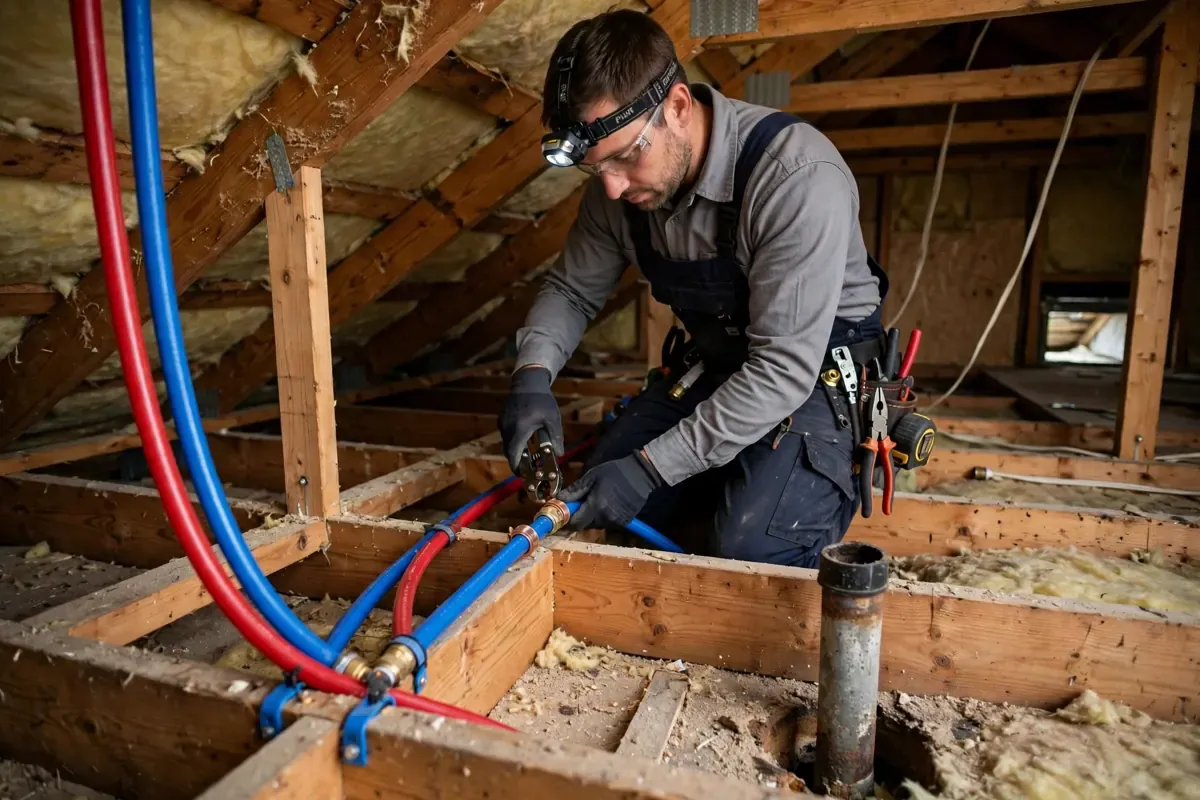
The images on this page are illustrative diagrams, not photos of a specific job at a specific address, and they are not presented as this business's own work. Call us at (770) 520-8128 if you are unsure what you are seeing.
The short answer: cold does not create a leak from nothing — it finishes off a weak pipe
A slab leak in winter usually starts with a pipe that was already weakened — corrosion thinning a copper run, a pinhole that has been weeping for months, or a joint stressed by soil movement. Cold adds the final push. Water expands by about nine percent as it freezes, so any water trapped in a pipe or in the soil around it pushes outward as it turns to ice. Pipes and fittings contract as they cool, which pulls at joints. And Georgia red clay shrinks when it dries and cools, then swells when it wets again, moving the ground the pipe sits in. None of that needs a deep freeze. Lawrenceville winters are mostly short cold snaps — a few nights near or below freezing between milder days — and that swing is the problem: pipe and soil expand and contract again and again, and each cycle works a weak point a little further. A pinhole that would have dripped quietly for months can split during a cold snap and become a burst. The leak itself is still under the slab and hidden, and the first thing most homeowners notice is not the pipe but the bill, the floor, or the sound — which is why the signs below matter more than the weather forecast. Detection exists for exactly this reason: it finds the break before the floor is opened, and before a small winter leak becomes a large one.
The point is worth stating plainly because it changes what to watch for. A winter slab leak is not a different kind of leak — it is an ordinary under-slab failure that cold weather hurried along. That means the same detection and the same repair routes apply, and the same rule holds: test first, cut nothing on a guess. The signs guide lists the clues in full, and the how long a leak can go undetected guide explains what time does to a leak that is left alone. Winter only shortens that time.
Why Lawrenceville winters are hard on under-slab pipes
Lawrenceville homes sit on concrete slabs over Georgia red clay, and the soil is half the winter story. The Georgia red clay soil guide explains the shrink-swell cycle: dry, cold spells shrink the clay and pull it away from pipes, wet spells swell it back and press on them. A pipe that spends winter being squeezed and released in turn is a pipe under repeated stress, and the stress concentrates at the weakest points — joints, bends, and sections already thinned by corrosion. Homes in Collins Hill, Sugarloaf, and Downtown Lawrenceville share the same soil, so the risk is a Lawrenceville-wide pattern, not a quirk of one street.
The pipes most at risk are the ones nearest the cold. The service line where it enters the house — often near the garage or an exterior wall — the shallow runs near the slab edge, hot-water lines that cycle between hot and cold, and any copper run already thinned by pinhole corrosion, which the copper pinhole guide covers. Under-slab runs are insulated by the slab and the earth above them, so the whole run rarely freezes solid; the risk concentrates where the pipe is exposed or shallow, and where a joint sits in moving soil. Rapid temperature change is the stressor: a warm afternoon followed by a freezing night makes pipe and soil move at different rates and in different directions. Add that many Lawrenceville homes were built in eras when copper under the slab was standard — the older homes guide covers the aging-pipe angle — and the combination is the winter story: aging copper, moving clay, and freeze-thaw cycles, each making the others worse.
Signs of a slab leak that show up after a cold snap
The most useful habit in winter is to check for a leak after every cold snap, not only when something is visibly wrong. The signs below are the same ones that matter all year, but their timing after a freeze is what points at winter stress. A water bill that jumps after a cold snap is often the first sign, because a leak runs 24 hours a day and the meter keeps counting while you sleep; the high water bill guide covers the rule-outs. A warm patch on the floor points at a hot-water line — the warm spot guide explains why heat is the one symptom that locates itself. The sound of running water with every tap off, covered in the running-water sound guide, is a leak you can hear before you can see. Damp flooring, warped boards, or a musty smell near a baseboard are the floor telling you water has arrived from below — the musty smell and warped floors guide covers those early warnings. And low water pressure across the home, covered in the low pressure guide, can mean a supply line is losing water before it reaches your taps.
Two patterns separate a winter leak from a coincidence. First, the timing: signs that appear within days of a cold snap, when nothing changed in the house, point at freeze stress rather than a fixture that was already failing. Second, the combination: one sign on its own can have several causes, but two together — a bill jump plus a warm patch, or a sound plus a damp floor — are worth a meter test the same day. A burst pipe announces itself with pooling water and needs the emergency steps in the burst pipe guide; a pinhole leak whispers through the bill and the meter, and the meter test is how you hear it.
What to do first when you suspect a winter slab leak
Start with the meter test, and do it while the house is quiet. Turn off every tap and appliance, including the ice maker and any irrigation, and watch the meter dial for 15 to 30 minutes. If it moves, water is escaping from a pressurised line, and a slab leak is the leading suspect. The water meter leak test guide walks through the check step by step, and the meter test post explains how to read the result. If the meter does not move, a supply leak is off the table and you are looking at a drain, a fixture seal, condensation, or groundwater — the mimics guide covers the fixtures that most often impersonate a slab leak.
If water is pooling, flooring is lifting, or the meter is spinning fast, shut off the main if you can do so safely and call — that is a same-day situation, and the emergency guide covers the first steps in order. The shut-off guide shows where the valve usually sits in a Lawrenceville slab home. Two things not to do: do not thaw a frozen pipe with an open flame or a torch — heat it gently from a safe distance or leave it to a technician, because a flame on a pipe in a wall or under a floor is a fire risk; and do not cut the floor open at the wet patch, because the break is often rooms away from where the water surfaces, as the wet spot guide explains. Detection comes first — acoustic listening and thermal imaging, explained in the acoustic and thermal detection guide — and it is cheaper than a wrong cut.
How winter leaks are found — and what repair fits
Detection in winter works the same way it works all year, with one small advantage: when the slab is cold, a leaking hot-water line stands out more clearly on a thermal camera, because the warmth has a cold background to contrast against. A cold-water leak gives off no heat at any stage, so thermal imaging cannot see it, and acoustic listening and pressure testing of isolated lines are used instead. The detection methods guide explains how the two are combined, and the published planning range for detection is $300-$600 — a planning range only, with a written price following inspection.
Repair depends on where the break is and what condition the pipe is in, not on the season. A single leak in otherwise healthy pipe is usually a spot repair. A line that has failed before, or pipe that is worn along its length, may suit a reroute or a lining, and repeated failures point toward a whole-home repipe. The spot repair versus reroute versus repipe guide compares the routes, the fix without breaking the floor guide covers the options that avoid opening the slab, and the repair cost guide carries the published planning ranges: spot repair $500-$4,000, lining $800-$3,000, reroute $1,500-$5,500, repipe $4,500-$15,000+. Those are planning ranges only — never a quote, and never a price for your home until it has been inspected. Winter habits lower the risk of a repeat: keep the heat on even when you are away, know where your shut-off is and label it, insulate exposed pipes where you can reach them, and run the meter test after each cold snap. The prevention guide covers the year-round version of the same habits.
What to tell us when you call
When you call, tell us when the cold snap hit, what changed after it — the bill, a warm patch, a sound, a damp floor — and what the meter did with everything off. Mention your ZIP code and whether the water is pooling anywhere. That short list lets us plan detection around the freeze, not just the symptom.
Call (770) 520-8128 and describe your situation in plain words. We will talk through detection first, then a repair plan that fits your home.
Call Us Today
Fast local slab leak detection and repair in Lawrenceville, GA, ZIPs 30043–30046.
Call Now to Speak to a SpecialistFrequently asked questions
Can cold weather cause a slab leak?
Cold weather does not create a leak from nothing, but it can finish off a pipe that was weakened. Water expands by about nine percent as it freezes, pipes and fittings contract as they cool, and Georgia red clay shrinks and swells with temperature and moisture, moving the ground the pipe sits in. Each freeze-thaw cycle works a weak joint, bend, or corroded section a little further, and a pinhole that dripped for months can split during a cold snap.
Can pipes under a concrete slab freeze?
A pipe under a slab is insulated by the concrete and the earth, so the run rarely freezes solid. The risk is where the pipe is exposed or shallow: the service line where it enters the house, runs near the slab edge, and joints in moving soil. A winter slab leak is a weakened pipe failing under freeze-thaw stress, not the run turning to ice. That is why the signs are a bill jump, a warm patch, or a sound.
What are the signs of a slab leak in winter?
A bill that jumps after a cold snap is the first sign, because a leak runs 24 hours a day. A warm patch on the floor points at a hot-water line, the sound of running water with taps off is a leak you can hear before you can see, and damp flooring or a musty smell mean water has arrived from below. Signs appearing within days of a cold snap, especially two together, call for a meter test.
What should I do if a pipe bursts in cold weather?
If water is pooling, flooring is lifting, or the meter is spinning fast, shut off the main if you can do so safely and call: same-day situation. Keep clear of water near electrics. Do not thaw a frozen pipe with an open flame or a torch, and do not cut the floor open at the wet patch, because the break is rooms away from where the water surfaces. Detection finds the break before any floor is opened.
How do you find a slab leak in winter?
Detection starts with the meter and pressure tests that confirm water is being lost, then acoustic listening that follows the sound of escaping water through the slab, and thermal imaging that maps warm areas for hot-water leaks. When the slab is cold, a leaking hot-water line can stand out more clearly on a thermal camera against the cold background. A cold-water leak gives off no heat, so acoustic listening and pressure testing are used instead.