 Lawrenceville Slab Leak Detectors
Water Leak Under the House in Lawrenceville, GA
A water leak under the house in Lawrenceville, GA, usually means a slab leak — a supply line under the concrete slab in ZIPs 30043 and 30045, from Collins Hill to Bethesda. Whether insurance covers it depends on the cause and your policy, so check your cover before assuming anything.
What this looks like in a Lawrenceville home
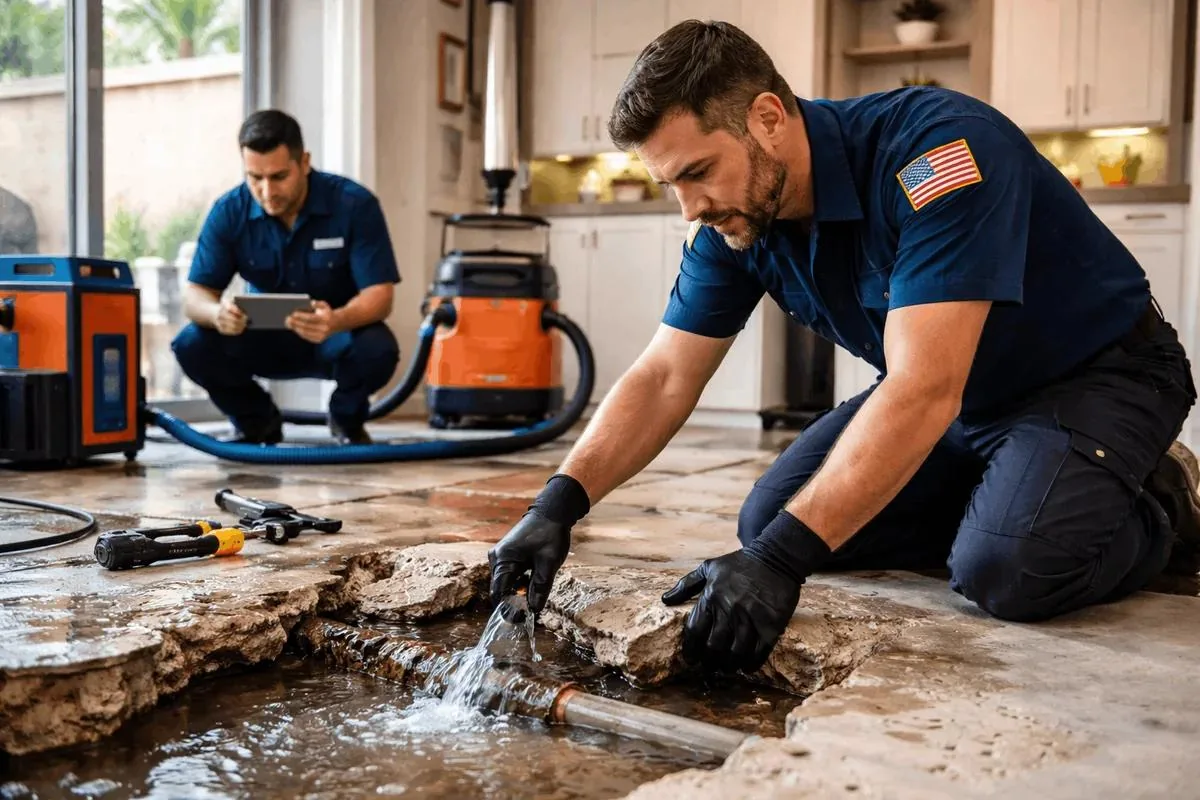
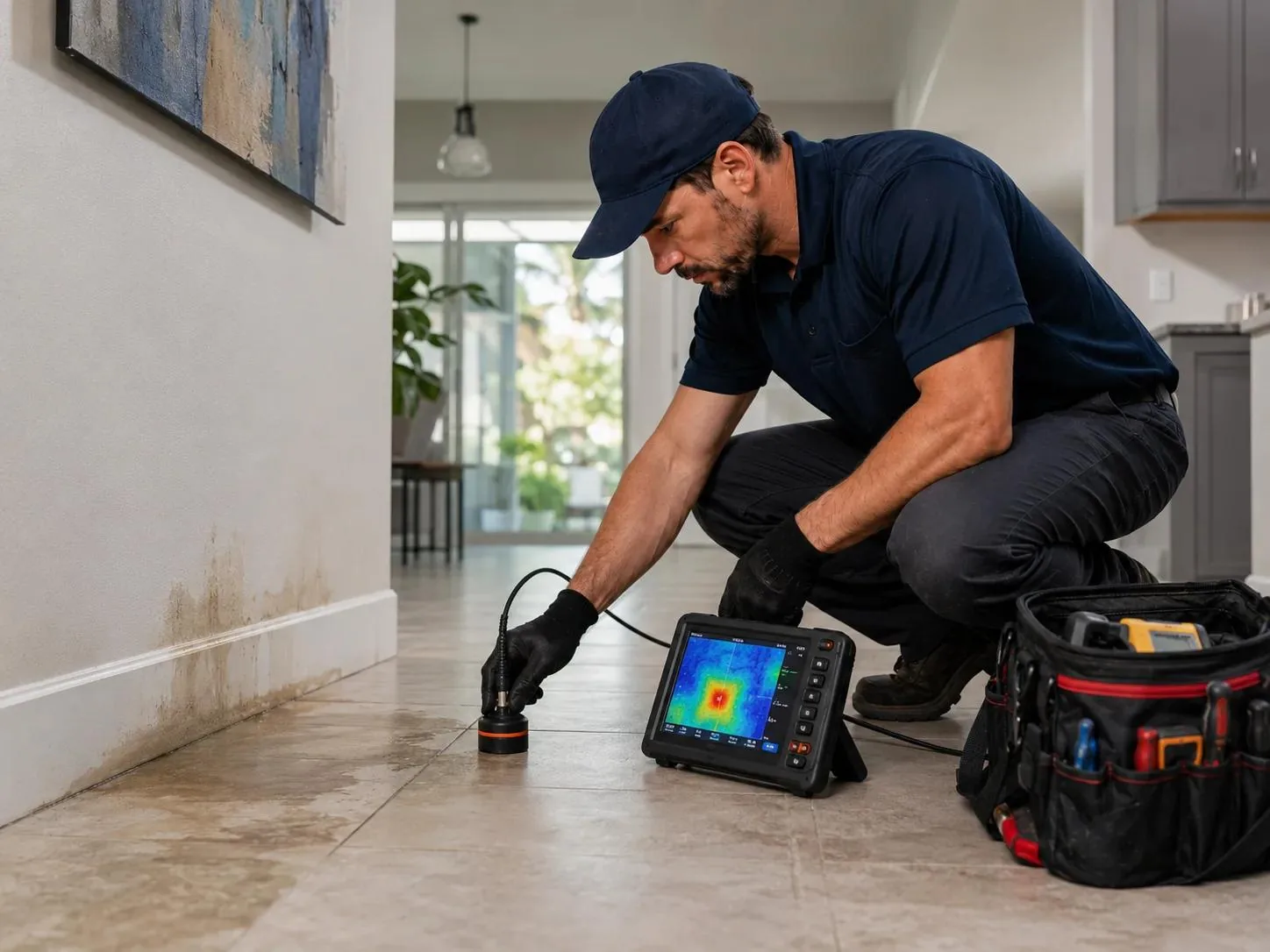
The images on this page are generic illustrations — a spot-repair photo and a thermal-imaging photo — not photos of this business's own work or of a specific home. Call us at (770) 520-8128 if you are unsure what you are seeing.
What "under the house" means in a Lawrenceville home
A water leak under the house in Lawrenceville, GA, usually means a slab leak. Most Lawrenceville homes are built on a concrete slab, not a basement or a crawl space, so there is no space under the house to look into — the water and sewer lines run in or under the slab itself, and a leak in one of those lines is a leak under the house. The what is a slab leak guide explains what those lines are and where they run, and the signs of a slab leak guide covers the signs that point at one.
The signs of an under-house leak are the signs of a slab leak, because they are the same thing. A wet patch on the floor that returns in dry weather, a warm spot on the floor where a hot-water line runs, a water bill that jumps with no change in use, the sound of running water when every tap is off, or a floor that has started to warp or a door that sticks — each of those is water escaping from a line under the slab and finding its way up. The water coming up through the floor guide covers the wet-floor signs, and the warm spot guide covers the warm-floor sign in detail. A leak under the house rarely floods a room the way a burst pipe does; it usually runs quietly for weeks, and the bill is often the first sign. The how long a slab leak goes undetected guide covers how long one can run before anyone notices it.
Supply leak or drain leak — how to tell
The first question is whether the leak is in a supply line or a drain line, because the repair route and the insurance question are both different. A supply leak is a pressurised line: it runs all the time, it raises the bill, and it keeps losing water whether or not anyone is using a tap. A drain leak only loses water when a fixture drains — a toilet flush, a shower, a washing machine — and it often brings a smell with it. The sewer versus supply guide explains how to tell a drain leak from a supply leak, and the sewer smell guide covers the smell signs.
The meter test tells you which one it is. Turn off every tap and appliance, including irrigation and the ice maker, and watch the meter dial for 15 to 30 minutes. A dial that moves means a pressurised supply line is leaking. A dial that holds still rules out a supply leak — the water you are seeing is a drain leak, rain, or runoff. The meter test post explains how to read the result. The shut-off test narrows it further: shut off the main valve where the line enters the house and watch the meter again. If it stops, the leak is inside the house. If it keeps moving, the leak is outside, in the service line between the meter and the house. The main water line break guide covers the outside case, and the water meter leak test guide walks through the check step by step.
How a leak under the house is found
Detection under a slab starts the same way it starts anywhere: confirm the loss, narrow the line, then pinpoint. Pressure testing picks the side — hot or cold — by isolating each line and watching which one loses pressure. Acoustic listening follows the sound of escaping water through the concrete, and thermal imaging maps warm areas for a hot-water leak. Line tracing follows the pipe's route first, so the search starts on the line rather than on a guess. For a stubborn leak that acoustic listening cannot pin down, a technician may use tracer gas — a harmless gas pumped into the line that escapes at the leak point, where a detector picks it up. Tracer gas is mentioned here only as a method a technician may use, not as a service on its own. The detection methods guide explains how the methods combine, the acoustic and thermal detection guide explains the two main methods, and the detection method finder helps you see which method fits your signs.
The result of detection is a marked spot, not a trench. A single leak in otherwise healthy pipe is usually a spot repair: a small, targeted opening in the slab at the marked location, the pipe fixed, and the floor put back. A line that has failed before may suit a reroute, where a new line runs around the slab, or a lining, where a new pipe is formed inside the old one — and whether a line can be lined is decided by camera inspection. The spot repair versus reroute versus repipe guide compares the routes, the fix without breaking the floor guide covers the options that avoid opening a slab, and the slab leak detection service page covers the detection step itself.
The insurance question, honestly answered
The question that follows almost every under-house leak is whether homeowners insurance covers it, and the honest answer is that it depends on the cause and on your own policy — no one can answer it for certain without reading that policy. This post is general information only, not insurance or legal advice. Homeowners cover in Georgia typically treats a sudden and accidental pipe failure differently from a leak that has run gradually over months, and many policies pay for the damage the water caused while treating the pipe repair itself separately. A policy that pays to tear out and access the pipe under the slab often will not pay to repair the pipe itself. Whether your policy does either is a question for the policy wording and your insurer or agent, not for a plumber. The does homeowners insurance cover a slab leak guide covers the same distinction in detail, and the claim denied guide covers the common reasons claims are refused.
What you can control is the evidence. Detection first, in most cases: a written detection finding tells you — and the insurer — where the leak is, which pipe failed, and whether it is a supply or a drain leak, and that evidence shapes the claim. Photograph the wet patches, the warped boards, and the meter readings, and note the dates you first noticed each sign. Keep the detection invoice and the written finding together with those photos. If water is spreading and you need emergency help, call the insurer's claims line the same day and tell them detection is booked. The insurance claim process guide walks through the steps in order, and the water damage cleanup guide covers the drying step that follows the repair. If you want a second opinion on the wording, the Georgia Office of Insurance and Safety Fire Commissioner is the state regulator to contact — it handles questions about how policies are supposed to work.
Two distinctions are worth getting right. First, a pipe leak is not a flood: flood cover is a separate policy for water that rises from outside, and a leak from a pipe under the house falls under the homeowners policy, not the flood policy. Second, a leak that has run for a long time is harder to claim than a sudden break, because most policies exclude damage from gradual leaks and from wear and tear — the insurer looks at when the leak started, whether it could reasonably have been noticed, and what the policy says. Document the dates, keep the bills and the photos, and let the insurer decide on the facts. The home warranty guide covers the separate question of whether a home warranty helps with a slab leak.
What detection and repair cost
The published planning ranges are detection $300-$600, spot repair $500-$4,000, lining $800-$3,000, reroute $1,500-$5,500, and repipe $4,500-$15,000+ — the repair cost guide carries the full table, and the repair cost estimator gives a planning figure from those ranges once detection has found the break. The written price comes after inspection, and the questions before approving a repair guide covers what to ask before any work starts. Whether insurance pays any part of that depends on the policy, as the section above explains — detection is the step that gives the insurer the evidence either way. The concrete and floor restoration service page covers putting the floor back after a slab opening, including matching the existing finish.
What to tell us when you call
When you call, tell us where the water shows and whether it returns in dry weather, what the meter did with everything off, and whether the line is hot or cold. Mention your ZIP code and whether you have already spoken to your insurer. That short list lets us plan detection around your home, not around a guess.
Call (770) 520-8128 and describe your situation in plain words. We will talk through detection first, then a repair plan that fits your home.
Call Us Today
Fast local slab leak detection and repair in Lawrenceville, GA, ZIPs 30043–30046.
Call Now to Speak to a SpecialistFrequently asked questions
Is a water leak under the house covered by insurance?
It depends on the cause and on your own policy, and no one can answer it for certain without reading that policy. Homeowners cover in Georgia typically treats a sudden and accidental pipe failure differently from a leak that has run gradually over months, and many policies pay for the damage the water caused while treating the pipe repair itself separately. Check your own policy wording and ask your insurer or agent before assuming anything.
Does insurance pay to find the leak under the slab?
Sometimes, and it depends on the policy. Detection is the step that proves where the water is coming from, and some policies cover the cost of locating a covered leak while others treat detection as the homeowner's cost. Keep the written detection finding and the invoice either way — they are the documents an insurer asks for first, and they also tell the repair plan. Ask your insurer how detection is treated under your cover before the visit.
What if the leak has been running for months — is it still covered?
A leak that has run for a long time is harder to claim than a sudden break, because most policies exclude damage from gradual leaks and from wear and tear. That does not mean the claim is automatically refused — the insurer looks at when the leak started, whether it could reasonably have been noticed, and what the policy says. Document the dates you first noticed signs, keep bills and photos, and let your insurer decide on the facts.
Should I file a claim before or after detection?
Detection first, in most cases. A detection finding tells you — and the insurer — where the leak is, which pipe failed, and whether it is a supply or a drain leak, and that evidence shapes the claim. Filing first, without proof of the source, can slow the claim down while the insurer waits for that information. If water is spreading and you need emergency help, call the insurer's claims line the same day and tell them detection is booked.
Does flood insurance cover a leak under the house?
No — a leak from a pipe under the house is not a flood, and flood cover is a separate policy for water that rises from outside, such as a river. A pipe leak is a plumbing failure, and it falls under the homeowners policy, not the flood policy. If the water came from outside the house rather than from a pipe, that is the question to ask your insurer, because the two kinds of water are handled differently.