 Lawrenceville Slab Leak Detectors
Water Coming Up Through the Floor in Lawrenceville
Water coming up through the floor in a Lawrenceville home points to a pipe under the slab, but drains, fixture seals, condensation, and rainwater can look the same. Collins Hill and New Hope homes in ZIPs 30043 and 30046 should run the meter test and note the timing first.
What this looks like in a Lawrenceville home
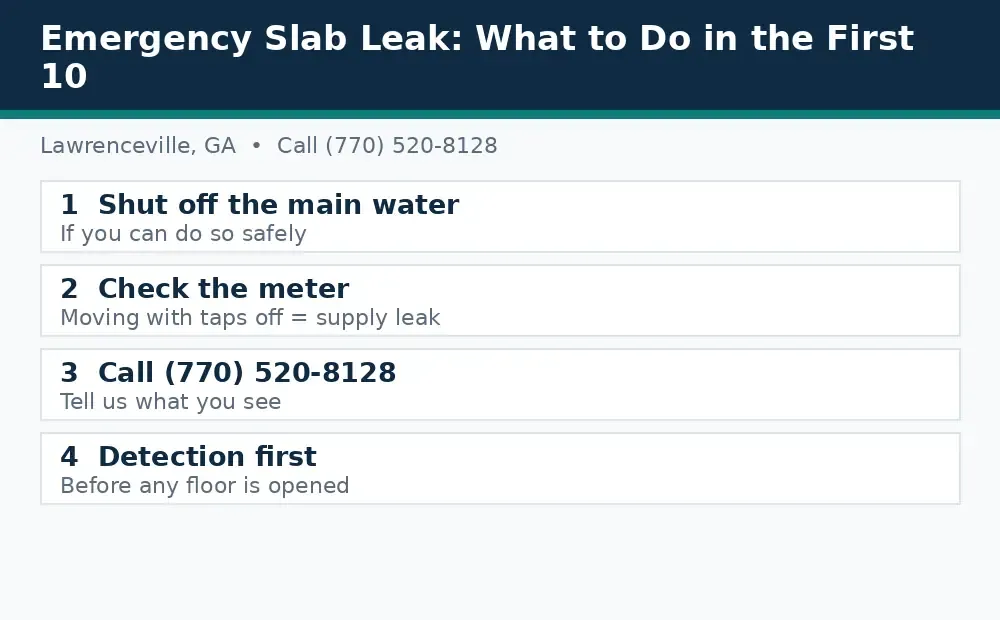
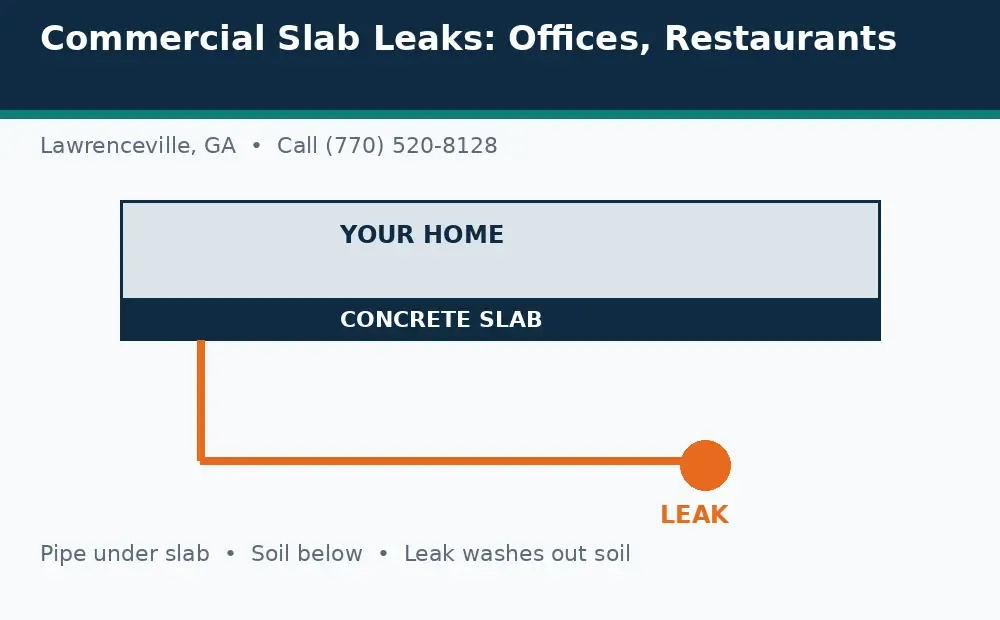
The images on this page are illustrative diagrams, not photos of a specific job at a specific address, and they are not presented as this business's own work. Call us at (770) 520-8128 if you are unsure what you are seeing.
The short answer: a slab leak is the usual suspect, not the only one
Water coming up through the floor of a slab home is alarming, and a leaking pipe under the slab is the most common cause — but it is not the only one, and treating it as a certainty before testing is how homeowners end up repairing the wrong thing. A pressurised supply line under the slab leaks 24 hours a day, so the water keeps coming whether or not anyone is using water, and whether or not it has rained. A drain line under the slab only leaks when water runs through it. A shower pan or toilet seal only leaks after use. Condensation only appears when warm, humid air meets a cool slab. Groundwater only rises after rain. Those patterns are the diagnostic clues, and this guide works through them one at a time, because the pattern, not the puddle, is what identifies the cause.
The first distinction to make is between water from your plumbing and water from outside it. Plumbing water comes from a pipe you own, under pressure or by gravity, and it keeps coming until the pipe is fixed or the water is shut off. Rainwater and groundwater come and go with the weather. The yard leak guide covers water outside the home; this guide covers water that appears inside, on the floor, with no spill above it. If you are seeing water on the floor and nothing was spilled, start with the meter test and a note of the timing — both are explained below — before deciding anything.
Five things that push water up through a floor
The five causes below cover most cases in Lawrenceville slab homes. Read the pattern column first: when the water appears is usually more informative than where it appears, because — as the companion guide on wet spots explains — the place water surfaces is often not the place it started.
| Cause | When it appears | How to tell |
|---|---|---|
| Pressurised supply slab leak | Constantly, day and night, whatever the weather | Meter moves with everything off; patch keeps growing; may be warm if a hot-water line |
| Drain or sewer leak under the slab | After baths, laundry, or flushing; intermittent | Meter does not move; may smell; tracks with water use |
| Fixture seal, shower pan, or toilet | After use of that fixture, near a bathroom or kitchen | Appears after showers or flushes; localised to one fixture's area |
| Condensation on a cool slab | Humid weather; warm days after cool nights | No meter movement; thin film rather than a pool; dries as the slab warms |
| Groundwater or rain | After heavy rain; rises and falls with storms | Near exterior walls or low spots; no meter movement; follows the weather |
A supply slab leak deserves the most attention because it runs constantly and it is the one that erodes soil under the slab while it runs. The how long a leak can go undetected guide explains what that time does. But do not skip the other four: a drain leak under the slab is still a slab leak, and the sewer versus supply guide explains why it needs a camera and a different test rather than a meter reading. A shower pan or wax ring is a far smaller job than a slab repair, and the mimics guide covers the fixtures that most often impersonate a slab leak.
Three checks that separate the causes
Check one is the meter test. Turn off every tap and appliance, then watch the meter dial for 15 to 30 minutes. If it moves, water is escaping from a pressurised line, and a slab leak is the leading suspect. If it does not move, a supply leak is off the table and you are looking at a drain, a seal, condensation, or groundwater. The water meter leak test guide walks through the check, and the meter test post explains how to read the result.
Check two is the timing log. For two or three days, note when the water appears: after a shower, after laundry, after rain, or all the time. A patch that only appears after a shower points at the shower or its drain. A patch that appears after rain points outside the plumbing. A patch that never dries points at a pressurised line. Photograph the patch each time, with the time noted, because a technician can read a surprising amount from a dated series of photos. Check three is the shutoff test: close the main shutoff and see whether the patch stops growing. If it does, the water is coming from your supply; if it keeps growing with the water off, it is coming from a drain, from groundwater, or from water already trapped under the flooring. Do not leave the water off longer than you need to for the test, and turn it back on if anyone in the home needs it.
What not to do while you work it out
Do not mop and forget. A patch that returns after drying is a symptom, not a spill, and every day it returns is another day of water moving under your floor. Do not cut the floor open at the wet patch: the companion guide on why the wet spot is not over the leak explains why the break is often rooms away from the visible water, and a cut in the wrong place is a bill for a hole that needs restoring. Do not assume a dehumidifier fixes it: a dehumidifier dries the air above the floor, not the water still arriving from below, and it can mask the symptom while the leak continues. And do not pour drain cleaner or sealant into a floor drain on a guess: if the cause is a drain break under the slab, chemicals will not reach it and can make the eventual repair harder.
One more caution: do not wait for the patch to get big enough to be sure. A small, returning patch is already sure enough to test. The signs guide lists the other clues to weigh with it — a bill jump, the sound of running water with everything off, a warm patch on the floor — and the symptom checker tool can help you decide how urgent the call is. The published planning ranges for detection are $300-$600, and a detection visit that finds nothing is still useful: it rules out the supply side and points the investigation at drains, seals, or groundwater instead of at the slab.
When floor water is an emergency
Most floor water is a prompt to test and call soon, but some of it is a call-now situation. Pooling water that keeps rising, water near electrical outlets or appliances, flooring that is lifting or buckling, and a meter spinning fast are all same-day calls, because the leak is already doing damage while the discussion waits. A sewer smell with the water is also urgent: it suggests a drain break, and the sewer smell guide explains what to check. The emergency guide covers the first steps in order: call first, then shut off the main if you can do so safely, and keep clear of water near electrics.
If none of those apply, the call is still worth making promptly rather than at the next convenient moment. A supply leak under a slab does not pause while a homeowner watches it, and the difference between a leak caught in its first week and one caught in its second month is measured in soil washed from under the slab, flooring ruined, and drying time afterwards — the cleanup and drying guide explains why drying, not just pipe repair, decides when a room is truly finished. Call, describe the pattern you logged, and let detection decide what the floor is telling you.
What to tell us when you call
When you call, tell us where the water appears, when it appears — constantly, after showers or laundry, or after rain — whether the meter moved with everything off, whether the floor feels warm there, and whether there is any smell. Mention your ZIP code and whether the water is near a bathroom, kitchen, or exterior wall. That short list lets us plan detection around the cause, not just the puddle.
Call (770) 520-8128 and describe your situation in plain words. We will talk through detection first, then a repair plan that fits your home.
Call Us Today
Fast local slab leak detection and repair in Lawrenceville, GA, ZIPs 30043–30046.
Call Us: (770) 520-8128Frequently asked questions
Is water coming up through the floor always a slab leak?
Not always. A supply line under the slab is the most common cause, and it leaks constantly, day and night, whatever the weather. But a drain leak under the slab, a failed shower pan or toilet seal, condensation on a cool slab, and groundwater after heavy rain can all push water up through a floor. The meter test and the timing of the water — constant, after use, or after rain — separate the causes before any floor is opened.
How do I test whether the water is from a slab leak?
Run a water meter test: turn off every tap and appliance, then watch the meter dial for 15 to 30 minutes. If it moves, water is escaping from a pressurised line and a slab leak is the leading suspect. Then log the timing for a few days — after showers, after laundry, after rain, or constantly — and try the shutoff test: if the patch stops growing with the main closed, the water is coming from your supply.
Can rain make water come up through a concrete floor?
Yes. After heavy rain, groundwater can rise and find its way up through cracks, joints, and the gap where the slab meets a wall, especially near exterior walls and low spots in the home. Rainwater follows the weather: it appears after storms and dries between them, and the meter does not move. If your patch only appears after rain, the cause is more likely drainage or groundwater than a pipe, and it is still worth a call to confirm.
Why does the wet patch keep coming back after I dry it?
Because the water is still arriving from below. A spill dries and stays dry; a leak refills the patch as fast as you mop it, because the source — a pipe, a drain, or groundwater — is still feeding it. A returning patch is itself a diagnostic clue: it means the water has a continuing source, and the next step is the meter test and detection, not a bigger mop.
Should I turn off my water if water is coming up through the floor?
If water is pooling, near electrics, or the meter is spinning fast, shut off the main if safe and call — that is a same-day situation. Otherwise, keep the water on for the test, which needs the supply live to show loss, and call to book detection. If the patch stops growing with the main closed, the water is coming from your supply; if it keeps growing, it is coming from a drain, groundwater, or water trapped under the flooring.