 Lawrenceville Slab Leak Detectors
Can a Slab Leak Fix Itself in Lawrenceville, GA?
A slab leak in Lawrenceville, GA, cannot fix itself or stop on its own. A pinhole or crack in a copper or polybutylene line under the slab in ZIPs 30043 and 30046, from Collins Hill to Downtown Lawrenceville, keeps losing pressurised water until the pipe is repaired or bypassed.
What this looks like in a Lawrenceville home

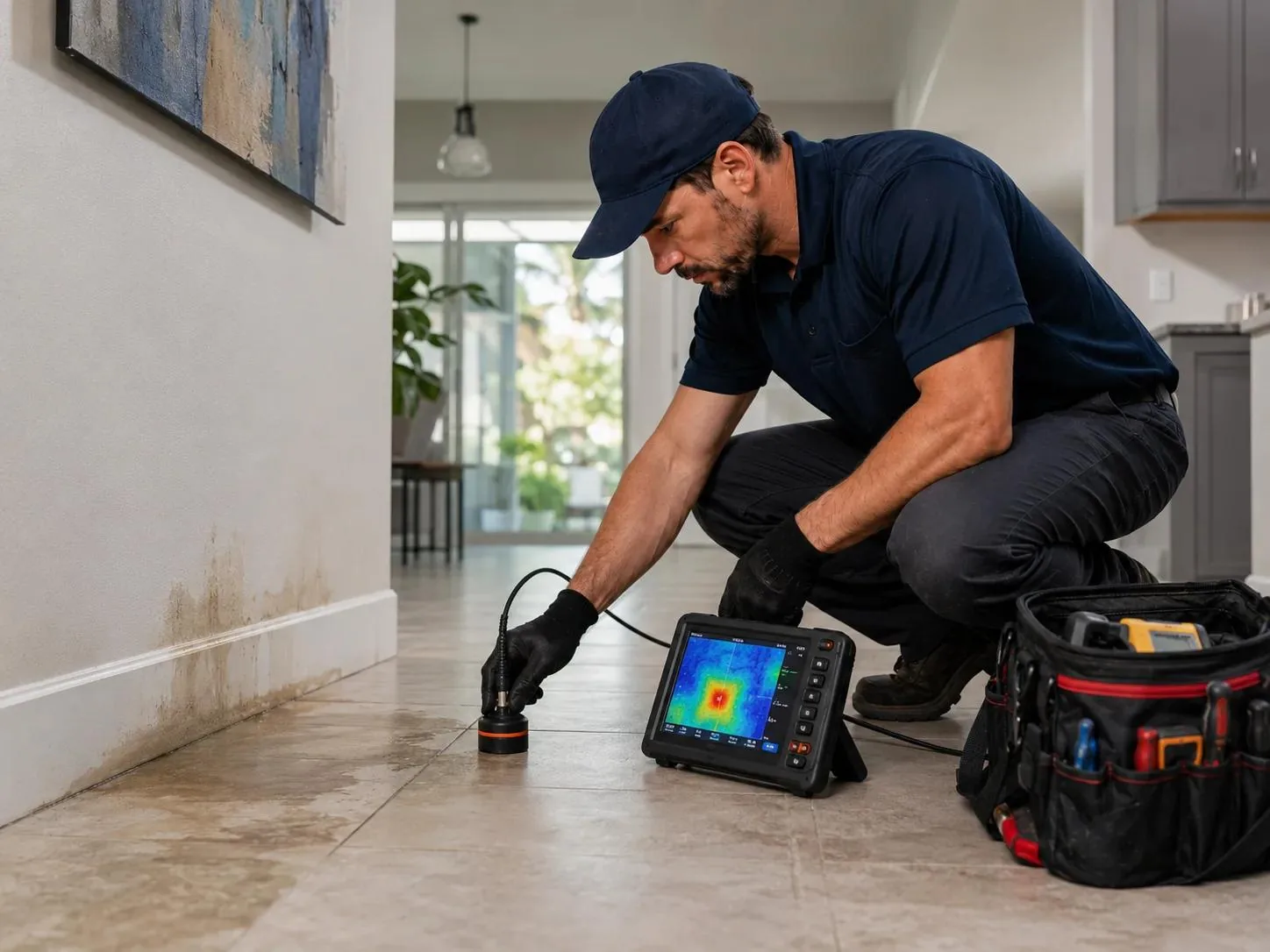
The images on this page are generic illustrations — an acoustic-listening photo and a thermal-imaging photo — not photos of this business's own work or of a specific home. Call us at (770) 520-8128 if you are unsure what you are seeing.
The short answer: no — a slab leak does not fix itself
A slab leak cannot fix itself, and a water leak under a slab does not stop on its own. A slab leak is a break, a pinhole, or a crack in a pressurised water line buried in or under the concrete slab, and none of those close up by themselves. Corrosion does not reverse, a crack does not knit back together, and the water pressure that pushed the water out in the first place keeps working at the same weak spot. The opening usually grows rather than seals, so the leak gets worse over time, not better. The what is a slab leak guide explains what the pipe under your floor actually is, and the copper pinhole guide covers the most common form of the failure: a tiny hole in a copper line that only gets larger as corrosion thins the pipe around it.
This is the question homeowners ask when the signs seem to have gone quiet — the wet patch dried up, the warm spot faded, the sound stopped — and the honest answer matters, because waiting on a leak that cannot heal is the most expensive mistake a slab leak allows. A leak that seems to have stopped has almost always done one of three things: slowed for a while, changed path, or moved somewhere you cannot see. None of those is a repair. The pipe still needs to be found and fixed, or bypassed, before the water loss and the soil loss underneath stop. The published planning range for detection is $300-$600, a planning range only, with a written price following inspection.
Why it looks like the leak stopped
The most common reason a slab leak seems to pause is sediment. A pinhole in a copper line can collect a plug of mineral scale or sediment from the water, and the flow slows or stops for a while. That plug is not a repair. Water pressure and the small vibrations of a running system disturb it, corrosion keeps thinning the copper around the hole, and the plug eventually washes out — often with the hole larger than it was before. The copper pinhole guide covers this in detail: a pinhole that has slowed is still a leak, and it still needs detection to find it and a repair to close it for good.
The second reason is that the water changed path. Water under a slab follows the easiest route through the soil and gravel, and that route shifts as the ground saturates. A wet spot on the floor can fade while the leak keeps running underneath, because the water has found a new way out — a different room, a wall base, the edge of the slab, or down into deeper soil where it never surfaces at all. Georgia's red clay makes this more likely, not less: clay holds water and moves it sideways, so the visible sign can sit several feet from the break, and it can move. The Georgia red clay guide explains how the soil moves water around, and the wet spot guide explains why the water rarely surfaces over the leak itself.
The third reason is use. A leak's signs get quieter when the house uses less water — a household away for a week, a season with less hot water use, a tap that is no longer run as often — without the leak stopping at all. A hot-water leak's warm spot fades when the water heater runs less. A sound you used to hear at night disappears under the noise of the day. None of that means the pipe healed. The how long a slab leak goes undetected guide covers how long a leak can run quietly before anyone notices it, and the running water guide explains how to listen for it when the house is quiet.
What keeps happening while you wait
While a slab leak runs, two things keep going: water loss and soil loss. The water loss shows up on the bill, and it does not stop because the floor dried — the meter keeps turning as long as the pipe is open. The how much water a slab leak wastes guide covers what a running leak means for the bill over time. The soil loss is the quieter problem: water escaping under the slab washes fine soil out from beneath the concrete, and the slab above it settles or cracks. The damage shows up later — a crack in the floor, a settled section, a warped board, a door that starts sticking — and by then the leak has been running for weeks. The foundation damage guide covers what happens when soil is washed from under concrete over time.
Moisture is the third cost of waiting. Water that soaks flooring, baseboards, and the soil under the slab creates the damp conditions mould needs, and it keeps doing so for as long as the leak runs. Drying the floor does not dry the soil underneath, and a leak that pauses for a week does not undo the moisture it already put into the slab. The mould and water damage guide covers what prolonged moisture does to a home, and the water damage cleanup guide covers what drying involves once the leak is fixed. There is no safe waiting period for a slab leak: a small leak can run for weeks with no visible damage while the soil washout and the bill both grow.
The checks that settle it
The meter test is the check that answers the question. Turn off every tap and appliance, including irrigation and the ice maker, and watch the meter dial for 15 to 30 minutes. A dial that moves means water is escaping from a pressurised line, whatever the floor looks like. A dial that holds still rules out a supply leak — the water you saw was rain, runoff, or a drain. The meter test post explains how to read the result, and the water meter leak test guide walks through the check step by step.
Two more checks back it up. The shut-off test narrows the location: with everything off, watch the meter, then shut off the main valve where the line enters the house and watch again. If the meter stops, the leak is inside the house — under the slab or in a wall. If it keeps moving, the leak is outside, in the service line. And the listening check costs nothing: stand near the line's route with the house quiet and listen for a faint hiss or the sound of running water. The symptom checker lets you weigh the signs together before you call, and the acoustic and thermal detection guide explains how a technician follows the sound and the heat to the exact spot.
Repair routes once the leak is found
Once detection has marked the spot, the repair depends on the pipe's condition. A single leak in otherwise healthy pipe is usually a spot repair: a small, targeted opening in the slab at the marked location, the pipe fixed, and the floor put back. A line that has failed before, or pipe worn along its length, may suit a reroute, where a new line runs around the slab and bypasses the bad section, or a lining, where a new pipe is formed inside the old one without breaking the floor — and whether a line can be lined is decided by camera inspection, because a collapsed or offset pipe does not qualify. A home with repeated leaks may need whole-home repiping. The spot repair versus reroute versus repipe guide compares the routes, and the fix without breaking the floor guide covers the options that avoid opening a slab.
The published planning ranges are detection $300-$600, spot repair $500-$4,000, lining $800-$3,000, reroute $1,500-$5,500, and repipe $4,500-$15,000+ — the repair cost guide carries the full table, and the repair cost estimator gives a planning figure from those ranges once detection has found the break. The written price comes after inspection, and the questions before approving a repair guide covers what to ask before any work starts. The slab leak detection service page covers the detection step itself, and the concrete and floor restoration service page covers putting the floor back after a slab opening.
What to tell us when you call
When you call, tell us what you saw and whether it changed — the wet patch that dried up, the warm spot that faded, the bill that stayed high — and what the meter did with everything off. Mention your ZIP code and which rooms the signs touched. That short list lets us plan detection around your home, not around a guess.
Call (770) 520-8128 and describe your situation in plain words. We will talk through detection first, then a repair plan that fits your home.
Call Us Today
Fast local slab leak detection and repair in Lawrenceville, GA, ZIPs 30043–30046.
Call Now to Speak to a SpecialistFrequently asked questions
Can a slab leak fix itself?
No. A slab leak is a break, a pinhole, or a crack in a pressurised pipe under the concrete slab, and none of those close on their own. Corrosion does not reverse, and water pressure keeps working at the weak spot, so the opening usually grows rather than seals. A leak that seems to have stopped has almost always changed path or slowed, not healed — the pipe still needs repair or bypassing.
Why did the wet spot disappear — did the leak stop?
Usually not. Water under a slab follows the easiest path through the soil, and that path changes as the ground saturates, so a wet spot can move to another room or fade from the floor while the leak keeps running underneath. A drop in water use can also make the signs quieter without stopping the loss. The meter test settles it: turn off every tap and appliance and watch the dial — movement means water is still escaping.
Can a pinhole leak seal itself with minerals?
A pinhole can slow for a while if sediment or mineral scale settles in the hole, which is the most common reason a leak seems to pause. But the scale is not a repair: pressure and vibration disturb it, corrosion keeps thinning the copper around it, and the hole reopens — often larger than before. A pinhole that has slowed is still a leak, and it still needs detection to find it and a repair to close it for good.
How long can a slab leak run before it causes damage?
There is no safe waiting period. A small leak can run for weeks with no visible damage while it washes soil from under the slab, and the damage shows up later as a crack, a settled floor, or a warped board. The bill also keeps climbing the whole time. If you suspect a leak, run the meter test and call for detection — waiting only adds water loss and soil loss to the repair.
What should I do first if I think a slab leak stopped on its own?
Run the meter test before you relax. Turn off every tap, appliance, and irrigation line, then watch the meter dial for 15 to 30 minutes. A dial that moves means the leak is still running, whatever the floor looks like. If the dial holds still, keep watching the bill and the floor for a few weeks — and call (770) 520-8128 if the signs return, because a leak that pauses can reopen.