 Lawrenceville Slab Leak Detectors
Can a Slab Leak Cause Foundation Damage in Lawrenceville?
Yes — a slab leak in Lawrenceville, GA, can damage your foundation. Water escaping under the slab washes away red clay soil in ZIPs 30043 and 30046, from Downtown to Collins Hill, leaving voids that let the slab settle or heave — detection finds the leak before the damage spreads.
What this looks like in a Lawrenceville home
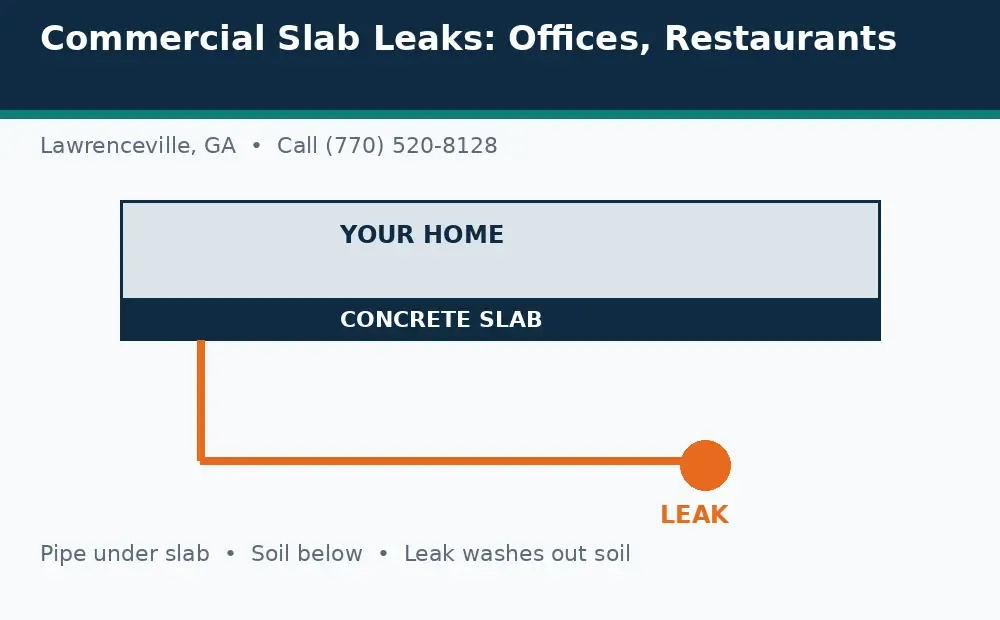
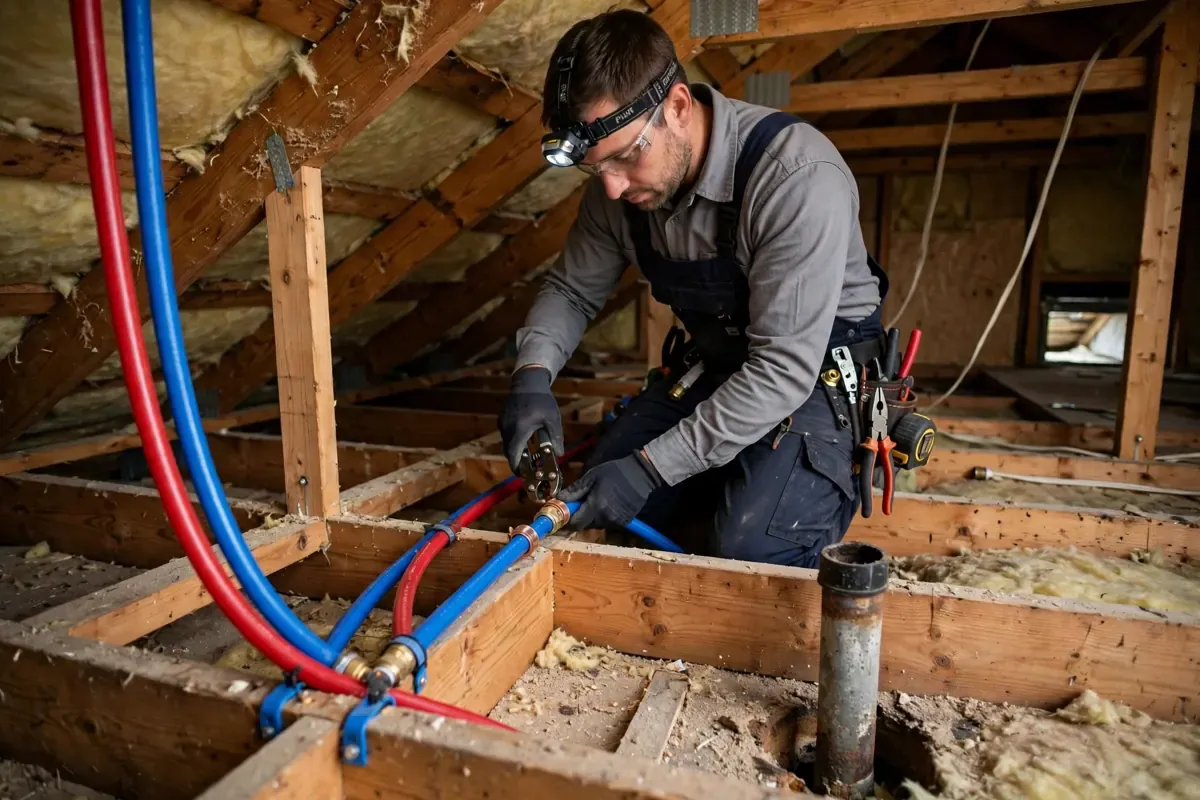
The images on this page are illustrative diagrams, not photos of a specific job at a specific address, and they are not presented as this business's own work. Call us at (770) 520-8128 if you are unsure what you are seeing.
The short answer: yes — and the damage starts where you cannot see it
A slab leak can damage your foundation, and the damage starts under the slab, not on top of it. Your home sits on a concrete slab poured over soil and fill, and the pipes that feed your kitchen, bathrooms, and laundry run under that slab. When one of those pipes cracks, corrodes, or splits at a joint, water escapes into the ground beneath the concrete. The concrete itself is not leaking; the pipe under it is. But the water does not just sit there. It washes soil away, it soaks the clay until the clay swells, and it leaves empty space under the slab where solid ground used to be. Over time, the slab loses support in one place, and that is when the foundation damage shows — cracks in walls and floors, doors that stick, a floor that slopes or lifts. The slab leak versus foundation problem guide explains how to tell a leak from settlement that has nothing to do with plumbing.
The important point is the order of events. A slab leak is a plumbing problem first and a foundation problem second. The foundation damage is the consequence, not the cause. That is why the right first step is always detection, not a foundation contractor. A foundation company can lift or stabilise a slab, but if the pipe under it is still leaking, the water keeps washing soil away and the problem comes back. Fix the leak, stop the water, and then deal with whatever the slab needs.
How a leak damages a foundation, step by step
The damage follows a sequence, and it helps to know it, because each stage looks different from inside the house. First, water escapes from the pipe and soaks the soil and fill under the slab. A supply-line leak runs 24 hours a day, whether anyone is using water or not, so the soaking never stops while the leak runs. A drain leak only runs when a fixture drains, so it soaks in bursts — after showers, laundry, or flushing — and it can take longer to show. Second, the moving water carries fine soil away with it. The ground under a slab is not solid rock; it is soil and fill, and a steady leak erodes it grain by grain, leaving a void — an empty pocket under the concrete where support used to be. The Georgia red clay soil guide explains the soil under Lawrenceville slabs.
Third, the slab responds to the missing support. Georgia red clay makes the response worse in both directions. Dry clay shrinks; wet clay swells. A leak that soaks one patch of clay under the slab makes that patch swell and push the slab up — that is heave, and it lifts the floor in the middle of the house. A leak that washes soil away leaves a void, and the slab over the void drops — that is settlement, and it slopes the floor toward the leak. The same leak can cause one or the other depending on the soil, the leak size, and how long it has been running, and the two can look alike from inside: doors stick, drywall cracks, and floors slope either way. The difference is the direction of the slope. A floor that rises toward the middle, over the leak, points at heave. A floor that drops toward one area points at settlement.
Fourth, the movement itself does the visible damage. A slab that settles unevenly pulls the walls and floors with it, opening cracks in drywall, separating baseboards from walls, and cracking tile along a ridge. A slab that heaves pushes up from below, lifting flooring and cracking tile in a line across several tiles. Neither happens overnight. A pinhole leak weeps for weeks before the soil moves enough to show, which is why a bill jump with no visible damage is still worth a meter test the same day. There is no fixed timetable for foundation damage — it depends on the size of the leak, the soil, and how long the water has been running — so do not wait for a number of weeks to pass before acting. The leak is the clock.
The signs the foundation is being affected
The signs of foundation damage from a slab leak are the same signs as foundation movement from any cause, which is why they need detection to sort out. Look for cracks that are new or growing — hairline cracks in drywall above doors and windows, cracks in a tile floor that run in a line across several tiles, or a crack in the slab itself visible at the edge of the garage or patio. Look for doors and windows that suddenly stick or will not latch, especially interior doors that used to close cleanly. Look for a floor that slopes, a gap opening between a baseboard and the wall, or a section of flooring that has lifted or buckled. The signs guide lists all ten slab-leak signs in one place.
What separates a leak-driven foundation problem from plain settlement is what comes with it. Settlement from drying clay alone does not raise your water bill, warm your floor, or make the meter move with everything off. A leak does. So weigh the signs together: a sticking door plus a bill jump is a meter test the same day; a crack plus a warm patch on the floor is detection, not a wait-and-see. A hot-water leak warms the floor above the break, which is the one symptom that locates itself — the warm spot guide explains why heat is the clue that points at the leak. A cold-water leak gives off no heat, so it produces no warm spot at all. If water is pooling, flooring is lifting, or the meter is spinning fast, shut off the main if you can do so safely and call — the emergency guide covers the first steps in order.
Plumber first, foundation company second
The order matters, and getting it wrong is the most expensive mistake in this whole topic. A foundation contractor who wants to drive piers under a slab before the leak is found and stopped is treating the symptom while the cause keeps running. Piers anchor the slab, but they do nothing about the water washing soil away underneath it. The leak keeps eroding the ground, the slab keeps moving, and the piers end up holding a slab that is still being undermined. The right sequence is detection first, repair second, and foundation work only after the water is stopped. Detection locates the break — meter and pressure tests confirm the loss and narrow it to one run, acoustic listening follows the sound through the slab, thermal imaging maps warm areas for hot-water leaks, and a camera inspects drain lines from inside.
Once the leak is located and repaired, the foundation question becomes much simpler. A slab that has settled slightly may need no foundation work at all once the water stops — the soil dries, the movement stops, and the cracks stop growing. A slab with real damage may still need a foundation specialist, but that specialist can now work on dry, stable ground with a known cause, instead of guessing at a moving target. That is also the point to ask the questions that decide the repair route: where is the break, what condition is the pipe in, and has it failed before. A single leak in otherwise healthy pipe is usually a spot repair. A line that has failed before, or pipe worn along its length, may suit a reroute or a lining. Repeated failures point toward a whole-home repipe, and the recurring leaks guide explains when spot repair stops making sense. The spot repair versus reroute versus repipe guide compares the routes, and the questions before approving a repair guide lists what to ask before any work starts.
What repair looks like once the leak is stopped
Repair depends on where the break is and what condition the pipe is in, not on how dramatic the foundation signs look. The published planning ranges are: detection $300-$600, spot repair $500-$4,000, lining $800-$3,000, reroute $1,500-$5,500, repipe $4,500-$15,000+ — the repair cost guide carries the full table, and the repair cost estimator gives a planning figure from those ranges once detection has found the break. Those are planning ranges only, never a quote, and never a price for your home until it has been inspected. Whatever route is chosen, the concrete and flooring need putting back properly, and the concrete and floor restoration service page covers what that step includes.
One more thing to do while the repair is being planned: keep the evidence. Photograph the cracks, the flooring, the baseboards, and the meter reading, with dates, and keep the water bills that show the jump. A detection report that locates the leak, identifies it as hot or cold, supply or drain, and records the meter and pressure results is the document that supports any insurance conversation about the damage — the damage side is an insurance question, and the insurance claim process guide covers how a claim is documented, while the homeowners insurance guide covers what insurance usually does and does not cover. Do not let a running leak wait while paperwork moves: a supply leak runs 24 hours a day, and the water does not pause for a claim decision. Detection first, repair second, foundation work only after the water stops — that order is what keeps a plumbing problem from becoming a foundation rebuild.
What to tell us when you call
When you call, tell us what you have noticed — the cracks, a sticking door, a sloping floor, a bill jump — and what the meter did with everything off. Mention your ZIP code, which rooms are affected, and whether the water is pooling anywhere. That short list lets us plan detection around your home, not around a guess.
Call (770) 520-8128 and describe your situation in plain words. We will talk through detection first, then a repair plan that fits your home.
Call Us Today
Fast local slab leak detection and repair in Lawrenceville, GA, ZIPs 30043–30046.
Call Now to Speak to a SpecialistFrequently asked questions
Can a slab leak damage my foundation?
Yes. Water escaping under the slab washes fine soil away and soaks the clay, leaving voids where support used to be. The slab then settles over the void or heaves where wet clay swells, and that movement cracks walls and floors, sticks doors, and lifts flooring. The damage is the consequence of the leak, not the cause — which is why detection and repair come before any foundation work.
How long does it take for a slab leak to damage a foundation?
There is no fixed timetable, because it depends on the size of the leak, the soil, and how long the water has been running. A pinhole leak can weep for weeks before the soil moves enough to show, while a larger break can move soil faster. Do not wait for a set number of weeks to pass — a bill jump or a moving meter is the signal to test and detect now, before the movement starts.
Can a slab leak make my house settle or lift?
Both. A leak that washes soil away leaves a void, and the slab over the void drops — that is settlement, and the floor slopes toward the leak. A leak that soaks Georgia red clay makes the clay swell and push the slab up — that is heave, and the floor rises toward the middle, over the leak. The same leak can cause either one, and both show as sticking doors, cracks, and sloping floors.
Should I call a plumber or a foundation company first?
A plumber — detection first. A foundation company can lift or stabilise a slab, but if the pipe under it is still leaking, the water keeps washing soil away and the problem comes back. Detection locates the break, repair stops the water, and only then does foundation work make sense, on dry, stable ground with a known cause instead of a moving target.
Does homeowners insurance cover foundation damage from a slab leak?
That is an insurance question, and it depends on your policy, not on the leak. In general, insurance covers sudden and accidental damage, while slow, long-running leaks and the pipe itself are often treated differently — and foundation work is usually a separate question from the water damage. Keep a detection report, photographs, and bills, and ask your insurer what your policy covers before assuming anything.