 Lawrenceville Slab Leak Detectors
Water Leak Under the Driveway in Lawrenceville, GA
A water leak under the driveway in Lawrenceville, GA, rarely surfaces where the pipe broke. A wet patch on the concrete, sinking pavers, and a spinning meter in ZIPs 30043 and 30044, from Collins Hill to Downtown Lawrenceville, are the signs to check before anyone digs.
What this looks like in a Lawrenceville home
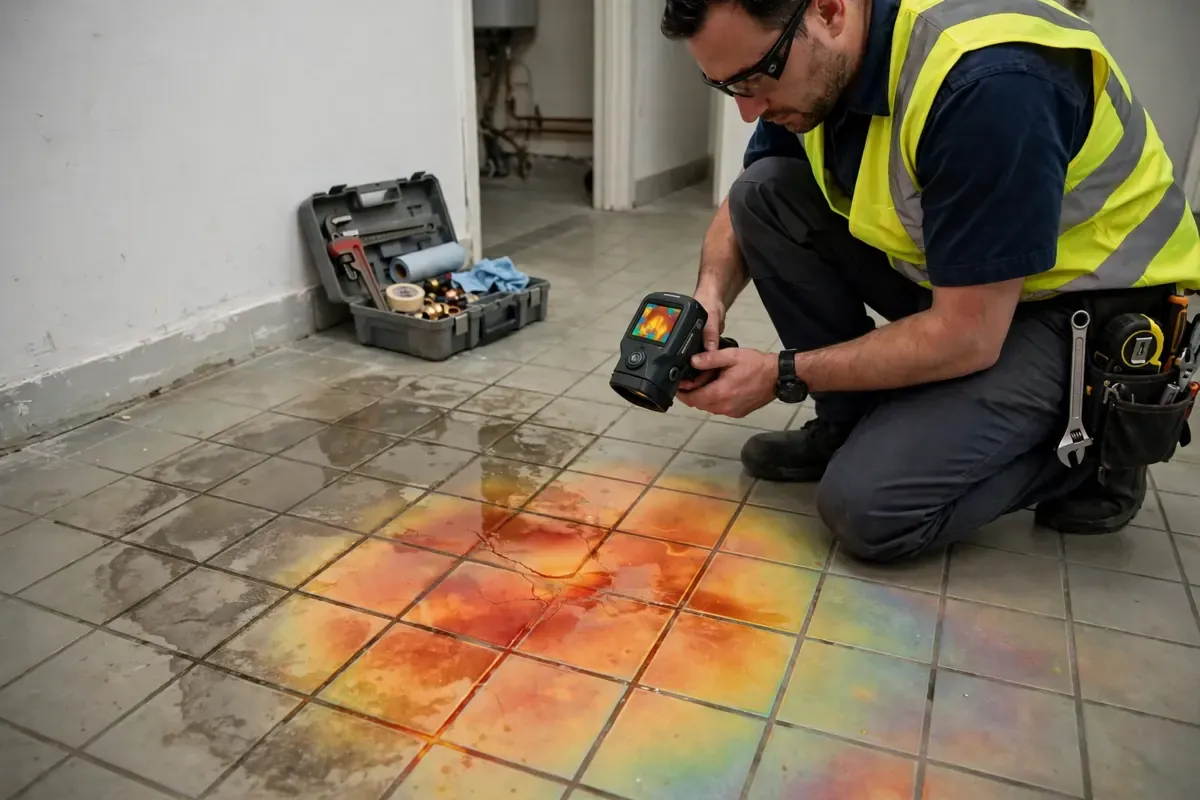
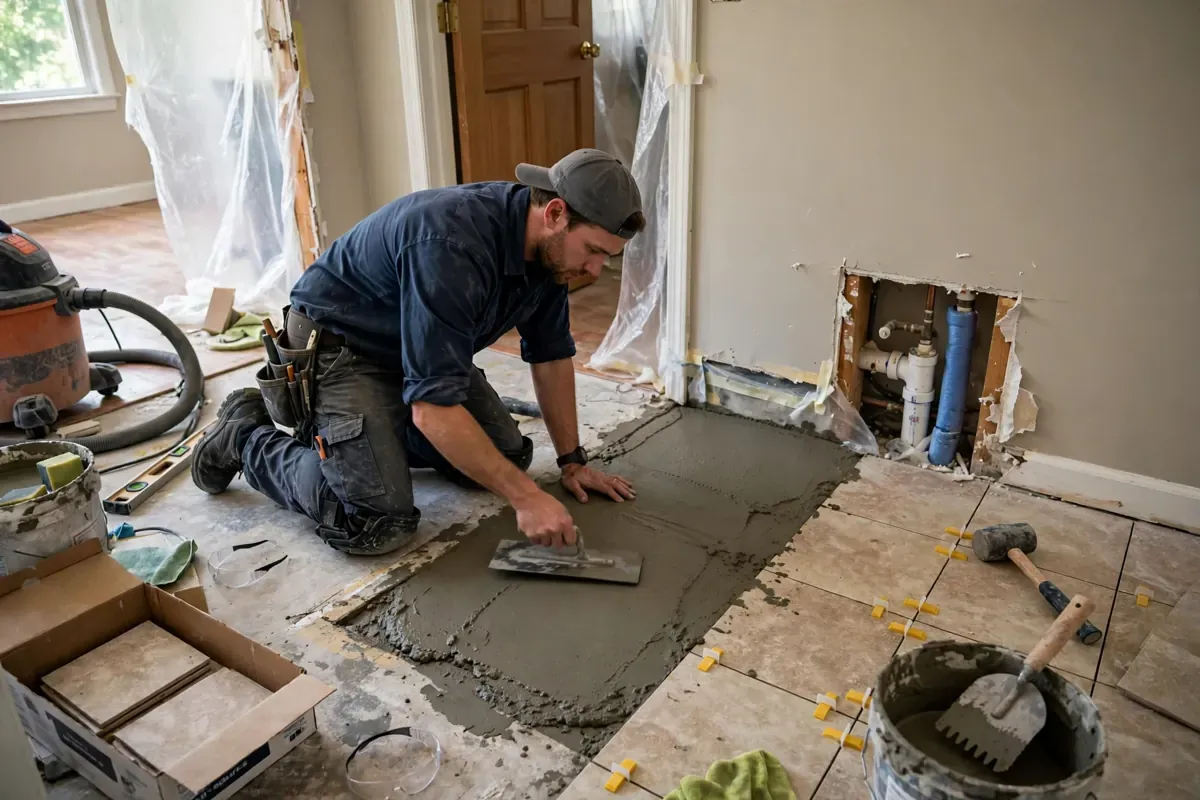
The images on this page are generic illustrations — a thermal-imaging photo and a concrete-finishing photo — not photos of this business's own work or of a specific home. Call us at (770) 520-8128 if you are unsure what you are seeing.
The short answer: the wet patch is rarely over the break
A water leak under the driveway in Lawrenceville rarely surfaces where the pipe broke. The supply line from the meter to the house often runs under the driveway, and water escaping from it travels through Georgia's red clay until it finds the easiest way up — a joint in the concrete, the edge of the driveway, or a low spot in the yard beside it. So the puddle you see may be several feet from the break, and the break may sit under solid concrete that looks completely dry. The main water line break guide covers the same line's yard signs; this guide covers what happens when that line runs under your driveway instead of your lawn.
The combination that points under the driveway is a wet patch that returns in dry weather plus a meter that keeps moving with everything off. Either sign alone has innocent explanations — a sprinkler, a heavy rain, a neighbour's runoff — but the two together mean pressurised water is escaping somewhere on your side of the meter, and the driveway is the first place to suspect when the line runs beneath it. Detection comes before any digging, because digging on a guess tears up concrete and often misses the break anyway. The published planning range for detection is $300-$600, a planning range only, with a written price following inspection.
Why the driveway is where a leak shows
In most Lawrenceville homes the water service line runs from the meter at the street to the house in the shortest practical route, and for many homes that route crosses the driveway. The line is buried underground, and the driveway concrete sits directly over it, so a leak has no lawn to surface through — it spreads sideways through the clay until it finds a joint, a crack, or the edge of the slab. That is why a driveway leak can run for weeks with no visible water at all, and why the first sign is often the water bill rather than a puddle. The Georgia red clay guide explains how clay holds water and moves it sideways — the same behaviour that makes a slab leak surface rooms away from the break.
Driveways in Lawrenceville also carry a second risk: the concrete itself. A leak washing soil from under a driveway leaves a void, and the slab above it settles or cracks. A crack that appears in a driveway that has been stable for years, a section that has sunk slightly, or pavers that have shifted are all worth reading as possible leak signs, not just as age. The wet spot guide explains why water rarely surfaces over the leak, and the foundation damage guide covers what happens when soil is washed from under concrete over time.
The signs, in the order you will usually notice them
The bill usually speaks first. A water bill that jumps with no change in use — no guests, no new irrigation, no filled pool — is the most reliable early sign of a pressurised leak, and the high water bill guide covers the rule-outs. The meter is the check that confirms it: turn off every tap and appliance, including irrigation and the ice maker, and watch the dial for 15 to 30 minutes. A dial that moves means water is escaping from a pressurised line. The water meter leak test guide walks through the check step by step.
On the driveway itself, look for a wet patch that returns after dry days, water pooling at the driveway's low edge, or a dark stain that never fully dries. Look at the edges: a strip of grass beside the driveway that is greener and faster-growing than the rest of the lawn, or soil that stays soft underfoot, means water is reaching the surface there. Look at the concrete: a new crack, a section that has settled, pavers that have shifted or sunk, or a hollow sound when you tap the slab. And listen: stand near the line's route with the house quiet and listen for a faint hiss or the sound of running water — the running water guide explains how to listen and what the sound means.
One sign can have an innocent cause, and a driveway collects innocent water — rain, sprinkler overspray, a neighbour's downspout, condensation from a car. What separates a leak from weather is persistence: water that returns in a dry spell, a patch that stays wet when the rest of the driveway is dry, a bill that stays high across two billing periods. The yard leak guide covers the same reading for lawns, and the slab leak mimics guide covers the lookalikes that share the same wet patch.
A slab leak, or a service-line leak — how to tell
The question that matters is whether the leak is under the house slab or in the service line between the meter and the house, because the repair route is different. The meter test tells you water is being lost; the shut-off test tells you where. With everything off, watch the meter, then shut off the main valve where the line enters the house and watch again. If the meter stops, the leak is inside the house — under the slab or in a wall. If it keeps moving, the leak is outside, in the service line — the line that runs under the driveway. The meter test post explains how to read the result.
Who to call follows from that answer. Water in Lawrenceville now comes from Gwinnett County Water Resources, which took over the city's water distribution system on December 1, 2020. A water-main issue is the county's job; everything past the meter is a plumber's job. The utilities guide covers who to call for each kind of leak. A sewer line under the driveway behaves differently again — a smell, slow drains, or a soggy patch with no bill jump — and the sewer versus supply guide explains how to tell a drain leak from a supply leak. Do not dig to find out: the line's depth and route are not visible from the surface, and a shovel can turn a leak into a break.
How a leak under concrete is found without digging it up
Detection under a driveway starts the same way it starts under a slab: confirm the loss, narrow the line, then pinpoint. Acoustic listening follows the sound of escaping water through the concrete — a pressurised leak makes a distinct hiss that sensitive equipment can hear through a driveway slab — and the acoustic and thermal detection guide explains how the two methods combine. Thermal imaging maps warm areas for a hot-water leak, but it is less useful outdoors: sun warms a driveway unevenly through the day, so a thermal reading on outdoor concrete needs to be weighed against the time of day and the weather. Line tracing follows the pipe's route first, so the search starts on the line rather than on a guess.
For a stubborn leak that acoustic listening cannot pin down, a technician may use tracer gas — a harmless gas pumped into the line that escapes at the leak point, where a detector picks it up. Tracer gas is mentioned here only as a method a technician may use, not as a service on its own. Whatever the method, the result is the same: a marked spot on the concrete, not a trench. The detection methods guide explains how the methods combine, and the symptom checker lets you weigh the signs together before you call.
Repair routes — and what happens to the driveway
Whether concrete has to come up depends on the repair route. A single leak in otherwise healthy pipe is usually a spot repair: a small, targeted opening in the driveway at the marked location, the pipe fixed, and the concrete put back. That opening takes out only the section directly over the break. A line that has failed before, or pipe worn along its length, may suit a reroute, where a new line runs around the driveway — through the yard or along the house — and bypasses the bad under-driveway section, or a lining, where a new pipe is formed inside the old one without breaking the concrete — both of which can avoid opening the driveway at all. Whether a line can be lined is decided by camera inspection, and a collapsed or offset pipe does not qualify. The spot repair versus reroute versus repipe guide compares the routes, and the fix without breaking the floor guide covers the options that avoid opening a slab.
The published planning ranges are detection $300-$600, spot repair $500-$4,000, lining $800-$3,000, reroute $1,500-$5,500 — the repair cost guide carries the full table, and the repair cost estimator gives a planning figure from those ranges once detection has found the break. A permit may be needed depending on the scope; the technician confirms what applies after inspection. Whatever route is chosen, the concrete needs putting back properly, and the concrete and floor restoration service page covers what that step includes — including matching the existing driveway finish, which depends on the age and type of the concrete, and making sure the ground beneath it is compacted so the repair does not settle later.
What to tell us when you call
When you call, tell us where the wet patch is and whether it returns in dry weather, what the meter did with everything off, and whether the driveway concrete has cracked or settled. Mention your ZIP code and whether the line runs under the driveway or the lawn. That short list lets us plan detection around your driveway, not around a guess.
Call (770) 520-8128 and describe your situation in plain words. We will talk through detection first, then a repair plan that fits your home.
Call Us Today
Fast local slab leak detection and repair in Lawrenceville, GA, ZIPs 30043–30046.
Call Now to Speak to a SpecialistFrequently asked questions
How do I know if the water on my driveway is a leak?
Dry the patch completely and watch it through a dry spell. Water that returns with no rain, no sprinkler, and no car washing points at a leak, and the meter test settles it: turn off every tap and appliance and watch the dial for 15 to 30 minutes. A moving dial means a pressurised line is leaking. A dial that never moves rules out a supply leak — the water is rain, runoff, or a drain.
Can a leak under the driveway damage my foundation?
Yes, if it runs. Water escaping under a driveway washes soil from beneath the concrete, and the slab above it settles or cracks. The same water can travel through the clay toward the house slab, where it undermines the soil the foundation rests on. A leak that has been running for weeks deserves detection promptly, not because the house will fail tomorrow, but because the soil loss and the bill both grow while it runs.
Does a driveway leak mean the whole driveway has to come up?
No. A spot repair opens only the section directly over the marked break. A reroute or a lining can avoid opening the driveway altogether, running a new line around it or forming a new pipe inside the old one. The concrete that is opened is put back as part of the job, and matching the existing finish depends on the age and type of the concrete.
Should I call the water company or a leak detection company first?
Water in Lawrenceville comes from Gwinnett County Water Resources, which took over the city's water distribution system on December 1, 2020. A water-main issue is the county's job; everything past the meter is a plumber's job. Run the meter test first: if the dial moves with everything off, the loss is on your side of the meter and detection is the next step. If you are unsure, call and describe what you see.
How much does it cost to find and fix a leak under a driveway?
The published planning range for detection is $300-$600, a planning range only. Spot repair is $500-$4,000, lining $800-$3,000, and reroute $1,500-$5,500 — the route depends on what detection finds and whether the pipe can be lined. The written price comes after inspection, and the driveway restoration depends on the size of the opening and the finish to match.