 Lawrenceville Slab Leak Detectors
Slab Leak Under Carpet in Lawrenceville, GA?
A slab leak under carpet in Lawrenceville shows as a damp patch near Sugarloaf or Collins Hill in ZIP 30044, with a warm spot, a musty smell, or a climbing water bill. The pad soaks up water first, so the carpet tells on the pipe below.
What this looks like in a Lawrenceville home
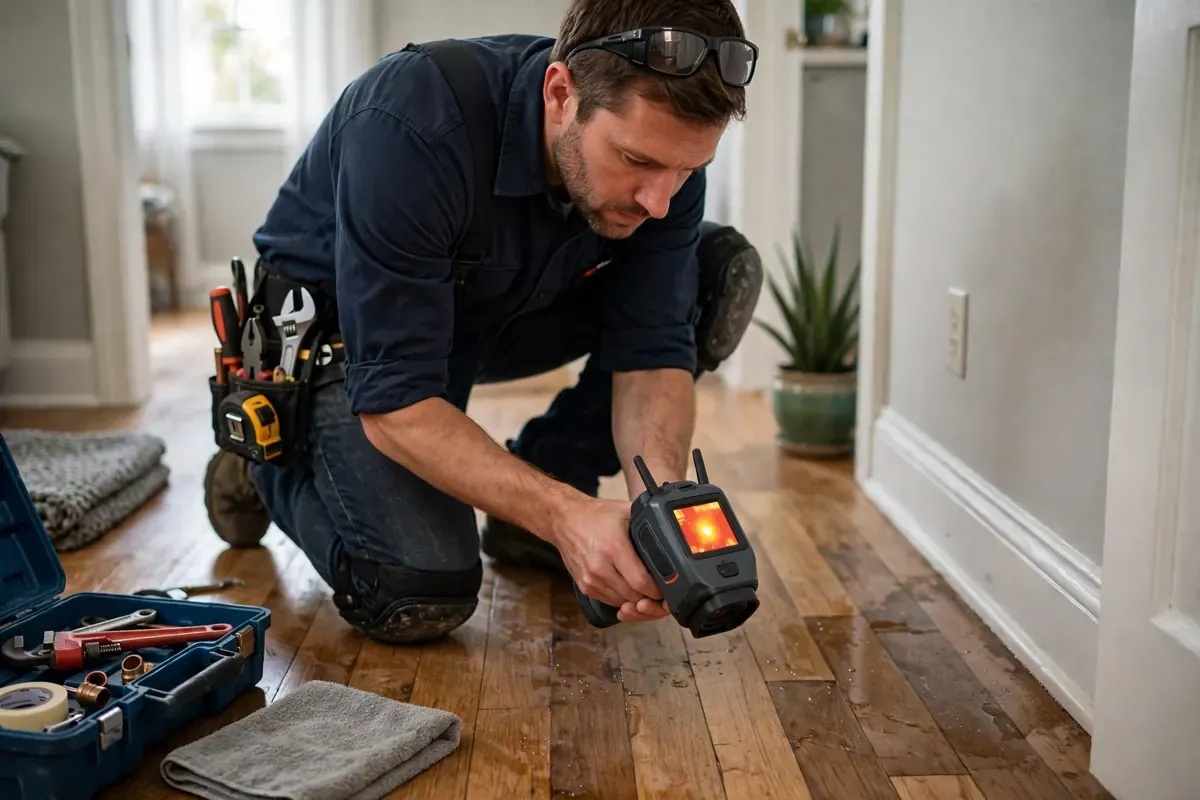
The images on this page are generic photos and diagrams of leak detection equipment in use, not photos of this business's own work or of a specific home. Call us at (770) 520-8128 if you are unsure what you are seeing.
How water from under the slab reaches your carpet
A slab leak is a pressurized water line failing under your concrete foundation, and carpet shows it early, because carpet is built to absorb. Concrete looks solid, but it is porous enough to pass moisture upward through cracks and joints, and the pad is the first absorbent layer the water meets. The pad soaks it up and holds it, and the carpet above it stays damp long after a spill would have dried. That is the pattern that separates a slab leak from a spill: a spill wets the carpet from above and dries from the top, while a slab leak wets the pad from below and keeps wetting it, because the pipe keeps leaking. The damp patch is often not directly over the leak, either. Water spreads along the slab before it finds a crack to rise through, and the pad wicks it sideways, so the wet spot may sit a few feet from the broken pipe. The wet spot guide explains why the patch grows beyond the leak, and the Georgia red clay guide explains the ground underneath: the clay under most Lawrenceville slabs swells when wet and shrinks when dry, so a leak that runs for weeks keeps the ground moving as well as the floor wet. A hot-water line leak adds one more tell, a patch of carpet that feels warm under bare feet, while a cold-water leak gives you dampness with no warmth. Either way, the carpet is not the problem — it is the warning.
Reading the carpet: the signs that point under the slab
Carpet hides a leak longer than a hard floor does, but it also gives you signs a hard floor never would, if you know what to feel and smell for. Start with a damp patch that keeps coming back. Press a dry paper towel firmly onto the carpet in the suspect area and hold it for a minute; if it comes away wet, and it comes away wet again tomorrow after the carpet has had a day to dry, the water is being fed from below. A spill dries and stays dry. Next, walk the room barefoot first thing in the morning and feel for a patch that is warmer than the carpet around it, which is the hot-water tell, or for a patch that feels cooler and damper than the rest, which is the cold-water version. Then get down to floor level and smell: a musty smell at the base of the wall or along the tack strip is often the first thing people notice, sometimes days before the carpet feels wet, because the pad starts to smell before the fibres do. Look for a dark line along the baseboard, where the water has stained the edge of the carpet, and for an area where the carpet feels spongy underfoot, as if the pad underneath has gone soft. The musty smell and damp floors guide covers the smell in full, and the warm spot guide covers the patch that belongs to hot-water leaks specifically. Each floor tells the story differently. Hardwood cups and crowns, which the hardwood floor guide covers, and tile hides the moisture longest and shows it as loose grout and hollow-sounding tiles, which the tile floor guide covers. Carpet is the early warning of the three: it shows the water first, but it hides where the water came from, so the signs need the checks below before anyone lifts the flooring. One sign on its own is a reason to test, not a diagnosis, and two or three together, especially with a moving meter, are a strong reason to call.
Checks you can do before you call
Walk the floor barefoot first, then press a dry paper towel into the damp area, and repeat the press test the next day. If it returns, lift a corner of the carpet at the edge of the room and read what is underneath. Wet concrete plus wet pad means the water came from below, which points at the slab. Wet pad over dry concrete means it came from above or the side, and the slab is not the source. Then run the meter test, which is the check that matters most: turn off every tap and appliance, watch the meter dial, and if it moves with nothing running, water is leaving the system somewhere. The water meter leak test guide walks through it step by step, and the slab leak symptom checker runs through the rest of the signs. The shut-off test is the second check: if you hear water moving under the floor, close the main valve, and if the sound stops, you are hearing a pressurized line. The shut-off guide shows where the main valve usually sits in a Lawrenceville home. Rule out the easy causes before you call: a spill that was blotted but never fully dried, an air-conditioning condensate line dripping into a wall, a failed toilet wax ring, and rain or groundwater at the slab edge after a storm. Each of those dries between episodes. A slab leak does not dry. The slab leak mimics guide covers the look-alikes in full. Do not pull up the carpet across the room, and do not shampoo it, until the source is found. Shampooing drives water deeper into a pad that is already saturated. Photograph the damp patch and write down the meter reading before you call.
Can the carpet and pad be saved?
Once a slab leak has soaked the pad, the honest answer is that the pad is usually lost and the carpet is sometimes saved, and the deciding factor is how wet each layer is and how fast it dries. Carpet padding, once saturated, usually cannot be dried back to a sound, odour-free state, and it is normally removed rather than dried in place, as the water damage cleanup and drying guide states. The carpet itself stands a better chance if the water was clean supply water and the wetting was caught early: it can be lifted, dried, and re-laid over new pad once the slab is dry. If the water sat for days, or came from a drain, the carpet is far less likely to be worth keeping. While the pad stays wet it also creates the conditions for mold. Constant moisture under flooring creates the right conditions for mold, often with a musty smell before you see anything, so a musty carpet that is only slightly damp can already be a mold problem in the pad, the tack strip, or the baseboard. The mold and water damage guide covers what to watch for while the floor dries: fixing the pipe stops the water source, but the moisture already in the pad and the slab still has to be dried and assessed. Drying is judged by moisture readings on the pad, the carpet, and the slab, not by a calendar figure, and new flooring should not go down until the slab reads dry. The concrete and floor restoration page covers putting the floor back, pad and all, only after the slab is dry. If the damp area is large, if you can see mold, or if the moisture keeps returning after drying, professional remediation is the right call.
Detection and repair — and what happens to the floor
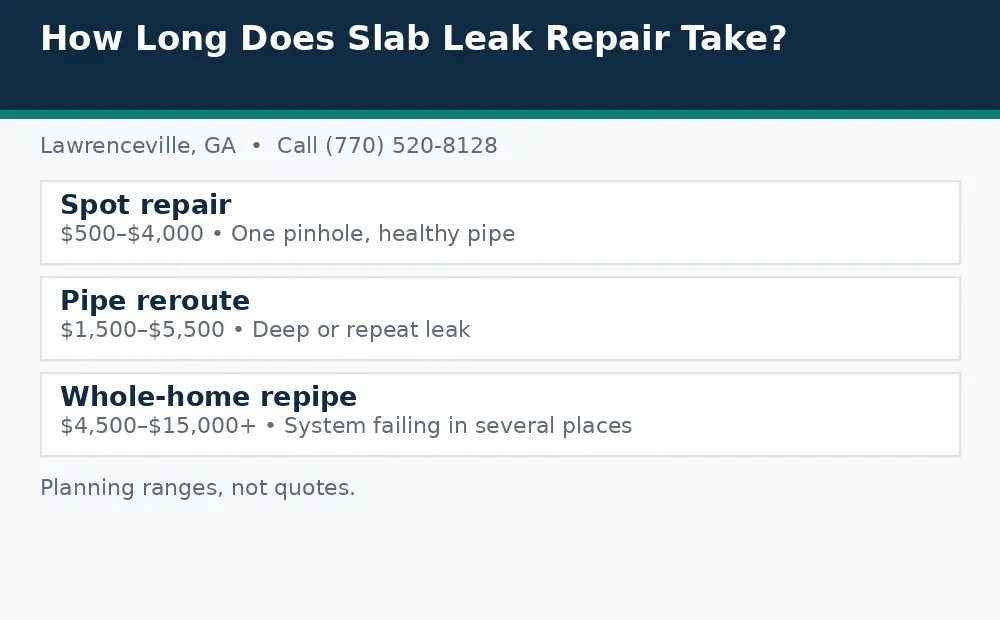
Your checks can tell you that something is leaking, not exactly where, and the carpet should not be lifted beyond a corner until detection has put a mark on it. Acoustic detection takes the hiss of the leak and turns it into a location: ground microphones far more sensitive than an ear are placed on the slab at several points, and the technician listens for where the sound peaks. Carpet makes the job harder in one specific way: it insulates the floor, so thermal imaging gets a weaker read through carpet than through tile or hardwood, and the acoustic read has to carry more of the work. A pressure test can confirm which side is leaking, hot or cold, by isolating each line. The detection methods guide covers the full set, including tracer gas as a method a technician may use, and the acoustic and thermal guide explains what the equipment does. Detection in Lawrenceville runs in the site's published planning range of $300–$600, and the detection cost guide explains what the visit covers. Once the leak is found, the repair routes are spot repair, which opens the slab at the marked leak; a reroute, which abandons the old line and runs a new one through the walls or attic; trenchless lining, which seals the pipe from the inside; and a whole-home repipe. The spot repair versus reroute versus repipe guide compares them, and the repair cost guide carries the published planning ranges: spot repair $500–$4,000, lining $800–$3,000, reroute $1,500–$5,500, repipe $4,500–$15,000 or more. None of that work starts until detection has put a mark on the floor. Carpet has one advantage over tile and hardwood: it is cheaper to lift and replace than a hard floor, so tunneling under the slab, which reaches the leak from outside the room and leaves the floor above untouched, is worth weighing when the carpet is new. The tunneling guide covers that route. After the pipe is fixed, the floor still has to dry before anything goes back: the pad is normally removed, the carpet is dried or replaced, and the slab has to reach normal moisture readings before new pad is laid.
What to tell us when you call
When you call, tell us which rooms feel damp, whether any patch feels warm, what the meter dial did with every tap off, and whether the dampness returns after a day of drying, plus your ZIP. That tells us whether we are listening for an active supply leak, a drain problem, or a look-alike.
Call (770) 520-8128 and describe the carpet in plain words. We will talk through the meter test first, then detection if the tests point that way.
Call Us Today
Fast local slab leak detection and repair in Lawrenceville, GA, ZIPs 30043–30046.
Call Now to Speak to a SpecialistFrequently asked questions
Can a slab leak make carpet wet?
Yes. Concrete passes moisture upward through cracks and joints, and the pad under your carpet is the first absorbent layer the water meets, so a leak under the slab can leave a damp patch in the carpet that keeps coming back after drying. The wet spot is often not directly over the leak, because water spreads along the slab and the pad wicks it sideways before it rises.
Why is my carpet wet but there is no leak?
There may still be a leak you cannot see, because a slab leak feeds the pad from below and never shows a puddle. Or the water came from above: a spill that was blotted but never fully dried, an air-conditioning condensate line, a failed toilet wax ring, or rain at the slab edge. The meter test separates them: a meter that moves with everything off means water is leaving the system, and a spill cannot do that.
Can carpet be saved after a slab leak?
Sometimes the carpet can be saved, but the pad usually cannot. Carpet padding, once saturated, rarely dries back to a sound, odour-free state and is normally removed rather than dried in place. The carpet itself stands a better chance if the water was clean supply water and the wetting was caught early, because it can be lifted, dried, and re-laid over new pad once the slab underneath reads dry.
Can a slab leak cause mold under carpet?
Yes. Constant moisture under flooring creates the right conditions for mold, often with a musty smell before you see anything, and the pad, the tack strip, and the baseboard are the first places it takes hold. Fixing the pipe stops the water source, but the moisture already in the pad and the slab still has to be dried and assessed, and new flooring should not go down until the slab reads dry.
How do I tell a slab leak from a spill or something else?
Lift a corner of the carpet at the edge of the room and read the layers: wet concrete plus wet pad means the water came from below, while wet pad over dry concrete means it came from above or the side. A spill dries from the top and stays dry; a slab leak keeps wetting the pad. The meter test confirms it: if the dial moves with every tap off, water is leaving the system somewhere.