 Lawrenceville Slab Leak Detectors
Slab Leak in the Bathroom in Lawrenceville, GA
A slab leak in the bathroom in Lawrenceville, GA, is easy to miss — every fixture sits over the same under-slab pipes. Water at the toilet base, damp grout, and a warm tile patch in ZIPs 30043 and 30046, from Downtown to Collins Hill, are the signs to check.
What this looks like in a Lawrenceville home

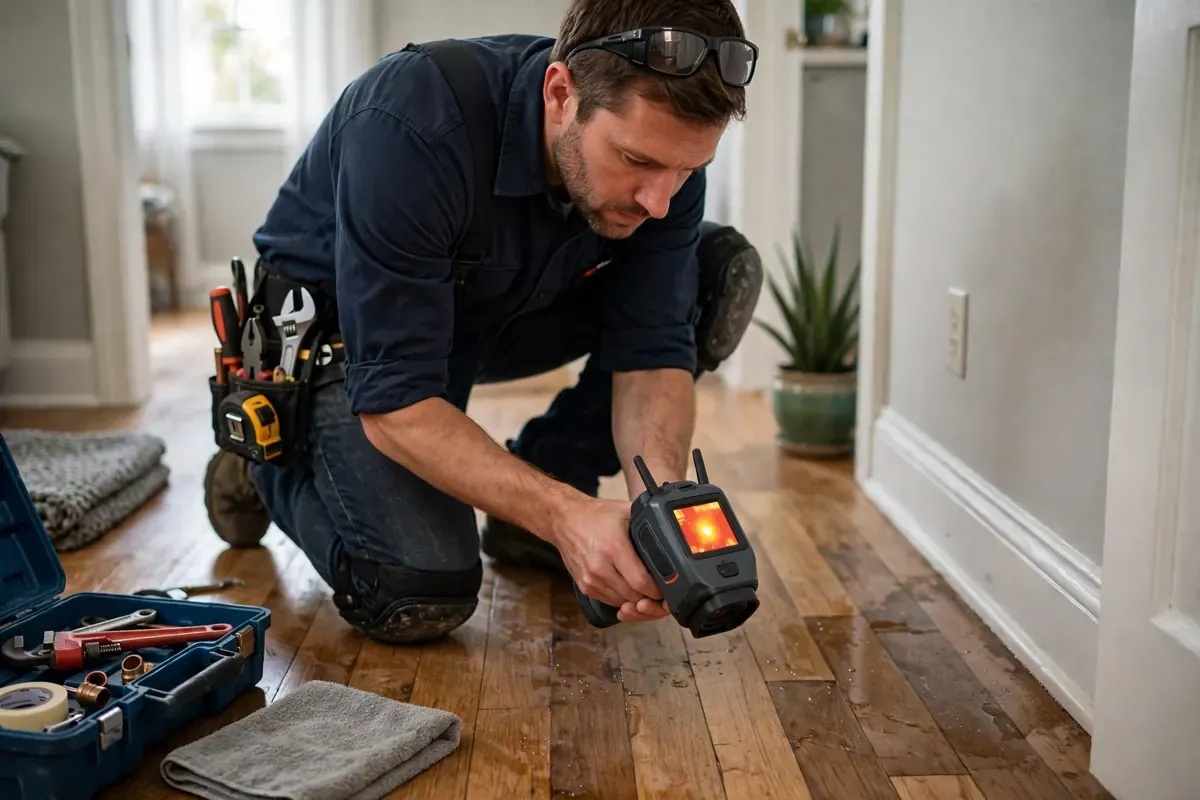
The images on this page are illustrative diagrams, not photos of a specific job at a specific address, and they are not presented as this business's own work. Call us at (770) 520-8128 if you are unsure what you are seeing.
The short answer: the bathroom hides a slab leak behind its fixtures
A slab leak in the bathroom is easy to miss, because the bathroom is the one room where water on the floor always has an innocent explanation. A splash from the shower, a toilet that ran over, a dripping tap — every bathroom has water on the floor sometimes. But a slab leak is different: the water comes from a pipe under the concrete slab, not from a fixture above it, and it keeps coming whether anyone used the bathroom or not. The pipes that feed your toilet, shower, tub, and vanity all run under the slab, so the bathroom floor sits directly over the most likely leak points in the house. The what is a slab leak guide explains which pipes run where, and the signs guide lists all ten slab-leak signs in one place.
The signs in a bathroom are specific, and they are worth learning, because a bathroom leak that is mistaken for a fixture problem can run for weeks while the floor is mopped and the real cause is ignored. Water at the base of the toilet, grout that stays dark and damp, a patch of tile that feels warm, a musty smell that returns after cleaning — each of these has a fixture explanation and a slab explanation, and the checks below separate them. If you have any of these signs in a bathroom in ZIP 30043, 30044, 30045, or 30046, do not wait for visible water. The bathroom is where a slab leak shows first, and it is also where it is most often misread.
Why the bathroom is the most common room for a slab leak
A bathroom concentrates more plumbing into a smaller area than any other room in the house. The toilet has a supply line and a drain. The shower has a hot and a cold supply line, a drain, and a shower pan. The tub has the same. The vanity has a hot and a cold line and a drain. All of those lines run under the slab to reach the fixtures, and they meet under the bathroom floor — supply lines coming in, drain lines going out. That concentration is why a bathroom is the most common room for a slab leak to show, and also why it is the hardest room to read: with so many pipes in one place, a wet patch could be fed by any of them, and the wet patch is often not over the leak at all, as the wet spot guide explains.
The hot-water lines are the ones that give themselves away. A hot-water supply leak warms the water that pools under the slab, and that heat comes up through the tile — tile conducts heat well, so a warm patch on a bathroom tile floor is easier to feel than the same patch under carpet. Walk the bathroom barefoot in the morning, before the sun warms the floor, and feel for a patch that is warmer than the tiles around it. The warm spot guide explains why heat is the one symptom that locates itself. A cold-water leak gives off no heat, so it produces no warm spot at any stage — for a cold leak, the clues are the grout, the loose tiles, and the bill. The high water bill guide covers the rule-outs, including a running toilet and a meter misread. The hot versus cold symptoms guide compares the two in full.
The signs, fixture by fixture
At the toilet, look for water at the base that returns after you dry it, a toilet that rocks when you sit on it, and a floor that is soft or discoloured around the base. Water at the toilet base is the most misread sign in the bathroom: it is usually a failed wax seal or a loose flange, but it can also be a slab leak surfacing at the toilet's drain connection, and the two look identical from above. The difference is the test, covered in the next section. Around the shower and tub, look for grout that stays dark and damp after the floor has dried, tiles that have come loose or sound hollow when tapped, and a musty smell near the baseboards. A drain leak under the shower only runs when the shower runs, so the dampness comes and goes with use — a pattern that points at a drain, not a supply line. The sewer versus supply guide explains how to tell a drain leak from a supply leak, and the sewer smell guide covers the smell that comes with a drain leak.
At the vanity, look for dampness in the cabinet, a swollen cabinet base, and water on the floor in front of it that returns after drying. A vanity supply line leak is usually visible inside the cabinet, but a leak in the same line under the slab shows on the floor instead, with the cabinet dry. On the floor itself, look for the signs the tile floor guide covers in detail: cracked tiles in a line, tiles that rock or sound hollow, grout that never dries, and a warm patch. And in the air, look for the musty smell that returns after cleaning — the musty smell and warped floors guide covers the early warnings that come with damp tile. One rule holds across every fixture: a single sign can have an innocent cause, but a sign plus a bill jump, or a sign plus a moving meter, is worth detection.
Slab leak or fixture leak — how to tell
The question that matters in a bathroom is not whether there is water, but where the water comes from, and three tests separate a slab leak from a fixture leak. First, the toilet test. Grip the bowl and try to rock it: any movement means the flange connection has failed and the wax seal with it. Then dry the floor completely, flush once, and watch. Water that appears only after a flush is a seal, not a slab. Water that is there constantly, flush or no flush, points under the slab. Second, the use test. A shower pan or a drain leak only leaks when water runs through it, so dry the floor, do not use the shower or tub for a day, and see whether the dampness returns. Dampness that returns with no use at all is not a fixture drain — it is a pressurised line, which means a supply leak, under the slab or in a wall.
Third, and most decisive, the meter test. Turn off every tap and appliance, including the ice maker and any irrigation, and watch the meter dial for 15 to 30 minutes. If it moves, water is escaping from a pressurised line — a slab leak is genuinely on the table, along with a fixture supply line or a toilet fill valve. If it never moves at all, nothing pressurised is leaking, and whatever is wetting your bathroom floor is a drain, a seal, a shower pan, or condensation. The water meter leak test guide walks through the check step by step, and the meter test post explains how to read the result. The symptom checker lets you weigh the signs together, and the slab leak mimics guide covers the other lookalikes — a running toilet, condensation, an irrigation break — that share the same wet patch.
Detection and repair in a bathroom — and what happens to the tile
Detection comes first, because the break is often rooms away from where the water surfaces in the bathroom. Detection starts with the meter and pressure tests that confirm water is being lost and narrow the leak to one run — hot or cold, supply or drain. Acoustic listening follows the sound of escaping water through the slab, and thermal imaging maps warm areas for hot-water leaks. The detection methods guide explains how the methods combine. The published planning range for detection is $300-$600, a planning range only, with a written price following inspection.
Whether tile has to come up depends on the repair route. A single leak in otherwise healthy pipe is usually a spot repair: a small, targeted opening in the slab at the marked location, the pipe fixed, and the concrete and flooring put back. That opening takes out the tiles directly over the break — usually a small number — and the rest of the bathroom floor stays untouched. A line that has failed before, or pipe worn along its length, may suit a reroute, where a new line runs through a wall or ceiling and bypasses the bad under-slab section, or a lining, where a new pipe is formed inside the old one without breaking the slab — both of which can avoid opening the tile at all. The spot repair versus reroute versus repipe guide compares the routes, and the fix without breaking the floor guide covers the options that avoid opening the slab. The published planning ranges are spot repair $500-$4,000, lining $800-$3,000, reroute $1,500-$5,500, repipe $4,500-$15,000+ — the repair cost guide carries the full table, and the repair cost estimator gives a planning figure from those ranges. Whatever route is chosen, the concrete and flooring need putting back properly, and the concrete and floor restoration service page covers what that step includes — including the question of matching the existing bathroom tile, which depends on whether the same tile is still available.
What to tell us when you call
When you call, tell us which fixture the water is near — toilet, shower, tub, or vanity — whether the water appears constantly or only after use, and what the meter did with everything off. Mention your ZIP code and whether any tiles are cracked, loose, or warm. That short list lets us plan detection around your bathroom, not around a guess.
Call (770) 520-8128 and describe your situation in plain words. We will talk through detection first, then a repair plan that fits your home.
Call Us Today
Fast local slab leak detection and repair in Lawrenceville, GA, ZIPs 30043–30046.
Call Now to Speak to a SpecialistFrequently asked questions
How do I know if the water in my bathroom is a slab leak?
Run the meter test with every tap and appliance off, and watch the dial for 15 to 30 minutes. A moving dial means a pressurised line is leaking. A dial that never moves rules out a supply leak — the water is coming from a drain, a seal, or a shower pan. Water that appears only after a flush or a shower points at a fixture; water that is there constantly points under the slab.
Can a slab leak come from the toilet?
The leak does not come from the toilet itself, but it can surface at the toilet's drain connection under the slab, and it looks identical to a failed wax seal from above. Grip the bowl and try to rock it: any movement means the flange and seal have failed. Then dry the floor, flush once, and watch — water that appears only after a flush is a seal, while water that is there constantly points under the slab.
Why is my bathroom floor warm in one spot?
A warm patch on a bathroom tile floor means a hot-water supply line is leaking under the slab — the escaping hot water warms the concrete and the tile above it, and tile conducts heat well, so the patch is easy to feel barefoot in the morning. A cold-water leak gives off no heat and produces no warm spot. Sunlight or a heating vent can mimic a warm patch, so weigh it with the meter test and the water bill.
Will a slab leak under my bathroom damage the tile?
Yes. Tile is rigid, so when the slab under it settles or heaves, the tile cracks in a line across several tiles, or pops loose and sounds hollow when tapped. Water travelling under the tile bed keeps the grout dark and damp. Whether tile has to come up depends on the route: a spot repair takes out only the tiles over the break, while a reroute or a lining can avoid opening the slab and the tile.
What should I do first if I suspect a bathroom slab leak?
Dry the floor completely and note when the water returns — constantly, or only after a flush or a shower — then run the meter test with every tap and appliance off and watch the dial for 15 to 30 minutes. Photograph the damp area with dates and keep the water bills that show any jump. If water is pooling or the meter is spinning fast, shut off the main if you can do so safely and call.