 Lawrenceville Slab Leak Detectors
Can a Slab Leak Cause Electrical Problems in Lawrenceville, GA?
A slab leak in Lawrenceville, GA can cause electrical problems when water from a broken pipe under the slab reaches wiring, conduits, or floor-level outlets. In ZIPs 30043 and 30044, near Collins Hill and Sugarloaf, tripped breakers and flickering lights are warning signs to take seriously.
What this looks like in a Lawrenceville home
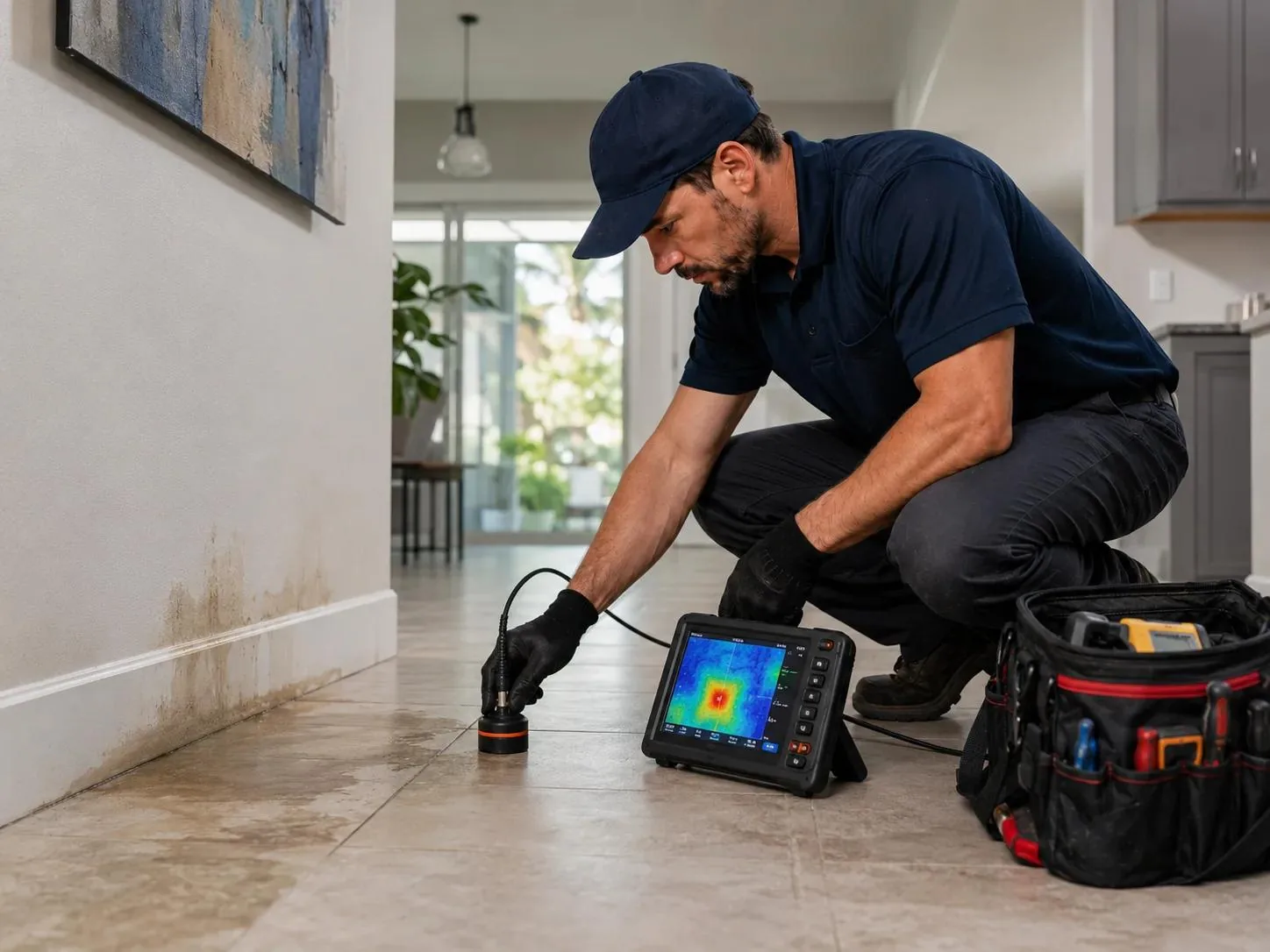
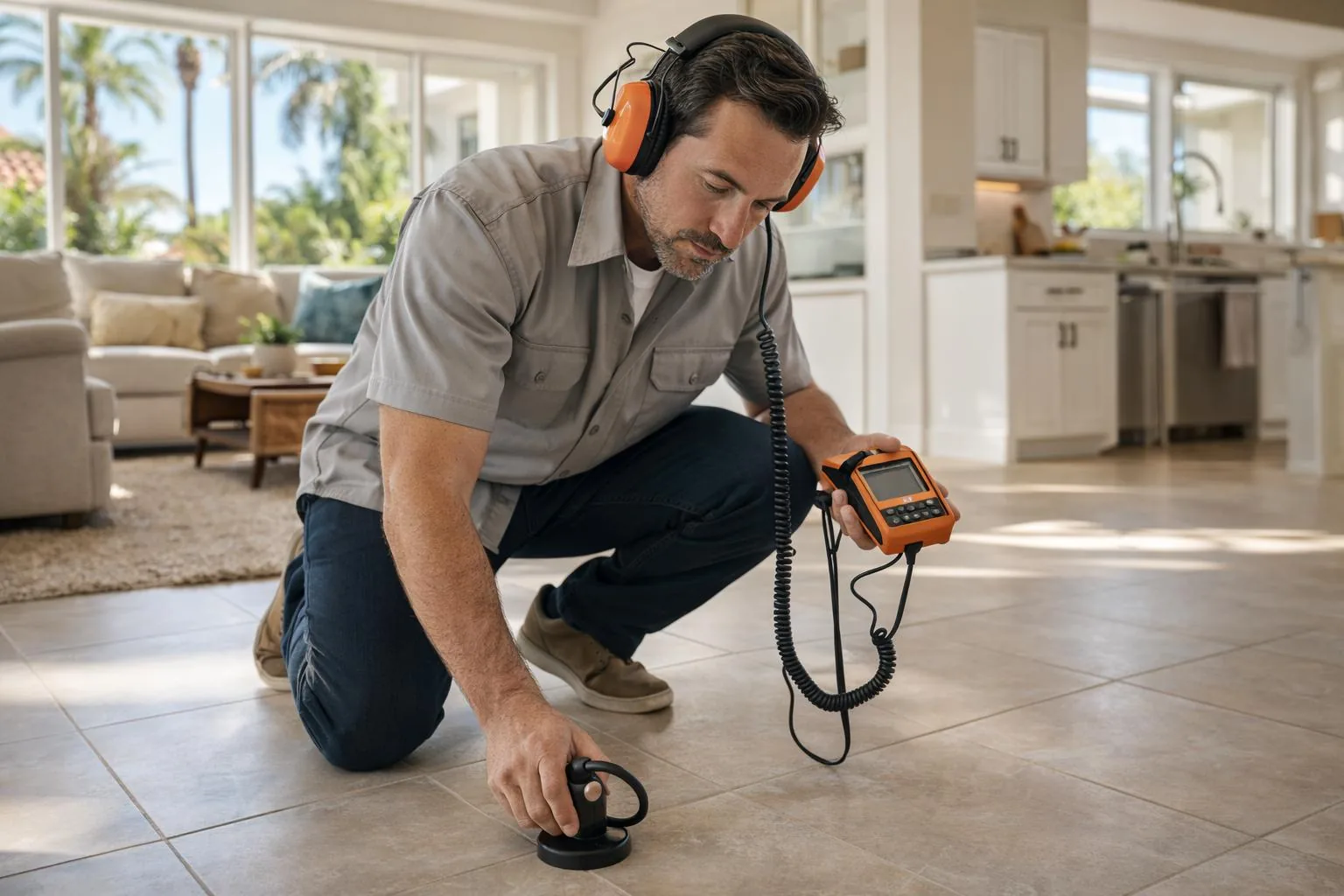
The images on this page are generic illustrations — a thermal image and an acoustic-listening photo — not photos of this business's own work or of a specific home. Call us at (770) 520-8128 if you are unsure what you are seeing.
How water from a slab leak reaches your wiring
Plumbing and electrical lines share the same crowded space under a Lawrenceville home. The water pipes run through the concrete slab, and so do the electrical conduits that carry wiring to floor-level outlets, and the two systems cross each other more often than most homeowners realise. When a pipe under the slab breaks, the water does not stay in one place. It follows the path of least resistance: along the outside of the pipe, through cracks and joints in the concrete, and up through the edge of the slab into the wall base. In Lawrenceville that water lingers, because the Georgia red clay under the slab holds moisture rather than draining it away, and a leak that runs for weeks keeps the soil wet right where the conduits pass. Water that reaches a conduit can travel inside it, or wick up through drywall and baseboards to the outlets and switches set low on the wall. The slab itself does not stop it: concrete cracks, joints open, and every pipe that passes through the slab is a place where the concrete is already interrupted. In an older home the picture can be worse: the older-homes guide covers how pipes corrode, joints loosen, and the slab settles over time, so a leak in an older home is more likely to find a crack to travel through. Detection still comes first when something is wrong — the water meter leak test guide walks through the check that confirms water is actually being lost — and the detection methods guide maps each method to the question it answers.
The warning signs: tripped breakers, dead outlets, flickering lights
A slab leak does not announce itself as an electrical problem. It shows up as a set of small electrical oddities that are easy to blame on something else, and the pattern is what gives it away. A breaker that trips, gets reset, and trips again is the most common sign: the circuit is not overloaded, it is getting wet, and resetting the breaker does not dry the wiring. Outlets that stop working for no reason, especially outlets low on the wall or near the floor, are another: water reaches the box or the wiring behind it, and the connection fails. A ground-fault outlet that trips again and again after being reset is another version of the same sign: the outlet is doing its job by cutting power when it senses current leaking where it should not go, and a wet connection under the slab is one reason it keeps sensing it. Flickering or dimming lights on one circuit, a buzzing or sizzling sound from a switch or an outlet, and an outlet cover that feels warm to the touch all point the same way. So do the stains: a discoloured patch on the wall near an outlet, or a baseboard that is damp or swollen. The musty smell guide explains what that smell usually means when it comes with damp floors, and the high water bill guide walks through the comparison that confirms water is being lost. Any one of these signs on its own has a dozen possible causes. The combination — an electrical symptom plus a water sign, like a warm patch on the floor or a meter that moves with every tap off — is what points to a leak under the slab. The warm spot guide explains what a warm patch on the floor usually means, and the slab leak symptom checker walks through the signs one by one.
What to do first: stay clear, switch off the breaker, shut off the water
If water and electricity are both involved, the order matters, and the first rule is to stay clear. Do not touch a wet switch or outlet, do not wade through water on the floor near electrics, and do not switch on a wet appliance to test whether it still works. If you can reach the breaker panel safely — dry floor, dry hands — switch off the breaker for the affected circuit, and leave it off. That removes the power from the wet wiring. Then shut off the water at the main supply valve, if you can do that safely: with no pressure behind the pipes, the leak cannot keep feeding water into the slab while you wait. The shut-off valve guide shows where to look for the valve and how the test works. If you see sparking, or smell burning, leave the room and call for help from outside it — do not stay to investigate. Once the power and the water are both off, call. The emergency guide covers what to do first when a slab leak is suspected, and the meter test post explains how to read the result once the water is back on. Tell the person you call exactly what you saw — which breaker tripped, which outlets are dead, whether the floor is damp — because that short list tells them whether they are looking for a leak, an electrical fault, or both.
Who fixes what: the electrician checks the wiring, detection finds the leak
A slab leak that has reached the wiring is two jobs, done by two different professionals, and neither one replaces the other. The electrician checks the wiring: the breaker panel, the outlets and switches on the affected circuit, and whether the circuit is safe to switch back on. Wiring work is a licensed electrician's job, and a leak detection company does not do it. The leak detection company finds the pipe: a meter test confirms water is being lost, a pressure test narrows it to a line, and acoustic listening and thermal imaging pinpoint the break without opening the floor. The acoustic and thermal detection guide explains the listening and imaging steps, and the detection page covers the full visit. The order depends on what is most urgent. If a circuit is wet or a breaker will not stay on, the electrician comes first, because the immediate risk is electrical. Once the circuit is safe, detection finds the leak so the repair can be priced. What does not work is fixing only one side: an electrician can make a circuit safe, but the water keeps coming until the pipe is repaired, and a plumber can repair the pipe, but the wiring that was already wet still needs checking. Both reports matter — the detection report that says which pipe leaked, and the electrician's word on whether the circuit is safe to use again.
Why the leak has to be fixed first
Water does not stop damaging wiring once the breaker is reset. A connection that got wet once will get wet again while the leak runs, and corrosion keeps working on it in the meantime: a wet connection corrodes, the corrosion raises resistance, and the resistance makes heat, which is how a damp outlet becomes a warm one. That is why an electrical repair on its own is temporary when a slab leak is behind it. The leak has to be found and fixed first, and only then does the electrical repair hold. Once detection has pinpointed the pipe, the repair routes are the ones in the comparison guide: a spot repair opens the slab at the marked leak and replaces the damaged section, a reroute abandons the old line and runs a new one through walls or the attic, trenchless lining seals the pipe from the inside, and a whole-home repipe replaces the system overhead. The published planning ranges on this site are detection $300-$600, spot repair $500-$4,000, lining $800-$3,000, reroute $1,500-$5,500, and whole-home repipe $4,500-$15,000 or more — planning ranges only, with a written price following inspection. The repair cost guide carries all five ranges together. After the repair, the drying matters as much as the repair itself: the water damage cleanup guide covers what that looks like, and if the repair opened the floor, the concrete and floor restoration service page covers putting the surface back. Do not rush the drying to get the floor back down — wiring and wood that are still damp are still a problem, and a floor laid over damp concrete traps the moisture underneath it.
What to tell us when you call
When you call, tell us what you saw — a breaker that keeps tripping, a dead outlet, flickering lights, a buzzing switch — and whether the meter moves with every tap off, plus your ZIP code. That short list tells us whether we are looking for a leak, and what the detection report will need to show.
Call (770) 520-8128 and describe your situation in plain words. We will talk through detection first, then a repair plan that fits your home.
Call Us Today
Fast local slab leak detection and repair in Lawrenceville, GA, ZIPs 30043–30046.
Call Now to Speak to a SpecialistFrequently asked questions
Can a slab leak cause electrical problems?
Yes. Water from a pipe under the slab can reach the wiring that runs through or under the concrete, and it can wick up through the slab edge into drywall, baseboards, and outlets. Wet wiring can trip a breaker, kill an outlet, or corrode a connection. The leak is the cause and the electrical problem is the symptom, so the pipe has to be found and fixed — an electrician checks whether the circuit is safe to use again.
My breaker keeps tripping. Is it a slab leak?
A breaker can trip because a circuit is overloaded or an appliance is failing, so tripping alone does not prove a leak. A slab leak becomes a likely cause when the tripping comes with a water sign: a warm patch, a damp baseboard, a musty smell, a water bill that jumped, or a meter that moves with every tap off. If the breaker trips again when reset, switch it off and leave it off, then get the leak checked.
Is it safe to touch a wet outlet or switch?
No. Never touch a wet outlet, switch, or appliance, and never wade through water near electrics — water conducts electricity, and a wet outlet can shock you even if the appliance plugged in is switched off. If you can reach the breaker panel safely, switch off the breaker for that circuit and leave it off. Then shut off the water at the main valve if you can do that safely, and call.
Will fixing the leak fix the electrical problem?
Fixing the leak stops the cause, but it does not undo the damage the water already did. A connection that got wet can keep corroding after the pipe is repaired. Once the pipe is fixed, a licensed electrician should check the affected circuit — the outlets, switches, and connections — and say whether it is safe to switch back on. The leak repair and the electrical check are two separate jobs, and the circuit stays off until both are done.
Should I call a plumber or an electrician first?
If a circuit is wet, a breaker will not stay on, or you see sparking, the electrician comes first — the risk is electrical. Switch the breaker off and keep it off until the wiring is checked. Once the circuit is safe, leak detection finds the pipe so the repair can be priced. If there is no electrical hazard, just a high bill, detection can come first. Tell each professional what the other found.