 Lawrenceville Slab Leak Detectors
Slab Leak While You're Away From Home in Lawrenceville, GA
A slab leak while you're away from home in Lawrenceville, GA can run for weeks — nobody hears the hiss or sees the bill climb. In ZIPs 30043 and 30044, near Collins Hill and Sugarloaf, a meter reading before you leave and one on return tells you whether water escaped.
What this looks like in a Lawrenceville home
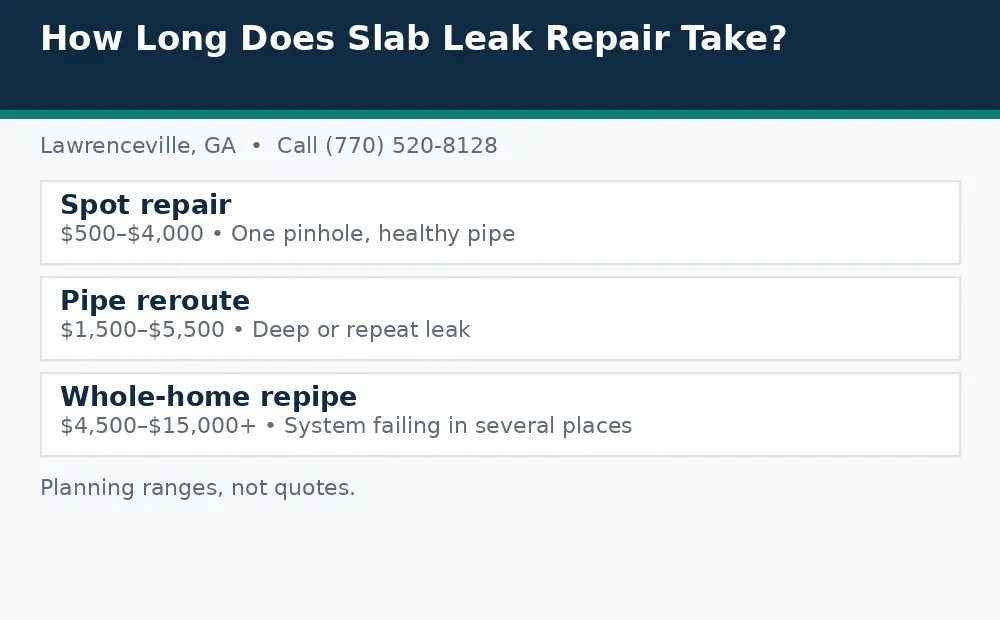
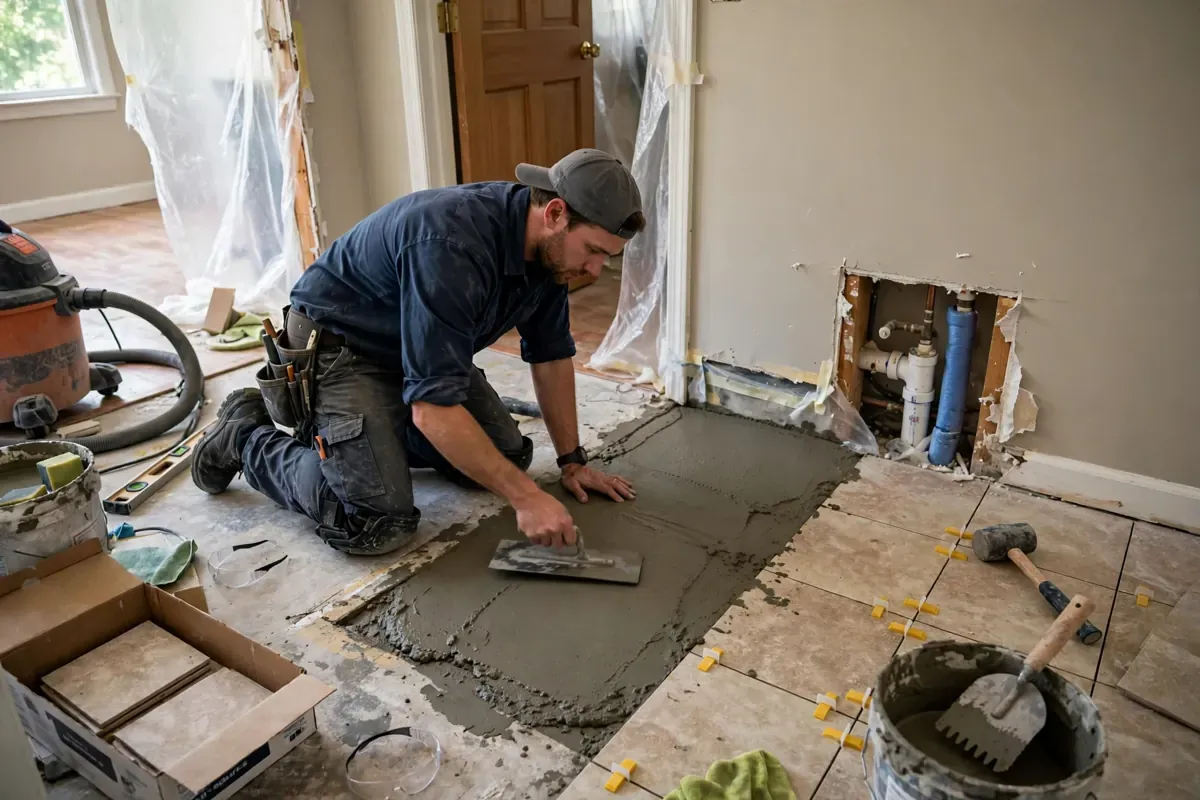
The images on this page are generic illustrations — a slab-and-pipe diagram and a floor-restoration photo — not photos of this business's own work or of a specific home. Call us at (770) 520-8128 if you are unsure what you are seeing.
The short answer: a leak nobody is home to notice
A slab leak is the worst leak to leave running in an empty house, because it is the one leak you cannot see. A burst pipe indoors soaks a ceiling or a floor and shows itself fast. A slab leak runs under concrete, out of sight, and the only people who would notice it are the people who live in the house — the ones who hear the faint hiss of water at night, feel a warm patch on the floor, or open a water bill that has jumped for no reason. Take those people away for a week or two and the leak keeps running with nobody to catch it. The water spreads through the soil under the slab, and in Lawrenceville that soil is Georgia red clay, which holds moisture rather than draining it away. By the time anyone comes home, a leak that would have been a small repair can be a saturated slab, a swollen floor, and a bill for water nobody used. That is why the work before a trip matters more than the work after it: the meter reading you take before you leave is the baseline that tells you, the day you return, whether anything escaped while the house sat empty. Detection still comes first when something is wrong — the water meter leak test guide walks through the check — and the slab leak signs guide lists what to look for once you are home.
Before you leave: the walkthrough that takes ten minutes
Walk the house the day before you leave, room by room, and look for anything that is already leaking. Check under every sink for dampness or a slow drip, look at the base of each toilet, and run your hand along the water heater and the washing-machine hoses. A drip you fix before you leave is a drip that cannot run for two weeks. Check the ceilings for stains and the floors for any warm or damp patch — the warm spot guide explains what a warm patch on the floor usually means. If you find a drip, fix it or call a plumber before the trip, not after: a small leak that is already running will not pause while you are gone.
Then take the meter reading. Go to the meter, write down the numbers, and photograph the dial with your phone so the reading carries a date and time. That photograph is your departure baseline. If nothing in the house uses water while you are away, the reading should be the same when you come back — and if it has moved, water escaped. The meter test post explains how to read the result. Tell someone local your dates while you are at it: a neighbour, a relative, or a friend who can step inside if something needs checking. Leave them the number of a plumber and the location of the main shut-off valve, so they are not searching for either in a hurry.
The shut-off decision: closing the main supply
The simplest protection against a leak in an empty house is to remove the pressure behind it. Closing the main house supply valve means there is no water pressure pushing through the pipes while you are gone, so a leak that starts — or one that is already running quietly — cannot keep feeding water into the slab. For a trip of a week or more, that is the step most worth taking, and it costs nothing. The shut-off valve guide shows where to look for the valve and how the test works.
There are trade-offs to think through before you decide. If the yard irrigation needs water while you are away, shutting off the whole supply stops that too — ask a plumber whether the house supply can be isolated on its own valve so the irrigation keeps running and the house lines stay off. Some appliances also need care when the water is off, and a water heater should not be left heating an empty tank, so talk the whole plan through with a plumber rather than changing valves and settings yourself. The point is not to do plumbing work before a holiday; it is to make one decision, with a professional, about whether the house lines stay pressurised while nobody is there. If you do shut the water off, leave a note on the kitchen counter saying so, with the date — so the person who checks the house does not spend an hour wondering why the taps are dry.
A house-checker routine: what a local check should cover
If someone local can step inside every week or two while you are away, give them a short list rather than a vague instruction to "check the house". The list is four items: compare the meter to your departure photograph — a meter that has moved with nothing running means water is escaping; look under the sinks and around the water heater for dampness or pooling; glance at the ceilings and the floors for new stains, soft spots, or a warm patch; and listen, in a quiet house, for the sound of running water when every tap is off. The running water sound guide explains what that sound usually points to, and the emergency guide covers what to do first if a leak is found.
Ask the checker to write down what they see each visit, with the date, and to send you a photograph of the meter each time. A single check tells you the house is fine that day; a series of readings tells you whether the meter is creeping. If the meter has moved between visits, that is the moment to call, not the moment to wait for your return — a leak under a slab does not pause for a flight home, and the longer it runs, the larger the repair. The checker does not need to diagnose anything; they only need to notice a change and report it. That is the whole job.
Coming home: the first checks, in order
Start at the meter, before you unpack anything. Compare the reading with your departure photograph: if it has moved and nothing in the house used water while you were away, water escaped somewhere. Then walk the house and use your senses before your luggage. Smell for mustiness as you open the door — the musty smell guide explains what that smell usually means — look for stains on ceilings and walls, and feel the floors for warm or damp patches and soft spots. Run each tap briefly and listen for the hiss of water when everything is off. Finally, when the first bill arrives, compare it with the same period last year: a jump with no change in use is the leak's signature, and the high water bill guide walks through that comparison.
If anything is off, get detection done before you settle back in. A detection visit — meter test, acoustic listening, thermal imaging — pinpoints the leaking pipe without opening the floor, and the detection report is the fact everything else is decided from. If the bill is high and the meter is still moving, the Gwinnett County Water Resources side of the question — who to call and what a leak adjustment involves — is covered in the utilities guide, and the detection methods guide maps each method to the question it answers. Do not wait a week to see whether the signs fade: a leak that ran while you were away has already had its head start.
What detection and repair look like on return
The sequence is the same as for any slab leak, and it starts with detection, not with a repair. The meter test confirms water is being lost, a pressure test narrows it to a line, and acoustic listening and thermal imaging pinpoint the break. The acoustic and thermal detection guide explains the listening and imaging steps, and the inspection preparation checklist covers what to have ready before the visit. Only once the leak is located is a repair priced — and the repair that fits depends on the pipe, not on how long the house sat empty.
The repair routes are the ones in the comparison guide: a spot repair opens the slab at the marked leak and replaces the damaged section, a reroute abandons the old line and runs a new one through walls or the attic, trenchless lining seals the pipe from the inside, and a whole-home repipe replaces the system overhead. The published planning ranges on this site are detection $300-$600, spot repair $500-$4,000, lining $800-$3,000, reroute $1,500-$5,500, and whole-home repipe $4,500-$15,000 or more — planning ranges only, with a written price following inspection. The repair cost guide carries all five ranges together, and the concrete and floor restoration service page covers putting the surface back after a repair that opens it. A permit may be needed depending on the scope of the work. Whatever route is chosen, ask for the written price before work starts, and ask what it covers: detection, the repair itself, and putting the surface back.
What to tell us when you call
When you call, tell us how long the house sat empty, your departure and return meter readings, what the house-checker saw on each visit, and your ZIP code. That short list tells us whether water escaped while you were away, and how long it has had to run.
Call (770) 520-8128 and describe your situation in plain words. We will talk through detection first, then a repair plan that fits your home.
Call Us Today
Fast local slab leak detection and repair in Lawrenceville, GA, ZIPs 30043–30046.
Call Now to Speak to a SpecialistFrequently asked questions
Can a slab leak start while my house is empty?
Yes. A slab leak can start at any time, and an empty house is where it does the most damage, because nobody is there to hear the hiss, feel a warm patch on the floor, or notice the water bill climbing. The leak runs under concrete, out of sight, and in Lawrenceville the Georgia red clay under the slab holds moisture rather than draining it away. That is why a meter reading taken before you leave matters so much.
Should I shut off the water before a long trip?
For a trip of a week or more, closing the main house supply is the simplest protection: with no pressure behind the pipes, a leak cannot keep feeding water into the slab while you are gone. If the yard irrigation needs water, ask a plumber whether the house supply can be isolated on its own valve so the irrigation keeps running and the house lines stay off. Talk the plan through with a plumber rather than changing valves yourself.
What should someone checking my house look for?
Four things: compare the meter with your departure photograph, look under the sinks and around the water heater for dampness, glance at ceilings and floors for new stains or soft spots, and listen in a quiet house for running water when every tap is off. Ask the checker to write down what they see each visit, with the date, and to photograph the meter. A meter that has moved with nothing running means water is escaping.
My meter moved while I was away. What do I do first?
Get detection done before you settle back in. A detection visit — meter test, acoustic listening, thermal imaging — pinpoints the leaking pipe without opening the floor. Walk the house first for mustiness, stains, and warm or damp patches, and compare the first bill with the same period last year. Do not wait a week to see whether the signs fade: a leak that ran while you were away has already had its head start.
Does the water company help with a leak that ran while I was away?
Gwinnett County Water Resources is the water provider for Lawrenceville, and it is the place to ask about a leak adjustment on a high bill — the utilities guide on this site covers who to call and what the adjustment involves. An adjustment is a billing question, not a repair: the leak itself still needs detection to find the pipe, and a repair priced after inspection. Keep the meter readings and the detection report as the evidence.