 Lawrenceville Slab Leak Detectors
Moen Flo Smart Leak Detection in Lawrenceville, GA
A Moen Flo smart water monitor in Lawrenceville watches the main water line for unusual flow and pressure, and can shut the water off when it detects a serious leak. Near Sugarloaf in ZIP 30044, it alerts you early — but it cannot pinpoint a slab leak under the floor.
What this looks like in a Lawrenceville home
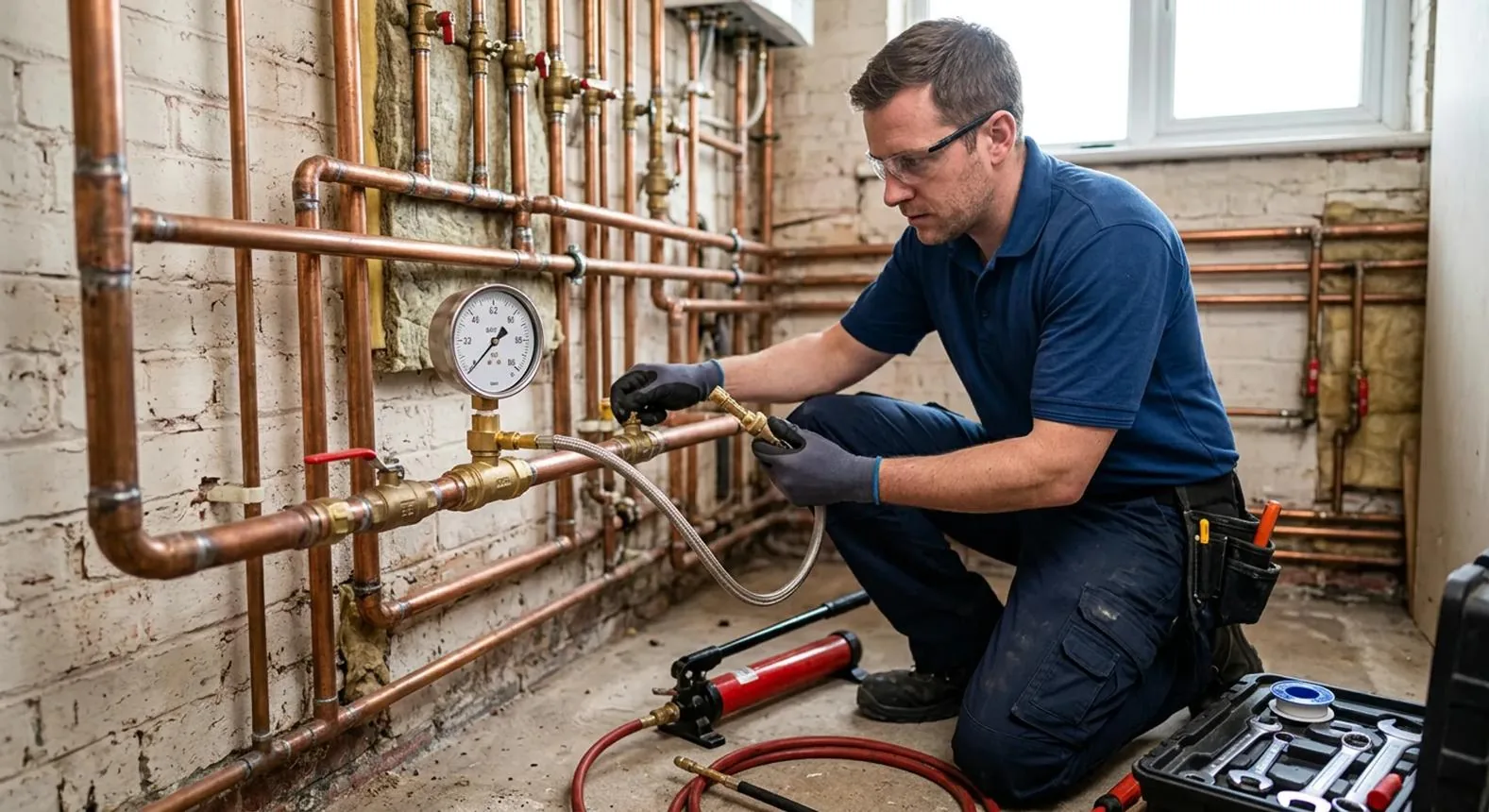

The images on this page are generic photos of leak detection equipment in use, not photos of this business's own work or of a specific home. Call us at (770) 520-8128 if you are unsure what you are seeing.
What a Moen Flo is
A Moen Flo, formally the Moen Smart Water Monitor and Shutoff, is a device that fits on the main cold-water line where water enters the house, and watches everything that flows through it. It measures flow, pressure, and the temperature around the device, and it learns the household's normal water use over a learning period of about a week or two, so it can tell a long shower from a burst pipe. When it sees something outside the normal pattern, it sends an alert to the Moen Smart Water app, and if the event is serious, it can close its own shutoff valve and stop the water. The homeowner can also close or open the valve from the app, or by hand at the device, and the app shows live and past water use by fixture type. Small battery-powered point sensors can be placed near washing machines, water heaters, dishwashers, and sinks, and a sensor that finds moisture can trigger the shutoff as well. One thing to say plainly, first: this business does not install or sell Moen Flo or any other smart leak detection device. Detection and repair are the services offered here. This guide explains what the device does and what its alerts mean, so a homeowner who already has one, or is thinking about one, knows what to do when it speaks up, and when a plumber is still needed. The device sits downstream of the water meter, the manual shutoff valve, and any pressure-reducing valve, and it needs power and a Wi-Fi connection to work. The shut-off guide shows where the manual main valve usually sits in a Lawrenceville home, which matters because the smart device is fitted after it, not instead of it.
How it finds a leak
The device finds leaks in two ways, and they catch different kinds of failure. The first is continuous flow monitoring. Its sensors watch the water moving through the main line all day, and the FloSense learning system builds a picture of normal use: showers, laundry, dishwashers, and irrigation each have their own flow pattern and their own usual times. A sudden, large increase in flow that stays high, the pattern of a burst pipe, is flagged at once, and if nobody answers, the valve can close on its own. A slow, steady flow at an hour when the house is normally quiet, the pattern of a line leaking under the slab, is flagged as unusual use. The second way is the daily MicroLeak test. Once a day, during a period of low water use, the device briefly closes its valve and watches the pressure in the sealed plumbing network. If the pressure holds, there is no leak. If it drops and keeps dropping, water is leaving the system somewhere, and the test is sensitive enough to catch a drip as small as about one drop per minute. The water meter leak test guide is the same idea done by hand: turn everything off and watch whether the meter moves. A smart monitor runs that test for you every day, and it also runs in three modes: Home, for normal day-to-day use; Away, with tighter monitoring when the house is empty for a while; and Sleep, which pauses most alerts and automatic shutoff overnight. A monitor that can shut the water off is most useful in a house left empty, the riskiest case for a leak — see the slab leak while away guide. The learning period matters: for the first week or two, the device is still building its picture of normal use, so a new device that flags normal use is usually still learning, not broken.
What it cannot do
A smart monitor has real limits, and the most important one is that it cannot tell you where the leak is. A MicroLeak alert means water is being lost somewhere in the sealed system, not which pipe, and a flow alert means the usage pattern is wrong, not which fixture. Finding the physical source still takes detection: acoustic listening, thermal imaging, and the meter test, which is what the detection methods guide covers. A slab leak under concrete is the hardest case for a monitor: the leak may only show as a slow pressure loss, and the device cannot hear it, see it, or point at it through the floor. It cannot detect water that does not come through the main line: flooding, rain, and a sewer backup all enter from outside the supply system, so a monitor on the main line never sees them, and a point sensor only helps if it sits where the water reaches. It needs power and Wi-Fi to alert or to shut off, so a power cut during a storm is exactly when it goes quiet, although the valve can still be closed by hand at the device. It watches only the water that passes through it, so a leak on a line that branches off before the device, such as an irrigation line tapped in ahead of it, is invisible to it. It can also be fooled in both directions: guests staying over or a new appliance can trigger alerts that turn out to be normal, and a very slow leak in a large system can sit below what the daily test can separate from normal pressure changes. The slab leak mimics guide runs through the sounds and signs that look like a leak and are not, and the same care applies to a device alert: it is a reason to test, not a diagnosis.
What to do when it alerts
An alert is the start of the job, not the end of it. First, read what the app says: a MicroLeak alert means the daily pressure test found a loss, while a flow alert means the usage pattern broke its usual shape, and the two point at different problems. A MicroLeak alert with a steady pressure drop is the stronger sign of a real leak, because a sealed system should hold its pressure. A flow alert at an odd hour may be a burst pipe, or it may be a guest, a new appliance, or a toilet running. The two checks from the water meter test guide settle it in minutes: turn off every tap and appliance and watch the meter dial, then close the main shut-off valve and see whether the sound or the flow stops. If the meter moves with nothing running, the alert was real. If the dial holds still, the alert may have been a pattern the device had not learned yet, and it is worth watching for a day before calling. If water is actively pooling on the floor, or the flow alert says a large volume is moving, shut the main valve off first and call after: the device may already have closed its own valve, and if it has, the water is already stopped. The signs guide lists what else to check alongside the alert — a warm floor spot, a bill that has jumped, a damp edge on the flooring — because two signs together are a reason to book detection. Detection in Lawrenceville runs in the site's published planning range of $300–$600, with a written price following inspection, and the detection cost guide explains what the visit covers. Say what the device flagged when you call, because it tells the technician whether detection should start with listening, pressure testing, or thermal imaging.
Is it worth it in a Lawrenceville home?
Whether a smart monitor is worth having depends on the home, and the honest answer is that it is an early-warning device, not a repair. It is most useful where a leak would run for a long time before anyone noticed: a home left empty during the day, a rental, a vacation home, or a house where the water heater and the washing machine sit far from the rooms people use. In those homes, an alert that arrives the same day is worth far more than a bill that arrives a month later, and a valve that closes itself can be the difference between a damp floor and a flooded one. It is less useful as a slab-leak tool on its own, because a slab leak is the failure a monitor is worst at locating: it can say water is being lost, but it cannot say the leak is under the kitchen floor, and the detection visit is still needed. It also does not change what the repair costs. The published planning ranges on this site are the same whether or not a device flagged the leak: detection $300–$600, spot repair $500–$4,000, lining $800–$3,000, reroute $1,500–$5,500, and whole-home repipe $4,500–$15,000 or more, with a written price after inspection. The repair cost guide explains those ranges. If you already have a Moen Flo or a similar device, keep its learning period in mind, keep the point sensors where water would actually reach them, and treat an alert as a prompt to run the meter test the same day, not as a verdict. If you are thinking about buying one, ask the installer what happens when the power or the Wi-Fi goes out, and whether the valve can be closed by hand, because those are the moments the device is least able to help. And if the alert points under the slab, the next call is still a detection visit. The device found the leak; it did not find where it is.
What to tell us when you call
When you call, tell us what the device flagged — a MicroLeak alert or a flow alert — what the meter dial did with every tap off, whether any floor feels warm, and your ZIP code. That tells us whether we are looking for a supply leak under the slab, a drain problem, or a device still learning your home.
Call (770) 520-8128 and describe the alert in plain words. We will talk through the meter test first, then detection if the tests point that way.
Call Us Today
Fast local slab leak detection and repair in Lawrenceville, GA, ZIPs 30043–30046.
Call Now to Speak to a SpecialistFrequently asked questions
What is a Moen Flo?
A Moen Flo, formally the Moen Smart Water Monitor and Shutoff, is a device fitted on the main cold-water line where water enters the house. It measures flow, pressure, and temperature, learns the household's normal water use over a week or two, sends alerts to a phone app when something looks wrong, and can close its own shutoff valve to stop the water if the event is serious. Small point sensors near fixtures can trigger the shutoff as well.
Can a Moen Flo find a slab leak?
It can flag that a leak exists, but it cannot find where it is. A MicroLeak alert means the daily pressure test found water leaving the sealed system, and a flow alert means the usage pattern broke its usual shape, but neither says which pipe or where under the slab. Finding the physical source still takes detection: acoustic listening, thermal imaging, and the water meter test, which pinpoint the leak before any floor is opened.
Does a Moen Flo shut the water off by itself?
Yes, when the event is serious and the settings allow it. If the device detects a large, abnormal flow, such as a burst pipe, and nobody answers the alert, the valve can close on its own. The homeowner can also close or open the valve from the app, or by hand at the device. It needs power and Wi-Fi to alert or to shut off, so a power cut is exactly when it goes quiet.
What can't a Moen Flo detect?
It cannot detect water that does not come through the main line: flooding, rain, and sewer backup all enter from outside the supply system, so a monitor on the main line never sees them. It cannot tell you where a leak is, only that water is being lost. It watches only the water that passes through it, so a leak on a line tapped in before the device is invisible to it.
Do you install Moen Flo smart leak detectors?
No. This business does not install or sell Moen Flo or any other smart leak detection device. Detection and repair are the services offered here. If your device has flagged a leak, call and describe the alert: the meter test and detection visit are the next steps, and they are the same whether or not a smart monitor raised the alarm.