 Lawrenceville Slab Leak Detectors
Does Polybutylene Pipe Need Repiping in Lawrenceville, GA?
Polybutylene pipe in a Lawrenceville home does not mean a leak is happening now, but it changes the repair decision. Check for the PB2110 stamp and the 1980s-1990s era, weigh the repipe triggers, and plan around ZIPs 30043 and 30046, from Collins Hill to Downtown Lawrenceville.
What this looks like in a Lawrenceville home
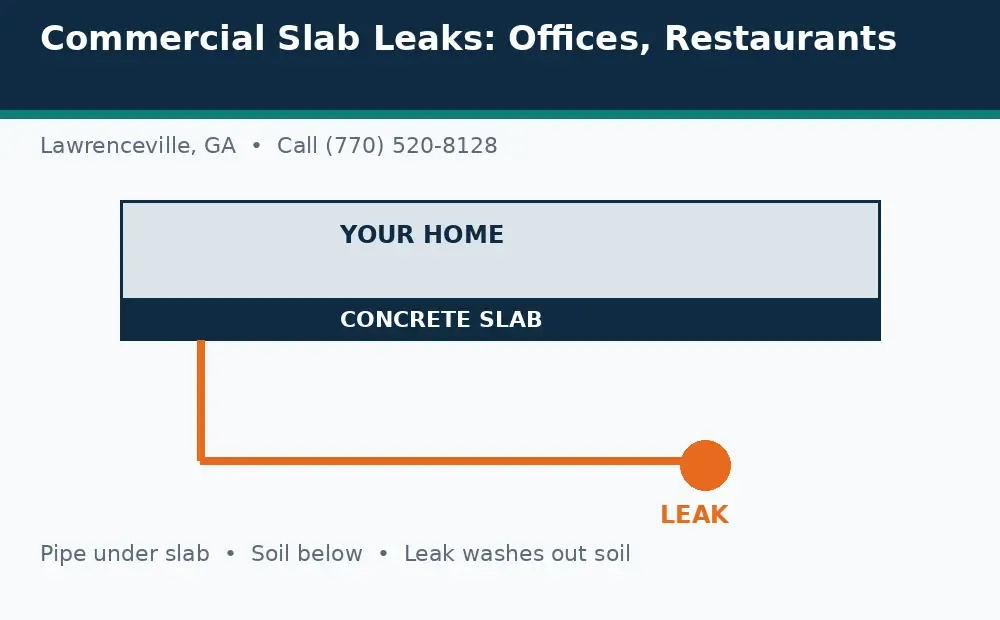
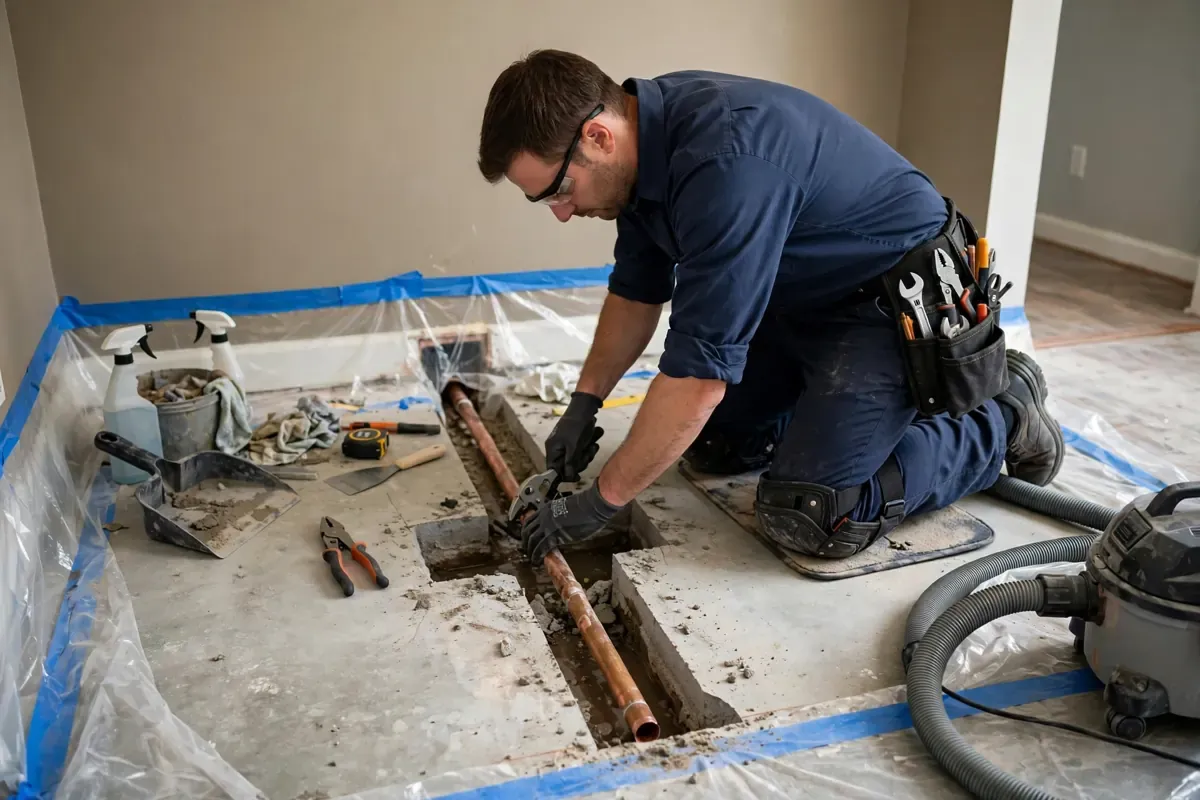
The images on this page are generic illustrations — a diagram and a stock photo — not photos of this business's own work or of a specific home. Call us at (770) 520-8128 if you are unsure what you are seeing.
The short answer: the pipe is a risk factor, not a leak
Finding polybutylene pipe in your home does not mean you have a leak today. Polybutylene is a flexible grey plastic pipe used in many 1980s and 1990s subdivisions, and it can split at fittings without warning — but a home with polybutylene under the slab is not automatically leaking. What the material does is change the decision: a single leak is read against a material history, not as an isolated event, and reroute or repipe enters the discussion far earlier than it would for copper or PEX. The pipe materials guide compares the four materials side by side; this guide answers the decision question that follows from it — when does polybutylene mean repipe, and when does it mean watch and test?
The honest answer is that there is no single date or age that decides it. The decision turns on evidence from your own home: whether the pipe has leaked before, whether the fittings are the failure point, whether an inspection has flagged the material, and what detection finds. This guide walks through the self-check you can do, the triggers that move the answer, and the three repair routes, with the published planning ranges only — detection $300-$600, spot repair $500-$4,000, lining $800-$3,000, reroute $1,500-$5,500, repipe $4,500-$15,000+ — and a written price after inspection. Nothing here promises a result; it gives you the same decision framework a technician uses, so the call you make is an informed one.
What polybutylene is, and how to spot it in your home
Polybutylene — often stamped PB2110 or branded Qest — is a flexible grey plastic pipe that was installed in many homes built or plumbed in the 1980s and 1990s, including subdivisions in Lawrenceville such as Collins Hill and Hurricane Shoals. It was withdrawn from the market after a documented pattern of failures at joints and along runs, and the failures often arrive without warning: a fitting splits, and water runs under the slab or inside a wall until something shows. The older homes guide explains why era and material should drive the repair choice in 1960s–1990s homes.
You can check for it where pipes are visible: under sinks, near the water heater, at the main shut-off, and where a supply line enters a wall. Look for flexible grey plastic pipe, often with plastic or metal fittings that differ from modern PEX fittings, and look for the PB2110 or Qest stamp on the pipe itself. But visible sections are clues only — they do not prove what runs under the slab, because homes can mix materials across eras and renovations. A home replumbed in part may show PEX at the heater and polybutylene under the slab, or the other way round. Previous repair invoices, inspection reports, and the technician's assessment during detection are what turn a clue into a material picture, and only an opened section or a camera finding confirms what is buried.
The self-check: four questions before you call
First, is there a stamp? Find a visible length and look for PB2110 or Qest. A stamp settles the identification; no stamp means you are guessing from colour and flexibility alone, which is not enough to plan a repipe. Second, when was the home built or last plumbed? A home from the 1980s or 1990s with original plumbing is in the window; a home replumbed since then may have polybutylene only in the runs that were never replaced, which is why the check has to be run by run, not house-wide. Third, what do the fittings look like? Polybutylene failures concentrate at fittings — the joints where the pipe meets a valve, a fixture, or another run — so corroded, stained, or weeping fittings matter more than a clean-looking length of pipe.
Fourth, what is the leak history? One leak in a polybutylene home is a warning in a way that one leak in a copper home is not, because the material history says the next failure is a matter of the same fittings, not bad luck. Note every leak: when it happened, where it showed, what it cost to fix, and whether the same run has failed before. Bring that list to the call, along with any inspection report that flagged the material. The recurring leaks guide explains when repeat leaks become the repipe trigger, and the detection visit guide lists what to gather before that visit.
The triggers that move the answer from watch it to repipe it
A second leak in the same run is the clearest trigger. One leak can be a single failed fitting; a second leak in the same material says the system is failing as a system, and spot repairs stop solving the pattern — which is why the whole-home repiping page says a full repipe is often the better long-term fix for polybutylene homes. A leak at a fitting, rather than in the middle of a run, points the same way, because fittings are where polybutylene fails. Water damage that keeps returning to the same room — a damp patch that dries and comes back, grout that never dries — is the same signal in slow motion.
Two triggers come from outside the plumbing. An inspection report that flags polybutylene — common when a home is being sold — turns a private decision into a transaction problem: a buyer, a lender, or an insurer may want the material addressed before closing, and a detection report plus a repipe plan turns the flag into a resolved line item rather than an open question. And a claim history matters: if a leak has already been through an insurance claim, the documentation from that claim — the detection report, the photographs, the itemised estimate — is the file the next decision starts from. The insurance claim process guide covers how that file is built. None of these triggers means a repipe is forced; they mean the cost of patching again has to be weighed against the cost of replacing once.
Patch, reroute, or repipe — what each does for a polybutylene home
A spot repair fixes one break through a small, targeted opening in the slab at the marked location. It fits a single leak in otherwise sound pipe, and it is the cheapest route — the published planning range is $500-$4,000 — but it leaves every other polybutylene fitting in place, so it is a bet that the next failure is a long way off. For polybutylene, that bet gets worse with every leak: the spot repair versus reroute versus repipe guide compares the routes, and the pattern in polybutylene homes is that the second leak arrives sooner than the first one did.
A reroute abandons the failed under-slab run and runs a new line through a wall or ceiling, bypassing the bad section without opening the slab — the published planning range is $1,500-$5,500. It fits a line that has failed before or is worn along its length, and it avoids the floor work a spot repair needs. Trenchless lining forms a new pipe inside the old one without breaking the slab — the published planning range is $800-$3,000 — but whether a line can be lined is decided by camera inspection, and a collapsed or offset pipe does not qualify. A whole-home repipe replaces all the supply lines overhead, usually in PEX or copper — the published planning range is $4,500-$15,000+ — and it ends the cycle of one repair per leak. The repair cost guide carries the full table, and the repair cost estimator gives a planning figure from those ranges once detection has found the break.
What a repipe actually involves
A repipe is a planned job, not an emergency one, and that is its main advantage: it happens on your schedule, with the water off for planned stretches rather than in the middle of a leak. The new lines are run overhead in PEX or copper, depending on the home, the route, and what fits, through walls and attic space where access allows. After the new lines are installed, they are pressure tested, then the walls and flooring are put back. A permit may be needed depending on the scope; the technician confirms what applies after inspection. The detection that comes first costs $300-$600 as a planning range, with a written price following inspection.
The part homeowners ask about most is the finish work: the concrete and flooring need putting back properly, and the concrete and floor restoration service page covers what that step includes. A repipe that runs overhead avoids opening the slab at all, which is one reason it suits polybutylene homes — the failing pipe stays buried and harmless while the new system takes over. The disruption is real — access holes in walls, a few days of work — but it is planned disruption, with a written price agreed before it starts, rather than the unplanned kind that begins with water on the floor.
What to tell us when you call
When you call, tell us whether you found a PB2110 or Qest stamp, when the home was built or last plumbed, whether the pipe has leaked before and where, and whether an inspection has flagged the material. Mention your ZIP code and whether any fitting is weeping or any floor is damp. That short list lets us plan detection around your polybutylene question, not around a guess.
Call (770) 520-8128 and describe your situation in plain words. We will talk through detection first, then a repair plan that fits your home.
Call Us Today
Fast local slab leak detection and repair in Lawrenceville, GA, ZIPs 30043–30046.
Call Now to Speak to a SpecialistFrequently asked questions
How do I know if my home has polybutylene pipe?
Look for flexible grey plastic pipe where it is visible — under sinks, near the water heater, at the main shut-off — and check for a PB2110 or Qest stamp. A stamp settles the identification. A home built or plumbed in the 1980s or 1990s with original plumbing is in the window, but visible sections are clues only: homes can mix materials across eras, so only an opened section or a camera finding confirms what runs under the slab.
Does finding polybutylene mean I must repipe immediately?
No, but it changes the conversation: the material's documented failure history means a single leak is read as a pattern warning, and reroute or repipe enters discussion far earlier than for other materials. A home with polybutylene and no leak history can be watched and tested, while a home with a second leak, a fitting failure, or an inspection flag moves toward repipe. Bring the identification to a technician and let the evidence decide.
Can a polybutylene leak be spot-repaired instead of repiped?
Yes, for one isolated leak in otherwise sound pipe — a spot repair fixes the single break through a small opening in the slab, at a published planning range of $500-$4,000. But spot repairs often do not solve the pattern in polybutylene homes, because every other fitting stays in place. A second leak in the same run usually ends the patching: at that point a reroute or a whole-home repipe is the route that stops the cycle.
How much does a polybutylene repipe cost in Lawrenceville?
The published planning range for a whole-home repipe is $4,500-$15,000+, a planning range only — the written price comes after a full inspection. The cost depends on the number of fixtures, the length of the runs, access through walls and attic space, and the finish work needed. Detection comes first at a planning range of $300-$600, and the repair cost estimator gives a planning figure from those ranges once the break is found.
Does polybutylene affect selling my home?
It can. An inspection report that flags polybutylene is a common finding in 1980s and 1990s homes, and a buyer, a lender, or an insurer may want the material addressed before closing. A detection report that describes the system, plus a repipe plan with a written price, turns the flag into a resolved line item rather than an open question. This guide is general information, not legal or real-estate advice — ask your agent what applies to your sale.