 Lawrenceville Slab Leak Detectors
Water Leak Under the Concrete Patio in Lawrenceville, GA
A water leak under a concrete patio in Lawrenceville, GA, rarely surfaces where the pipe broke. A wet patch that returns in dry weather, sinking pavers, and a spinning meter in ZIPs 30043 and 30045, from Sugarloaf to Collins Hill, are the signs to check before anyone digs.
What this looks like in a Lawrenceville home
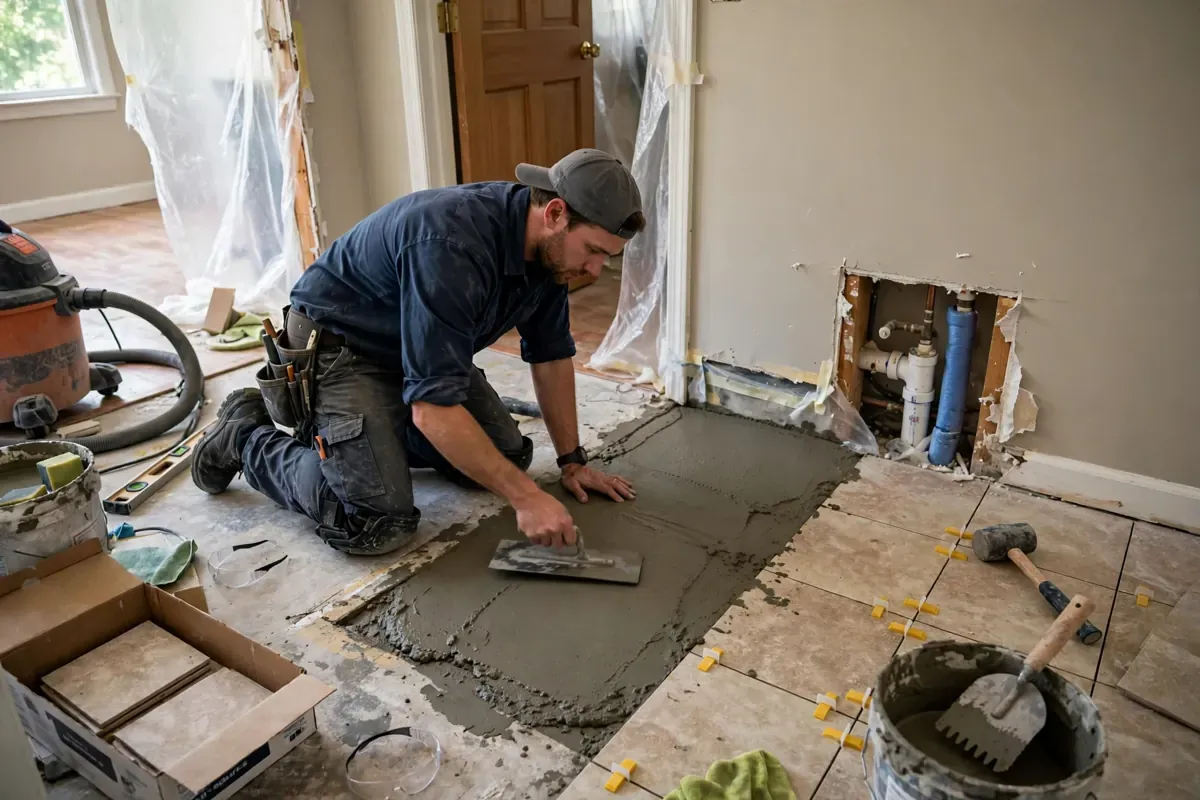
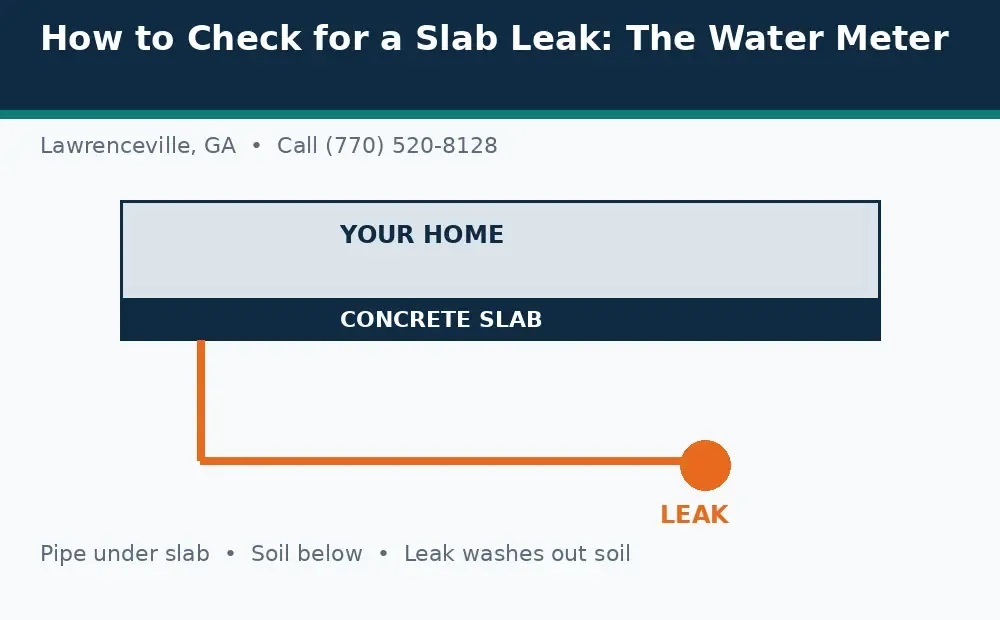
The images on this page are generic illustrations — a concrete-finishing photo and a water-meter-check diagram — not photos of this business's own work or of a specific home. Call us at (770) 520-8128 if you are unsure what you are seeing.
The short answer: the patio hides the break
A water leak under a concrete patio in Lawrenceville rarely surfaces where the pipe broke. The supply line to an outdoor tap, or the service line from the meter to the house, often runs under the patio, and water escaping from it travels through Georgia's red clay until it finds the easiest way up — a joint between pavers, the edge of the patio, or a low spot in the lawn beside it. So the wet patch you see may be several feet from the break, and the break may sit under solid concrete that looks completely dry. The main water line break guide covers the same line's yard signs; this guide covers what happens when that line runs under your patio instead of your lawn.
The combination that points under the patio is a wet patch that returns in dry weather plus a meter that keeps moving with everything off. Either sign alone has innocent explanations — a sprinkler, a heavy rain, a neighbour's runoff, water splashed from the patio itself — but the two together mean pressurised water is escaping somewhere on your side of the meter, and the patio is the first place to suspect when a line runs beneath it. Detection comes before any digging, because digging on a guess tears up concrete and often misses the break anyway. The published planning range for detection is $300-$600, a planning range only, with a written price following inspection.
Why a leak shows up on the patio
In most Lawrenceville homes the water service line runs from the meter at the street to the house in the shortest practical route, and for many homes that route crosses the patio. The line is buried underground, and the patio concrete sits directly over it, so a leak has no lawn to surface through — it spreads sideways through the clay until it finds a joint, a crack, or the edge of the slab. That is why a patio leak can run for weeks with no visible water at all, and why the first sign is often the water bill rather than a puddle. Outdoor taps and outdoor kitchens add a second possibility: a supply line branching off to a tap or an outdoor kitchen runs under the patio too, and a leak in that branch behaves the same way, surfacing at the patio's joints or edges.
Patios also carry a second risk: the concrete itself. A leak washing soil from under a patio leaves a void, and the slab above it settles or cracks. A crack that appears in a patio that has been stable for years, a section that has sunk slightly, or pavers that have shifted are all worth reading as possible leak signs, not just as age. Pavers make the reading easier than a poured slab: water finds the joints between pavers first, so a single joint that stays damp, or a paver that has sunk below its neighbours, points at the ground beneath it.
The signs, in the order you will usually notice them
The bill usually speaks first. A water bill that jumps with no change in use — no guests, no new irrigation, no filled pool — is the most reliable early sign of a pressurised leak. The meter is the check that confirms it: turn off every tap and appliance, including irrigation and the ice maker, and watch the dial for 15 to 30 minutes. A dial that moves means water is escaping from a pressurised line. The water meter leak test guide walks through the check step by step.
On the patio itself, look for a wet patch that returns after dry days, water pooling at the patio's low edge, or a joint between pavers that stays damp when the rest of the patio is dry. Look at the edges: a strip of grass beside the patio that is greener and faster-growing than the rest of the lawn, or soil that stays soft underfoot, means water is reaching the surface there. Look at the concrete: a new crack, a section that has settled, pavers that have shifted or sunk, or a hollow sound when you tap the slab. Feel for warmth: a hot-water leak under a patio can leave a warm patch on the concrete, most noticeable in the morning before the sun warms the slab. And check the patio-house joint: dampness or a musty smell where the patio meets the house wall can mean water is travelling along the foundation.
One sign can have an innocent cause, and a patio collects innocent water — rain, sprinkler overspray, a neighbour's downspout, water from washing the patio down. What separates a leak from weather is persistence: water that returns in a dry spell, a patch that stays wet when the rest of the patio is dry, a bill that stays high across two billing periods. Photograph the patch and note the date, so you can show whether it is growing or returning, and so the technician has a timeline instead of a single sighting.
A supply line, a drain, or an irrigation line — how to tell
The question that matters is which line is leaking, because the repair route and the right trade follow from the answer. The meter test tells you water is being lost; the shut-off test tells you where. With everything off, watch the meter, then shut off the main valve where the line enters the house and watch again. If the meter stops, the leak is inside the house — under the slab or in a wall. If it keeps moving, the leak is outside, in the service line or a branch under the patio.
A drain leak behaves differently: a smell, slow drains, or a soggy patch with no bill jump. An irrigation line is the third possibility under a patio: if detection shows the leak is in an irrigation line, that is an irrigation contractor's job, not a slab leak repair, and we will say so rather than sell a repair on the wrong line. Who to call follows from the same answer. Water in Lawrenceville now comes from Gwinnett County Water Resources, which took over the city's water distribution system on December 1, 2020. A water-main issue is the county's job; everything past the meter is a plumber's job. Do not dig to find out: the line's depth and route are not visible from the surface, and a shovel can turn a leak into a break.
How a leak under a patio is found without digging it up
Detection under a patio starts the same way it starts under a slab: confirm the loss, narrow the line, then pinpoint. Acoustic listening follows the sound of escaping water through the concrete — a pressurised leak makes a distinct hiss that sensitive equipment can hear through a patio slab. Thermal imaging maps warm areas for a hot-water leak, but it is less useful outdoors: sun warms a patio unevenly through the day, so a thermal reading on outdoor concrete needs to be weighed against the time of day and the weather, and a morning reading before the sun hits the patio is worth more than a midday one. Line tracing follows the pipe's route first, so the search starts on the line rather than on a guess.
For a stubborn leak that acoustic listening cannot pin down, a technician may use tracer gas — a harmless gas pumped into the line that escapes at the leak point, where a detector picks it up. Tracer gas is mentioned here only as a method a technician may use, not as a service on its own. Whatever the method, the result is the same: a marked spot on the concrete, not a trench.
Repair routes — and what happens to the patio
Whether concrete has to come up depends on the repair route. A single leak in otherwise healthy pipe is usually a spot repair: a small, targeted opening in the patio at the marked location, the pipe fixed, and the concrete put back. That opening takes out only the section directly over the break, and pavers make the job cleaner still — the affected pavers lift out and go back in, rather than being cut. A line that has failed before, or pipe worn along its length, may suit a reroute, where a new line runs around the patio — through the yard or along the house — and bypasses the bad under-patio section, or a lining, where a new pipe is formed inside the old one without breaking the concrete — both of which can avoid opening the patio at all. Whether a line can be lined is decided by camera inspection, and a collapsed or offset pipe does not qualify.
The published planning ranges are detection $300-$600, spot repair $500-$4,000, lining $800-$3,000, reroute $1,500-$5,500 — the repair cost guide carries the full table. A permit may be needed depending on the scope; the technician confirms what applies after inspection. Whatever route is chosen, the patio needs putting back properly, and the concrete and floor restoration service page covers what that step includes — including matching the existing patio finish, which depends on the age and type of the concrete or pavers, and making sure the ground beneath it is compacted so the repair does not settle later.
What to tell us when you call
When you call, tell us where the wet patch is and whether it returns in dry weather, what the meter did with everything off, and whether the patio concrete or pavers have cracked or settled. Mention your ZIP code and whether the line runs under the patio or the lawn. That short list lets us plan detection around your patio, not around a guess.
Call (770) 520-8128 and describe your situation in plain words. We will talk through detection first, then a repair plan that fits your home.
Call Us Today
Fast local slab leak detection and repair in Lawrenceville, GA, ZIPs 30043–30046.
Call Now to Speak to a SpecialistFrequently asked questions
How do I know if the water on my patio is a leak?
Dry the patch completely and watch it through a dry spell. Water that returns with no rain, no sprinkler, and no patio washing points at a leak, and the meter test settles it: turn off every tap and appliance and watch the dial for 15 to 30 minutes. A moving dial means a pressurised line is leaking. A dial that never moves rules out a supply leak — the water is rain, runoff, or a drain.
Can a leak under the patio damage my foundation?
Yes, if it runs. Water escaping under a patio washes soil from beneath the concrete, and the slab above it settles or cracks. The same water can travel through the clay toward the house slab, where it undermines the soil the foundation rests on. A leak that has been running for weeks deserves detection promptly, not because the house will fail tomorrow, but because the soil loss and the bill both grow while it runs.
Does a patio leak mean the whole patio has to come up?
No. A spot repair opens only the section directly over the marked break, and pavers lift out and go back in rather than being cut. A reroute or a lining can avoid opening the patio altogether, running a new line around it or forming a new pipe inside the old one. The concrete or pavers that are opened are put back as part of the job, and matching the existing finish depends on the age and type of the patio.
Could the leak under my patio be an irrigation line?
Yes, and detection is how you find out. An irrigation line runs under many patios, and a leak in it looks the same from the surface as a supply-line leak. The meter and shut-off tests narrow it down, and line tracing confirms which line is losing water. If detection shows an irrigation line, that is an irrigation contractor's job, not a slab leak repair, and we will say so rather than sell a repair on the wrong line.
How much does it cost to find and fix a leak under a patio?
The published planning range for detection is $300-$600, a planning range only. Spot repair is $500-$4,000, lining $800-$3,000, and reroute $1,500-$5,500 — the route depends on what detection finds and whether the pipe can be lined. The written price comes after inspection, and the patio restoration depends on the size of the opening and the finish to match.