 Lawrenceville Slab Leak Detectors
Can You Stay Home During Slab Leak Repair in Lawrenceville?
Lawrenceville homeowners can stay home during slab leak repair, because detection opens nothing and water shutoffs come in windows, not whole days without water. Downtown Lawrenceville and Collins Hill homes, ZIPs 30046 and 30043, should plan around noise, dust, and one working bathroom for spot repair, reroute, lining, or repipe.
What this looks like in a Lawrenceville home
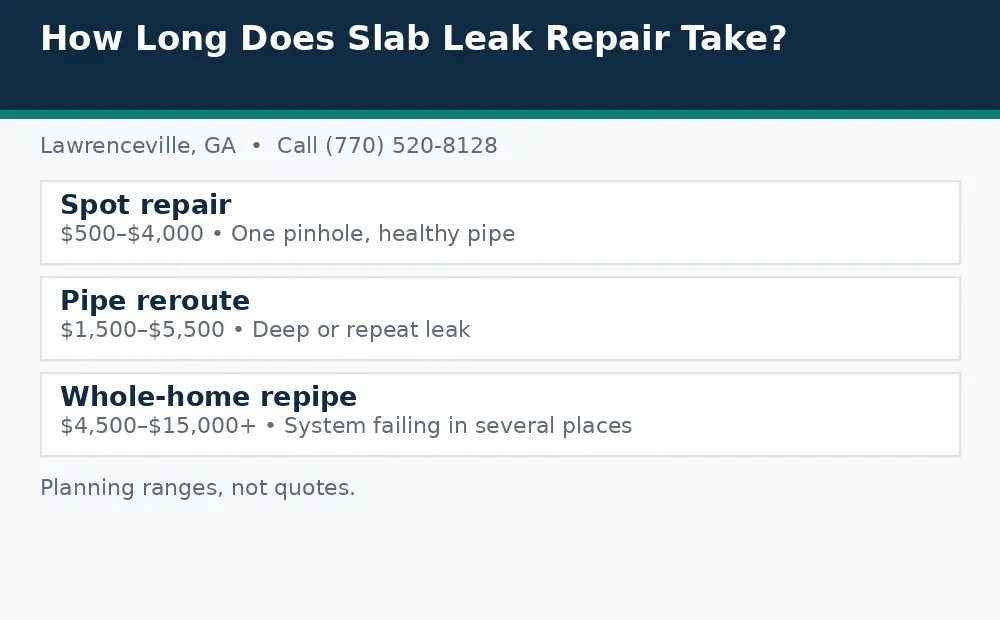
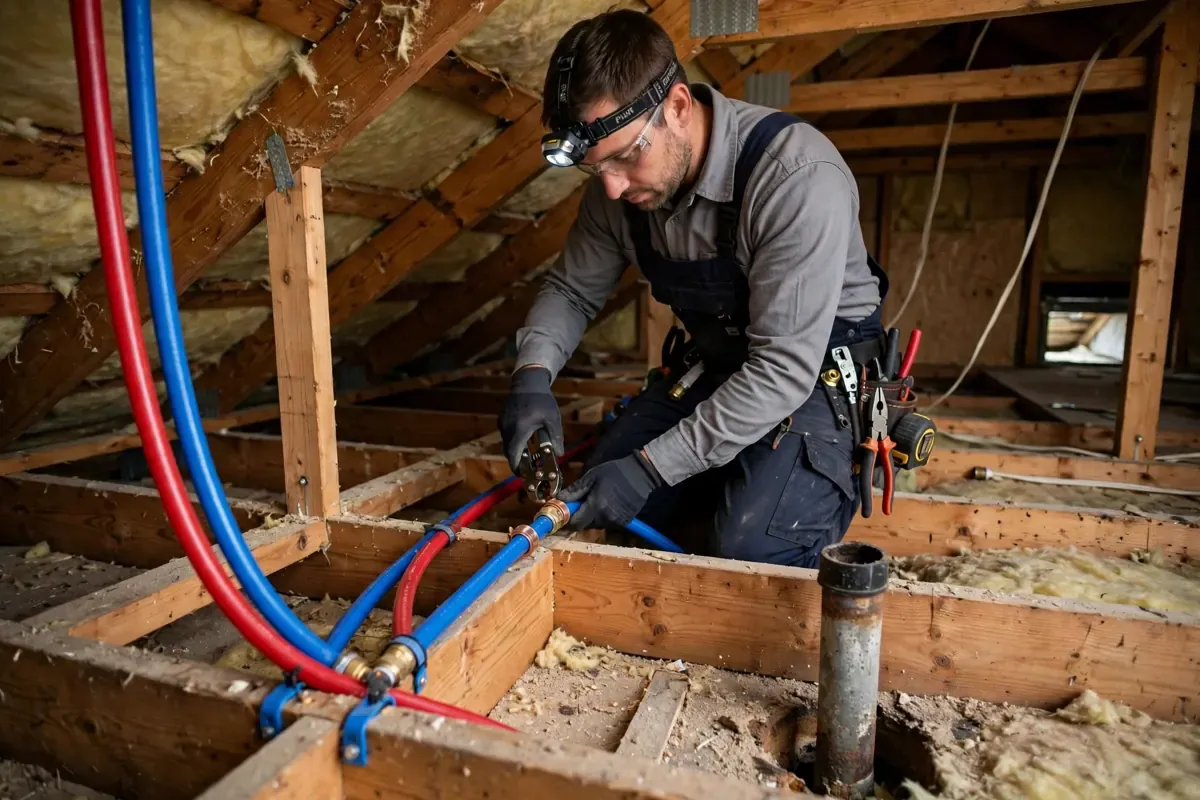
The images on this page are illustrative diagrams, not photos of a specific job at a specific address, and they are not presented as this business's own work. Call us at (770) 520-8128 if you are unsure what you are seeing.
The short answer: usually yes, with a plan
For most slab leak repairs, you do not need to move out. Detection itself asks almost nothing of you: acoustic listening, thermal imaging, and meter testing are non-destructive, nothing is opened up, and you can be home, working, or looking after children while they happen. The repair day is the part that needs planning, and the planning is about hours, not days. Water is shut off while the pipe itself is being worked on, then restored in stages, and the noisiest, dustiest work is usually confined to one room or one section of floor. That is why competitor repair pages and local guides alike give the same headline answer — staying is normal — and then spend their words on the exceptions, because the exceptions are what decide whether your household has a comfortable day or a miserable one.
The honest version of that answer has two halves. First, the method matters more than the label "slab leak repair": a single spot repair, a reroute through walls, a trenchless lining, and a whole-home repipe disrupt a home in very different ways. Second, your household matters as much as the method: a home with two bathrooms absorbs a water shutoff easily, while a one-bathroom home, a household with a baby, or someone sensitive to dust may find the same job much harder. This guide walks through both halves so you can judge your own repair, and it links to the repair-time guide and the questions-before-approving guide where the detail lives.
What each repair method means for a day at home
Spot repair opens one section of floor above the leak, fixes that section of pipe, and patches the concrete back. Expect concrete noise and dust in that room, a water shutoff during the pipe work itself, and a room you cannot use until the patch is safe to walk on. The rest of the house generally keeps working around it, which is why spot repair is the easiest stay-at-home job. A pipe reroute, by contrast, abandons the leaking under-slab section and runs a new line through walls or ceilings instead, as the pipe rerouting page explains. That means more rooms touched lightly — small openings, patched afterwards — rather than one room opened heavily, and water may be off in stages as sections switch over.
| Method | Water shutoff pattern | Staying at home usually means |
|---|---|---|
| Detection only | None | Normal day; no rooms closed |
| Spot repair | Off during pipe work, then restored | One room noisy and dusty; rest of house usable |
| Trenchless lining | Off in windows while the line is prepared and lined | Less floor opening; access points and curing time to plan around |
| Pipe reroute | Off in stages as sections switch over | Several rooms touched lightly; dust and patching spread out |
| Whole-home repipe | Zoned: sections switched over in turn | Longest disruption; plan one working bathroom throughout |
| Concrete and floor restoration | Usually none once pipe work is done | Rooms closed while patches and flooring cure |
The table is a planning guide, not a promise about your job. Timings vary with the leak's location, the pipe material, and what the floor is made of, and any recommendation should arrive with detection evidence behind it, never ahead of it. Planning ranges for the work itself are published on the repair-cost guide: spot repair $500-$4,000, lining $800-$3,000, reroute $1,500-$5,500, repipe $4,500-$15,000+, with detection $300-$600. Those are planning ranges, not a quote for your home, and a written price follows inspection.
When staying at home gets harder
Some situations turn a manageable repair day into a day better spent elsewhere, and it is worth naming them before the work starts. Sewage backing up into fixtures or onto floors is the clearest one: stop using the affected drains, keep children and pets away from the water, and do not treat it as a normal repair day, since the sewer detection page covers a different kind of job with different handling. Extensive floor opening is another: if the repair needs a large section of a main living room opened, or the only bathroom in the house is the room being worked in, the house may be technically habitable but practically unusable for the day. Dust matters too. Concrete cutting produces fine dust even with containment, so anyone with a respiratory condition, and any household with crawling babies or pets that cannot be kept out of the work zone, should ask specifically how dust will be contained and whether a day out is the wiser choice.
The remaining hard cases are about water itself. A home with a single bathroom has no fallback when that bathroom's supply is off, so even a short shutoff needs a neighbour, family, or facility plan. A home where someone works night shifts and sleeps days will feel daytime noise differently from a home empty during work hours. And a repair that grows — a second leak found once the first is opened, or a floor that needs longer to cure — can stretch a one-day plan into two. None of these means you must move out as a rule. They mean the stay-or-go decision should be made with the technician, on your home's facts, before work starts, rather than discovered at noon on repair day.
How to prepare if you are staying
Preparation turns a repair day from an endurance test into a routine. Clear access to the work area the night before: move furniture, rugs, and anything fragile out of the room, and clear a path from the door to the work area so equipment does not have to weave through your belongings. Fill a few containers with drinking water and set aside water for flushing before the shutoff begins, and agree with the technician which bathroom stays working and when the shutoffs will happen, so nobody discovers the water is off mid-shower. Keep pets in a room away from the work, with their own water, and plan children's movements the same way: one closed room is easy to manage when it is planned, and chaotic when it is improvised.
Ask about dust and noise containment directly, and ask what happens at the end of the day if the job is not finished: is water restored overnight, is the opening left safe to walk past, and is the room secured? Those three questions separate a well-run repair day from a stressful one, and they are the same discipline the detection-visit preparation guide recommends for the visit itself. If flooring or contents are already wet from the leak, the cleanup and drying guide explains what happens next in general terms, and that drying work, rather than the pipe repair, is often what keeps a room out of use longest. Finally, run the damage-risk scale tool before you call if you are unsure how urgent the leak is; it helps you describe the situation clearly rather than guessing at it.
Questions to settle before you approve the work
Before any repair begins, settle the stay-at-home questions in the same conversation as the repair itself. Which rooms will be opened, and which stay usable? When exactly will water be off, and will at least one bathroom keep working? How is dust contained, and who cleans the work area at day's end? What happens if the job runs past one day — is water restored overnight, and is the opening left safe? And what does restoration cover: concrete patching only, or flooring as well, and on what timeline? A technician who can answer those plainly is giving you the information a stay-at-home plan needs, and a recommendation that cannot answer them is not ready to approve.
That conversation is also where method choice meets daily life. A reroute that touches several rooms lightly may suit a household that needs its main bathroom untouched, while a spot repair that closes one room may suit a household with a spare room to spare. Neither is universally better; the right one is the one whose disruption your household absorbs most easily, for a leak whose location detection has actually confirmed. If you are weighing methods, the spot repair versus reroute versus repipe guide compares them side by side, and the repair-cost guide gives the planning ranges to weigh alongside them. Bring your household's constraints to that conversation — one bathroom, night-shift sleep, dust sensitivity, pets — because they are facts about the job, not footnotes to it.
What to tell us when you call
When you call, tell us how many bathrooms you have, which room the leak signs point to, whether anyone in the house is sensitive to dust or noise, and whether you plan to stay home during the work. Mention your ZIP code and whether sewage is involved, since that changes the handling entirely. That short list lets the visit be planned around your household, not just your pipe.
Call (770) 520-8128 and describe your situation in plain words. We will talk through detection first, then a repair plan that fits a day at home.
Call Us Today
Fast local slab leak detection and repair in Lawrenceville, GA, ZIPs 30043–30046.
Call Us: (770) 520-8128Frequently asked questions
Can I stay home during slab leak detection?
Yes. Detection uses acoustic listening, thermal imaging, and meter testing, none of which opens your floor or shuts off your water for the day. You can stay home, work, and carry on normally while the technician tests. Detection is the calm, non-destructive step that comes before any repair decision, and it is designed to be lived through without disruption.
Is water shut off for the whole repair day?
Usually not. Water is shut off while the pipe itself is being worked on, then restored in stages as sections are completed. A spot repair typically means a shutoff window during the pipe work, a reroute means staged shutoffs as sections switch over, and a repipe is zoned so one bathroom can keep working. Ask for the shutoff plan before work starts.
Which repair method is easiest to live through?
Detection is easiest, since nothing opens. Among repairs, a spot repair usually disrupts one room heavily while the rest of the house keeps working, while a reroute touches several rooms lightly instead. A whole-home repipe is the longest disruption. The best method for your household depends on which rooms you can spare and how many bathrooms you have.
Do I need to move out if the floor is jackhammered?
Usually not, as long as the opening is confined to one room and another bathroom keeps working. Concrete work brings noise and dust, so households with respiratory conditions, babies, or pets that cannot be kept out of the work zone should ask about dust containment. If the only bathroom is the room being opened, plan an alternative for the day.
What if sewage is backing up — can I still stay?
Treat sewage differently from a clean-water leak. Stop using the affected drains, keep children and pets away from the water, and do not treat it as a normal repair day. Sewer work follows different handling, and the visit should be planned around the backup first. Call promptly and say sewage is involved so the response is planned correctly.