 Lawrenceville Slab Leak Detectors
Slab Leak in a Lawrenceville Restaurant? Signs to Check
A slab leak in a Lawrenceville restaurant usually shows as a kitchen floor that stays wet after mopping, a water bill that jumps, or a warm tile patch. Near Downtown in ZIP 30046, the meter test after close confirms it before detection pinpoints the leak.
What this looks like in a Lawrenceville home
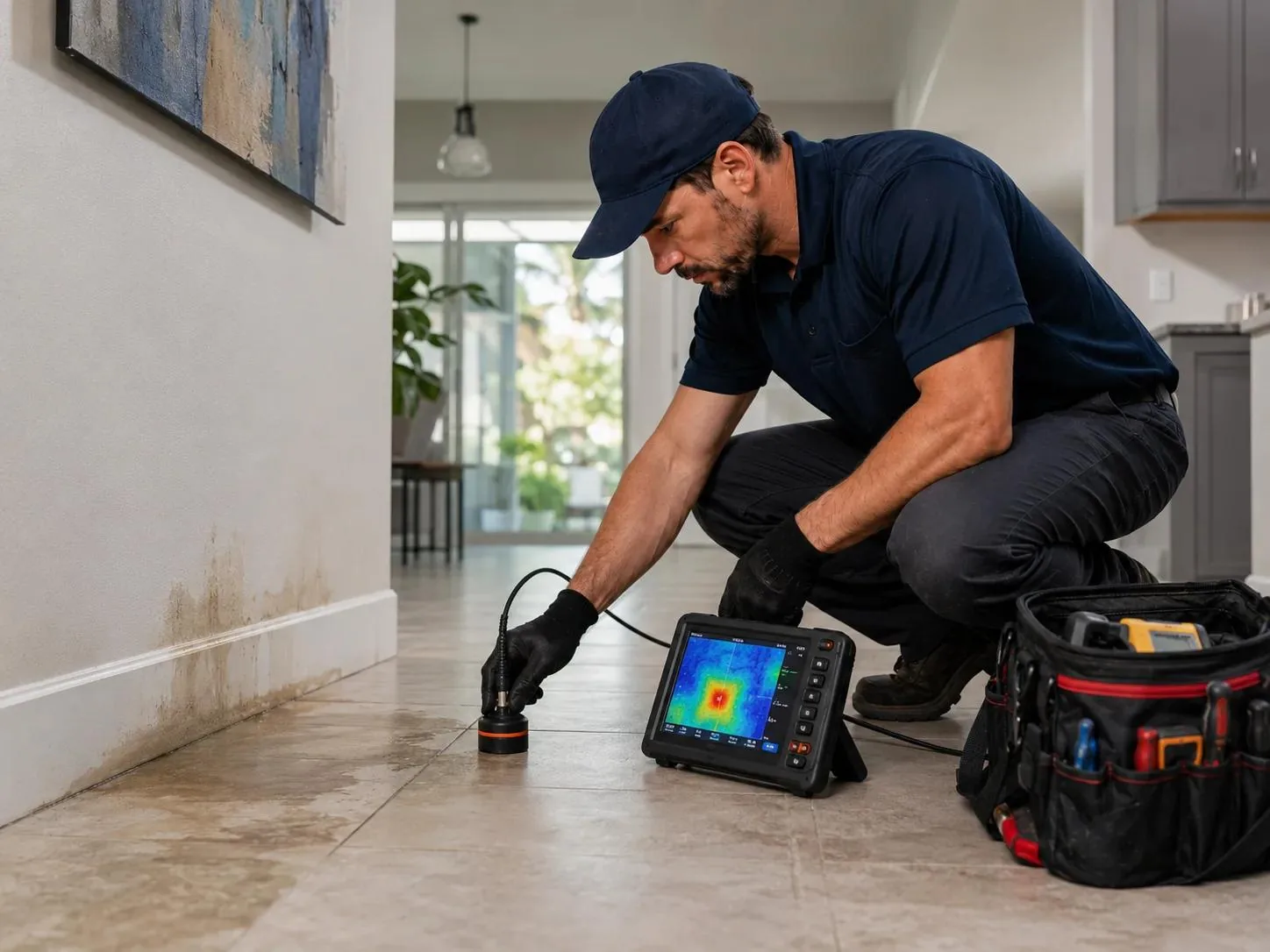
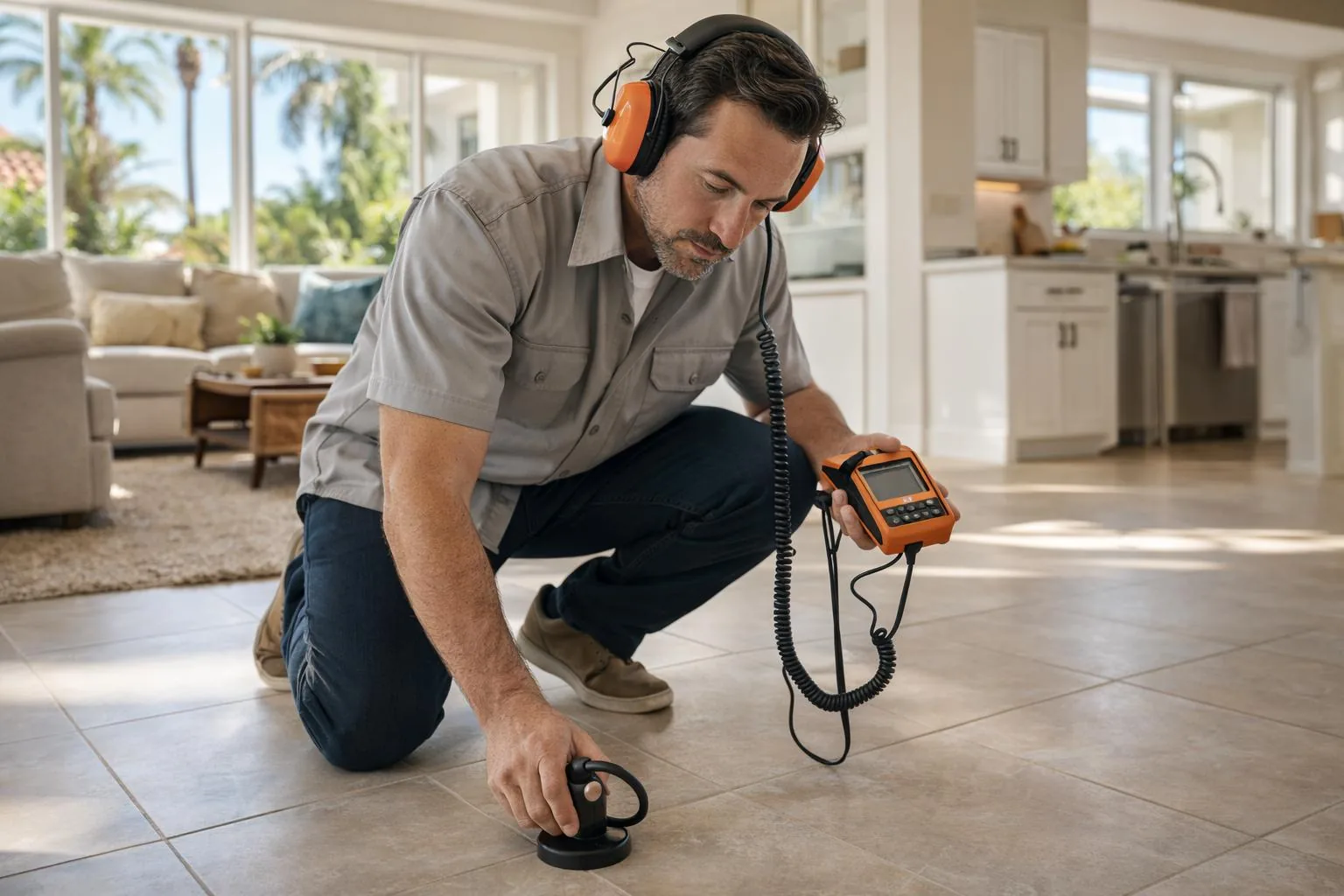
The images on this page are generic photos of leak detection equipment in use, not photos of this business's own work or of a specific home. Call us at (770) 520-8128 if you are unsure what you are seeing.
Signs of a slab leak in a restaurant
A slab leak in a restaurant usually shows up first on the floor, not at the water heater. The kitchen is where it starts: a patch of tile that stays wet after mopping, grout that darkens and never dries, or a floor that is damp again every morning in the same spot, after it was mopped and left dry overnight. A warm patch on the floor points to a hot-water line leaking underneath; a cold damp patch points to a cold-water line, or to a drain. The dining room gives the same signs in a quieter form: tiles that lift, a musty smell near the base of a wall, or carpet that feels damp underfoot in one area. The water bill is the second tell. A jump with no change in covers served or hours open means water is leaving the system somewhere, and a restaurant uses enough water that a leak shows up on the bill faster than it does in a house. Low pressure at the kitchen taps and the restroom sinks at the same time is a third sign: one fixture alone is a fixture problem, but several at once is a system problem. A faint sound of running water after close, when every tap is off, belongs on the same list. A slab leak is not the only cause of a wet restaurant floor. A blocked floor drain, a dishwasher leak, a mop sink overflow, a leaking ice machine line, or condensation can all wet a kitchen floor, and the meter test in the next section is what separates them. But a floor that is wet again every morning, in the same place, after the floor was cleaned and left dry, is the pattern that points under the slab. The signs guide puts each of these in context, and the commercial slab leak guide covers offices, restaurants and HOAs together.
Why a restaurant leak is different from a home leak
A restaurant has more pipe under its slab than a house, and more of it is in use all day. The kitchen, the bar, the restrooms and the mop sink sit on the same slab, fed by longer pipe runs with more joints, and a leak can sit under any of them. That matters for two reasons. First, the leak has more places to hide: a wet patch in the dining room may come from a line that runs under the kitchen, because water travels along the pipe and through the ground before it shows on the surface. Second, the floor cannot be opened on a guess. A dining room torn up in the wrong place costs a restaurant its tables, so detection comes first and the floor is only opened once detection has marked the leak. Detection visits run Monday to Saturday, 8:00 AM to 6:00 PM, and are planned to limit disruption to service: the meter test, acoustic listening and thermal imaging are all done without opening the floor, and the work is scheduled around the restaurant where the day allows. The person who books the visit gets the detection findings and the written price. If the restaurant leases the building, check the lease first: it usually says who pays for plumbing under the slab, and that answer belongs in the call. A restroom leak needs the same care as a kitchen leak. A slab leak under a restroom can look like a toilet leak, so the fixtures are isolated first — a toilet that keeps running is a fixture, not a pipe under concrete — and only then does the search move under the slab. The commercial detection service page sets out what a detection visit covers.
What to check first: the meter test after close
The fastest check a restaurant can run costs nothing and takes a few minutes after close. Turn off every tap and appliance: the kitchen taps, the dishwasher, the ice machine, the mop sink, the bar, and the restroom toilets. Then look at the water meter dial. If it moves with nothing running, water is leaving the system somewhere, and a slab leak is the first suspect when the wet patch is on the floor. If the dial holds still, the cause is above the slab — a drain, a fixture, or a spill — and the search moves there instead. The shut-off test is the second check. Listen for the running-water sound with the house quiet, then close the main water shut-off valve and listen again: if the sound stops the moment the main is closed, you are hearing pressurized water, and a slab leak is the likelier answer. The shut-off guide shows where the main valve usually sits in a Lawrenceville building. The water meter leak test guide walks through the meter test step by step, and a moving dial plus a sound that stops with the main closed is a strong pair: two independent checks pointing at the same pressurized leak. Write down both results before you call, because they tell the technician whether detection should start with listening or with pressure and thermal checks. If the dial moves but you hear nothing, the leak is still real: some leaks are too quiet to hear, and the meter is the check that catches them. If the floor is wet but the dial holds still, say so when you call — a drain-side leak under the slab does not move the meter, and the sewer versus supply guide explains how to tell the two apart.
How detection finds it without tearing up the dining room
Detection is the step that keeps a restaurant's dining room intact. It starts with the meter test, which confirms water loss, and then narrows the search with methods that do not open the floor. Acoustic listening uses ground microphones to find where the hiss of a pressurized leak is loudest; thermal imaging looks for the warm patch a hot-water leak leaves in the floor; pressure testing isolates the hot and cold lines separately to show which one is losing pressure. A sewer camera covers the drain side when the meter holds still but the floor is wet. Tracer gas appears only as a method a technician may use, never as a service on this site. The detection methods guide covers the full set, and the acoustic and thermal guide explains what the listening equipment does with the same sound a manager hears after close. Detection in Lawrenceville runs in the site's published planning range of $300–$600, with a written price following inspection, and the detection cost guide explains what the visit covers. Once the leak is found, the repair routes are the same as for a house: spot repair, which opens the slab at the marked leak; a reroute, which abandons the old line and runs a new one through the walls or the attic; trenchless lining, which seals the pipe from the inside; and a whole-home repipe for a system that keeps leaking. The spot repair versus reroute versus repipe guide compares them, and the repair cost guide carries the published planning ranges: spot repair $500–$4,000, lining $800–$3,000, reroute $1,500–$5,500, and whole-home repipe $4,500–$15,000 or more. After repair, the concrete and floor restoration page covers putting the floor back. In Lawrenceville, the ground under most slabs is red clay, which swells when wet and shrinks when dry, so a leak that runs for months keeps the ground moving under the slab — the Georgia red clay guide explains why that matters, and why a wet patch found early is a smaller job than the same patch found a year later.
What to tell us when you call
When you call, tell us where the wet patch is and on what kind of floor, whether the meter dial moved with everything off, whether the sound stops when the main is closed, whether any floor feels warm in the same spot, and your ZIP code — plus whether you own or lease the building. That short list tells us whether we are listening for an active supply leak, a drain problem, or a fixture, and what the detection should show first.
Call (770) 520-8128 and describe the floor in plain words. We will talk through the meter test and the shut-off test first, then detection if the tests point that way.
Call Us Today
Fast local slab leak detection and repair in Lawrenceville, GA, ZIPs 30043–30046.
Call Now to Speak to a SpecialistFrequently asked questions
Can a restaurant stay open during slab leak detection?
Yes. Detection is non-invasive: the meter test, acoustic listening, thermal imaging and pressure testing are all done without opening the floor, so the dining room stays usable. Visits run Monday to Saturday, 8:00 AM to 6:00 PM, and are planned to limit disruption to service. The floor is only opened once detection has marked the leak and a written price has been agreed after inspection.
What does a slab leak look like in a restaurant kitchen?
A tile patch that stays wet after mopping, grout that darkens and never dries, a warm patch on the floor from a hot-water line, a water bill that jumps with no change in covers served or hours open, low pressure at several fixtures at once, or a musty smell at the base of a wall. One sign alone is a reason to test; two or more together point under the slab.
Is a wet kitchen floor always a slab leak?
No. A blocked floor drain, a dishwasher leak, a mop sink overflow, a leaking ice machine line, or condensation can all wet a kitchen floor. The meter test separates them: turn off every tap and appliance after close and watch the dial. If it moves with nothing running, water is leaving the system, and a slab leak is the first suspect. If it holds still, the cause is above the slab.
How much does slab leak detection cost for a restaurant?
Detection in Lawrenceville runs in the published planning range of $300–$600, not a quote, and the written price for any repair comes after inspection. Repair planning ranges are spot repair $500–$4,000, lining $800–$3,000, reroute $1,500–$5,500, and whole-home repipe $4,500–$15,000 or more. The detection visit covers finding and pinpointing the leak.
Who should call — the owner, the manager, or the landlord?
Whoever manages the building can book the visit, and the detection findings and written price go to the person who books it. If the restaurant leases the building, check the lease first: it usually says who pays for plumbing under the slab. Bring that answer to the call, along with the meter result and where the wet patch is.