 Lawrenceville Slab Leak Detectors
Electronic Leak Detection in Lawrenceville, GA
Electronic leak detection in Lawrenceville, GA, is not one tool but three — electromagnetic locators, acoustic sensors, and thermal imaging — used in sequence to find a leak under a slab. In ZIPs 30043 and 30044, from Collins Hill to Sugarloaf, the right method depends on your pipe and slab.
What this looks like in a Lawrenceville home
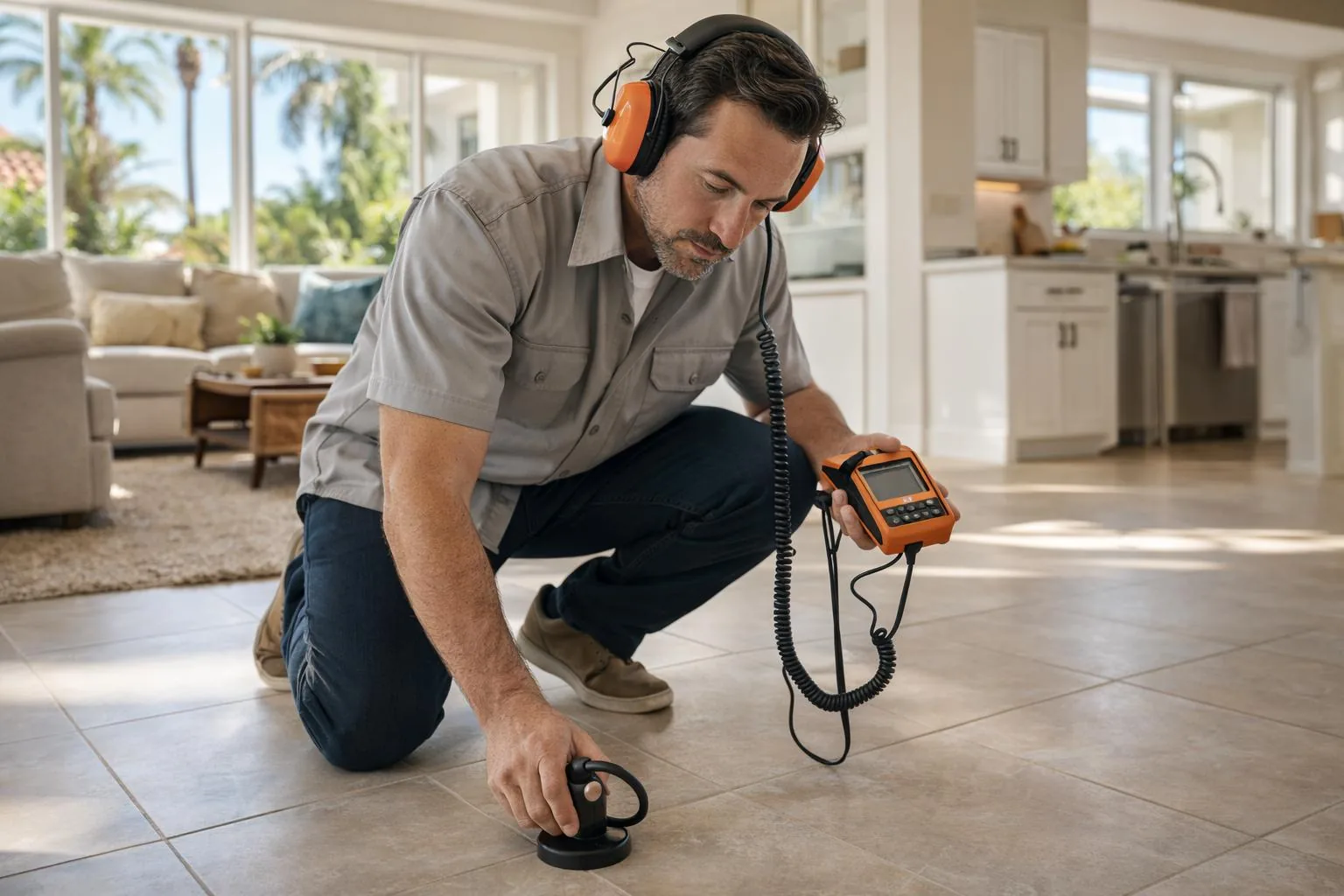
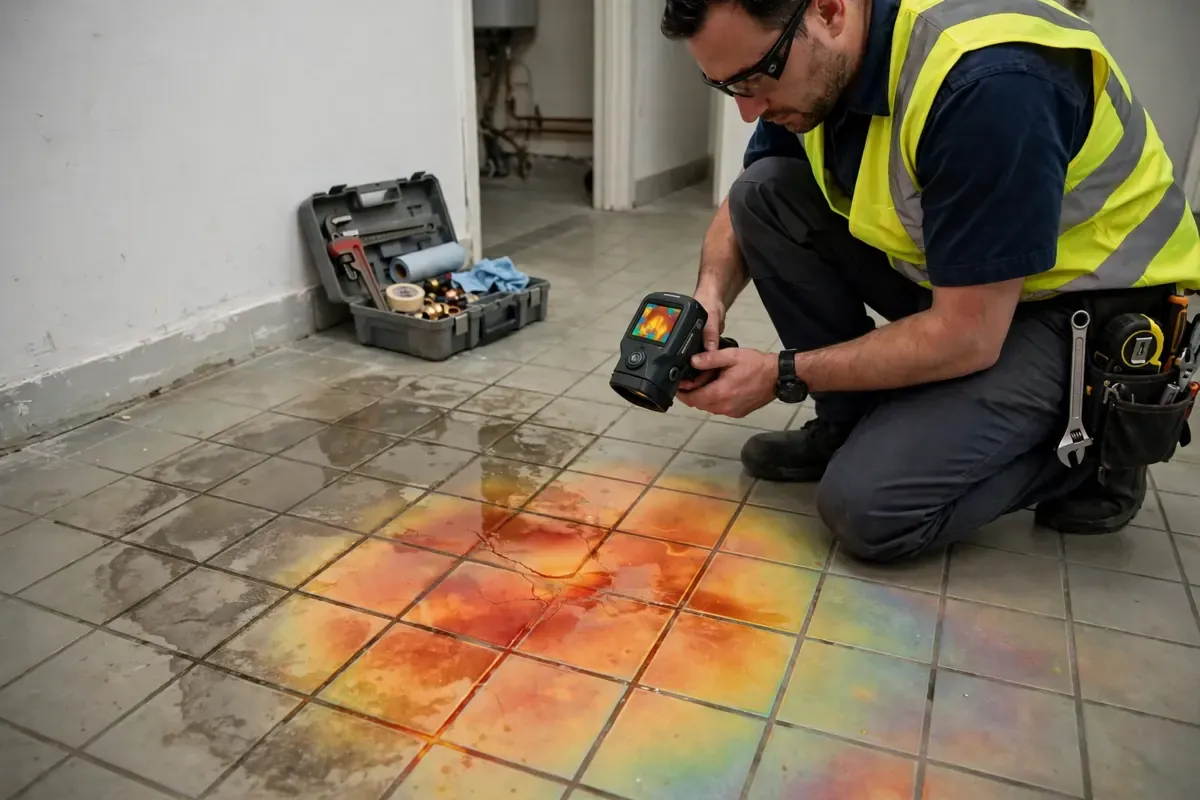
The images on this page are generic illustrations — an acoustic-listening photo and a thermal-imaging photo — not photos of this business's own work or of a specific home. Call us at (770) 520-8128 if you are unsure what you are seeing.
The short answer: "electronic" is three tools, not one
When a Lawrenceville plumber says a leak will be found with electronic leak detection, the word covers three different technologies, used in sequence rather than chosen between. Electromagnetic locators trace the pipe's route through the ground and the slab. Acoustic sensors listen for the sound of water escaping under pressure. Thermal imaging cameras map temperature differences on the floor surface. Each one answers a different question. The meter test still comes first — it confirms water is actually being lost before any equipment comes out — and the water meter leak test guide walks through that check step by step.
The three are grouped under one name because none of them breaks concrete. All three work from above the floor, through tile, concrete, and soil, and narrow the leak to a marked spot before anything is opened — so the floor is opened once, at the leak, for the repair. The published planning range for detection is $300-$600, a planning range only, with a written price following inspection. What follows is what each method does, when it is the right first move, and where it stops being useful.
Electromagnetic locators: tracing the pipe's route
The first question in any detection is where the pipe runs. A locator answers it by sending an electromagnetic signal through a metallic pipe — or along a tracer wire laid beside a plastic one — and following that signal from above the floor. The technician walks the floor with a receiver and marks the pipe's route as the signal peaks. That map matters because the leak can only be on the pipe. The locator can also show where the pipe's continuity breaks: a signal that stops or weakens at a point suggests the pipe itself has failed there, which is why electromagnetic detection is sometimes described as finding the exact point where the pipe's continuity is broken.
The method has clear limits, and they are worth knowing before you pay for it. It traces metal well and plastic poorly — a copper line gives a strong, readable signal, while a PEX or PVC line needs a tracer wire to follow at all, and a line with no tracer wire may not be traceable this way. It is also the method most affected by what is already in the slab: under a post-tension slab, the steel tendons running through the concrete create electromagnetic interference that the locator reads as noise, so the reading can misplace the pipe or fail outright. The post-tension slab leak detection guide explains why acoustic listening becomes the primary method there. A locator traces the pipe, not the water — it tells you where the line runs, not where it leaks, so it hands the job to the listening equipment rather than giving a verdict on its own.
Acoustic sensors: listening for the leak itself
Acoustic detection is the method that actually finds the leak. Water escaping from a pressurised pipe makes a distinct sound — a hiss or whoosh as it forces its way through a crack or pinhole — and a ground microphone pressed to the floor picks that sound up through concrete and tile. The technician moves the sensor across the floor in a grid pattern, listening for where the sound is loudest, and marks the spot where it peaks. In quiet conditions it can narrow the leak to within a few feet. Acoustic leak detection is an offered service, and the acoustic and thermal detection guide explains the listening process in more detail.
Sound is the most direct signal a leak produces, but it is also the easiest to lose. Georgia's red clay dampens sound, so the sensors sit closer together here than they would in sandy soil, and the grid takes longer to walk. A pinhole leak makes a fainter sound than a split pipe, and a leak in a plastic line is quieter still, because plastic carries sound poorly compared with copper. Background noise matters too: a running appliance or a humming water heater can mask the leak's sound, which is why the house is quieted before listening starts. When acoustic listening cannot pin a stubborn leak down, a technician may use tracer gas, a harmless gas pumped into the isolated line that escapes at the leak point, where a detector picks it up. Tracer gas is mentioned here only as a method a technician may use, not as a service on its own. For a leak in a drain or sewer line, which is not pressurised, listening does not work at all — that is a camera job, and the sewer camera inspection guide covers it.
Thermal imaging: heat as a clue, not a verdict
A thermal imaging camera reads temperature differences on the floor surface, and a hot-water leak leaves a warm patch where the hot water is moving under the slab. The camera shows that patch as a bright area on an otherwise even floor, which is why thermal imaging is the natural partner to acoustic listening for a hot-water leak: the listening finds the sound, the camera confirms the warmth, and the two together place the leak with more confidence than either alone. Thermal imaging is an offered service, and it also shows whether a warm spot is a leak at all — a heating vent or a sun-warmed patch can feel warm to the foot, and the camera shows the pattern that separates a leak from a normal run.
The limits are straightforward. Thermal imaging only helps with a hot-water leak: a cold-water leak leaves no warm patch, so the camera has nothing to see. It reads the floor surface, so thick tile, carpet, or rugs blur the picture, and it reads best in the morning before the sun warms the slab. Outdoors it is far less useful — sun warms a patio or driveway unevenly through the day, so a thermal reading on outdoor concrete needs to be weighed against the time of day and the weather. A warm patch is a clue, not a verdict: only the meter test and the listening confirm that water is actually being lost. A camera that finds warmth without a confirmed loss has found a warm floor, not a leak.
When electronic detection misleads — and what happens then
Every method has a slab it struggles with, and knowing the failure modes is how you tell a careful detection from a rushed one. Under a post-tension slab, the steel tendons interfere with electromagnetic locators, so the route map is unreliable and acoustic listening takes over as the primary method. With plastic pipe and no tracer wire, the locator cannot follow the line, so the search starts from the fixtures and the meter instead. A very small pinhole leak may be too quiet for the ground microphone, and a leak deep under a thick slab or several feet of red clay quieter still. A noisy house — a running washing machine, a humming appliance, traffic from a busy road — can mask the sound entirely.
None of these is a dead end; each one changes the sequence. A pressure test isolates sections of pipe and shows which one is losing pressure, separating a true leak from a normal pressure drop. Line tracing still comes first where it can be done, so the search starts on the pipe's route and the tendon layout, not on a guess. Where listening cannot pin the leak down, tracer gas or a leak noise correlator — sensors at two access points that calculate the leak's position from the noise's travel time — can place it. And where the line is a drain rather than a supply line, the camera replaces the microphone entirely. The detection methods guide maps each method to the question it answers. What a careful detection never does is skip to cutting: if the methods disagree, the honest answer is more detection, not a hole in the floor.
What a detection visit looks like, step by step
A detection visit follows the same order whatever the methods used. First the meter test and a pressure test confirm the loss and narrow it to a line. Then the locator traces the pipe's route where it can, and the listening follows: the ground microphone moves across the floor in a grid, and the loudest point is marked. For a hot-water leak, the thermal camera checks the marked area for a warm patch. The result is a marked spot on the floor, a line identified, and a written price for the repair after inspection — in that order. The repair cost guide carries the published planning ranges: detection $300-$600, spot repair $500-$4,000, lining $800-$3,000, reroute $1,500-$5,500, and whole-home repipe $4,500-$15,000 or more.
Judge the visit by whether the sequence happened, not by how much equipment was carried in. A visit that starts with listening before the meter test has skipped the confirmation; one that marks a spot from the locator alone has marked a pipe, not a leak; one that opens the floor without a mark is guessing. And a visit that cannot explain which method found the leak, and why it was right for your pipe and slab, has not done the explaining the price assumes. The repair routes themselves — spot repair, reroute, lining, repipe — are chosen from what detection finds, and the spot repair versus reroute versus repipe guide compares them. Whatever route is chosen, the concrete and flooring need putting back properly, and the concrete and floor restoration service page covers what that step includes.
What to tell us when you call
When you call, tell us what you have seen — a warm spot, a high bill, a spinning meter, the sound of running water — and what kind of pipe and slab you have, if you know: copper or plastic, conventional or post-tension, and your ZIP code. That short list tells us which electronic method to lead with, instead of starting from a guess.
Call (770) 520-8128 and describe your situation in plain words. We will talk through detection first, then a repair plan that fits your home.
Call Us Today
Fast local slab leak detection and repair in Lawrenceville, GA, ZIPs 30043–30046.
Call Now to Speak to a SpecialistFrequently asked questions
What is electronic leak detection, exactly?
It is an umbrella term for three technologies used to find a leak without breaking concrete: electromagnetic locators that trace a pipe's route, acoustic sensors that listen for the sound of water escaping under pressure, and thermal imaging cameras that map warm areas on the floor. They are used in sequence, not chosen between — the locator maps the route, the listening finds the leak, and the camera confirms a hot-water leak.
Does electronic leak detection work through tile and concrete?
Yes — that is the point of it. The ground microphone hears the sound of escaping water through tile, concrete, and soil, and the thermal camera reads temperature differences on the floor surface. Thick tile, carpet, or rugs blur a thermal reading, and Georgia's red clay dampens sound, so the sensors sit closer together here than in sandy soil — but the methods still work from above the floor, with no concrete broken.
Why would electronic detection fail under a post-tension slab?
The steel tendons running through a post-tension slab create electromagnetic interference that an electromagnetic locator reads as noise, so the locator can misplace the pipe's route or fail to give a usable reading. Acoustic listening does not depend on those signals, so it becomes the primary method under a post-tension slab. Nothing is cut until the tendons are located and the leak is pinpointed.
Can electronic detection find a leak in a plastic pipe?
It can, but the method changes. Plastic pipe carries sound poorly, so acoustic listening is quieter and harder to read than on copper, and an electromagnetic locator cannot follow a plastic line without a tracer wire laid beside it. For a stubborn plastic-line leak, a technician may use tracer gas, which escapes at the leak point and is picked up by a detector. The meter test still confirms the loss first.
How much does electronic leak detection cost in Lawrenceville?
The published planning range for detection is $300-$600, a planning range only, with a written price following inspection. The repair price depends on the route, not the detection method: spot repair $500-$4,000, lining $800-$3,000, reroute $1,500-$5,500, and whole-home repipe $4,500-$15,000 or more. The written price comes after inspection, once detection has found the break.