 Lawrenceville Slab Leak Detectors
Water Heater Running Constantly: Is It a Hot-Water Slab Leak?
A water heater that runs constantly in a Lawrenceville home can mean a hot-water slab leak, because escaping hot water forces constant reheating. Homeowners in Downtown Lawrenceville and Bethesda, ZIPs 30046 and 30045, should check for a warm floor patch and run a meter test.
Key takeaways
- A hot-water leak makes the heater work continuously: cold replacement water keeps arriving, so the heater never rests.
- Warm floor patches are the corroborating sign — heat escaping under the slab warms the floor above the leak.
- A gas or electric bill jump alongside heater cycling strengthens the case, but the meter test decides it.
- Isolate the hot-water side first: if the loss stops with hot water isolated, the hot line is the suspect.
What this looks like in a Lawrenceville home
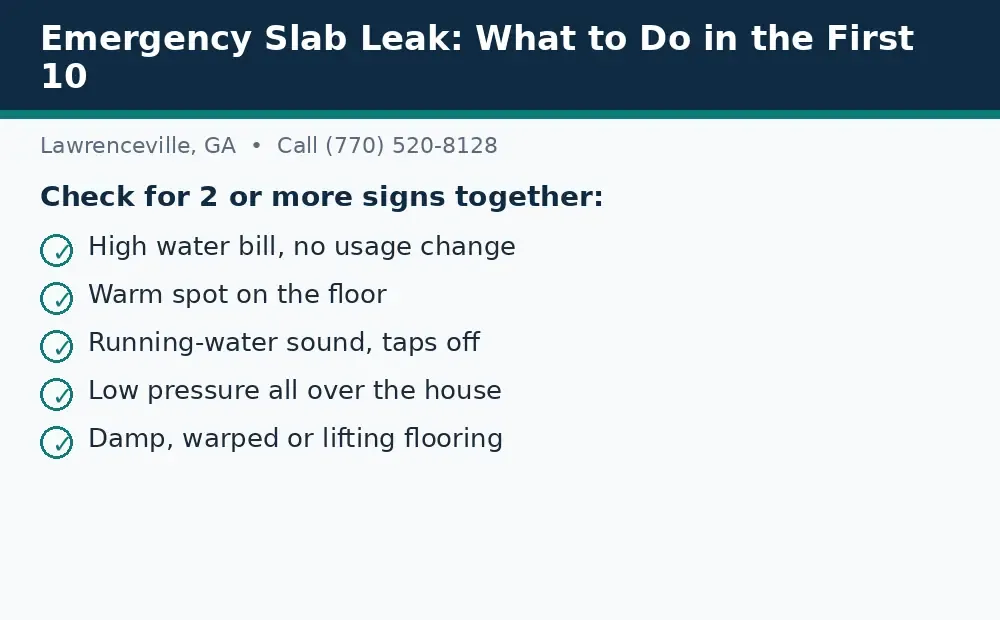
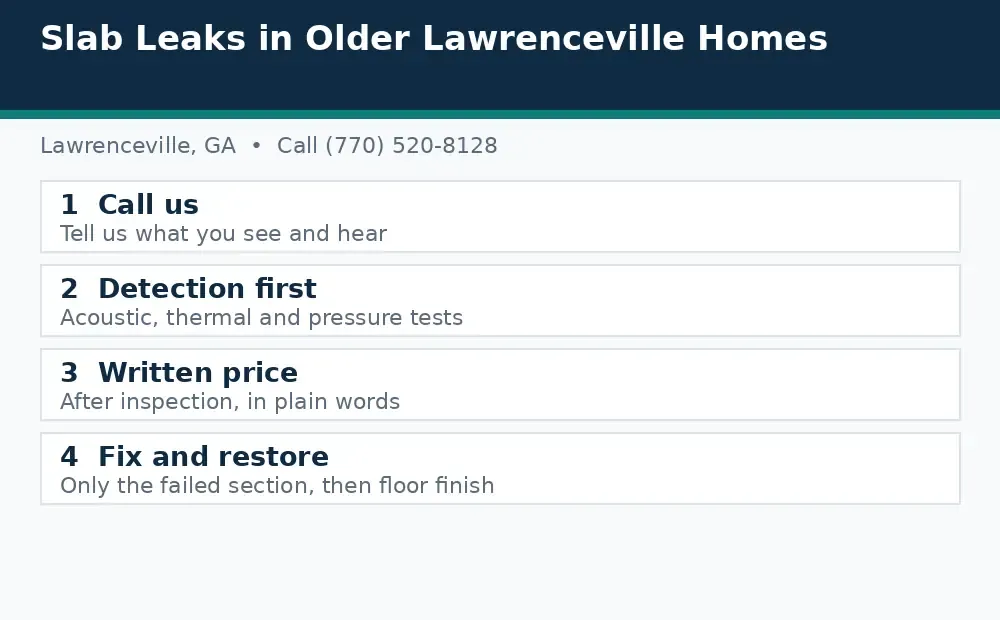
The working photo on this page is an illustrative working photo, not a photo of a specific job at a specific address. The diagrams are schematics, not to scale, made to explain the signs, process, options, or costs on this page in plain words. Call us at (770) 520-8128 if you are unsure what you are seeing.
Why would a slab leak make a water heater run constantly?
A water heater's job is to keep a tank of water hot. In a healthy system, it heats, rests, and reheats only as hot water is used. A leak on the hot-water line breaks that rest cycle: hot water escapes under the slab, cold water flows in to replace it, and the heater fires again to heat the replacement — continuously, whether anyone is using hot water or not. The result is a heater that seems never to switch off, a gas or electric bill that climbs without any change in showers or laundry, and a system working far harder than its design intends.
The mechanism matters because it explains why heater cycling is a clue rather than a fault in itself. The heater is behaving correctly for the conditions it faces; the conditions are wrong because water is leaving the system. Replacing or servicing the heater without checking for a leak treats the symptom and leaves the cause running — literally. If your heater's behaviour changed without any change in household hot-water use, the question to ask first is not 'what is wrong with the heater' but 'where is the hot water going', and the meter test is how that question gets answered. The hot-water slab leak repair page covers the service side, and this post covers the recognition side.
What other signs accompany a hot-water slab leak?
Warmth is the signature companion. Hot water escaping under concrete warms the slab above it, and that warmth reaches the floor as a patch that feels warm to bare feet while surrounding floor feels normal. The patch often sits in a hallway, bathroom, or kitchen — rooms over hot-water runs — and it persists regardless of heating or weather, unlike sun-warmed floor that changes with the day. A second companion is the bill: gas or electric use climbing alongside water use, because the heater is burning fuel or power to heat water that never reaches a tap.
A third companion is sound and pressure behaviour on the hot side specifically: hot taps that sputter, hot water that runs cooler than usual at distant fixtures because the leak steals flow and heat along the way, or a faint running sound near the heater or the warm patch. Any one of these alone has innocent explanations — a warm patch can be a sun spot, a bill jump can be seasonal — but a heater cycling constantly plus a warm patch plus a bill jump is a cluster that deserves a meter test the same day. Record the cluster with the symptom checker before you call, so the pattern is presented together rather than as scattered worries.
How do I test whether the hot-water line is the problem?
Start with the meter test, then narrow to the hot side. Everything off, read the dial, wait, read again: movement confirms real loss. Then, if the system allows it safely, isolate the hot-water side — close the hot-water outlet or the heater's supply as advised for your setup — and repeat the test. If the loss stops with hot water isolated, the hot line is the suspect; if it continues, the cold line or another source is. Do not attempt isolation steps you are unsure about, and never touch a heater or valve that looks damaged, corroded, or unsafe — note the uncertainty and let the technician handle that step.
Also check the heater itself for the simple explanations: a thermostat set unusually high, a continuously running recirculation pump where one is fitted, or a relief valve discharging. Those are heater-side causes that a technician can assess, and they matter because they change the job from a pipe repair to a heater service. But if the heater checks out, the meter moves, and a warm patch persists, the evidence points under the slab, and detection in Lawrenceville — with thermal imaging, which is particularly suited to hot-water leaks because it visualises the warmth pattern — becomes the next step. The detection methods guide in this batch explains why thermal imaging fits hot lines while acoustic listening fits pressurised lines generally.
What happens if a hot-water slab leak is left running?
The same three costs as any slab leak, plus a fourth. Soil washout under the slab continues while water escapes. Flooring and wall bases stay damp where the warm water surfaces. The water bill climbs. And on top of all three, the heater itself bears continuous load — higher fuel or power bills, more wear on the heater, and a shorter effective life for a unit run far beyond its normal duty. A hot-water leak is therefore one of the more expensive leaks to leave, not because the water is special but because two bills climb at once and one appliance ages faster while it does.
None of that requires panic, but it does argue against waiting for a more dramatic sign. A heater that has been cycling constantly for weeks has already cost weeks of extra fuel and water, and the slab beneath it has had weeks of washout. The fix follows the usual order — detection to locate and identify the line, written price after inspection, then spot repair, reroute, or another method chosen by the leak and the pipe — and the planning ranges on this site apply: detection $300–$600, spot $500–$4,000, reroute $1,500–$5,500, repipe $4,500–$15,000+, all planning ranges, not quotes. For homes in Bethesda and Downtown Lawrenceville, the routine is the same; what varies is the heater type and the floor covering, which change how the signs show, not what they mean.
What should I do today about a constantly running heater?
Today, note the pattern: when did the cycling start, does it ever rest, is there a warm patch, and has the gas or electric bill moved alongside the water bill? Run the meter test with everything off, and if you can safely isolate the hot side, run it again isolated — writing both results down with times. Check the simple heater explanations you can safely check, and leave anything damaged or uncertain alone. Then call with the bundle: cycling pattern, warm patch location, bill movements, and both meter results.
While you wait, avoid the temptation to turn the heater up to compensate for cooler hot water at distant taps — that only increases the loss rate and the fuel burn without addressing the leak. Keep the heater at its normal setting, keep the warm patch uncovered so it stays observable, and keep the meter notes and bills together for the visit and for any insurance file, following the documentation habits in the insurance claim process guide. A constantly running heater is a loud clue; the meter test turns it from a worry into evidence, and detection turns evidence into a located leak with a priced fix.
Hot-water leak clue cluster
| Clue | What it means alone | What it means with the cluster |
|---|---|---|
| Heater runs constantly | Could be heater fault or high use | With warm patch + bill jump: hot-line leak likely |
| Warm floor patch | Could be sun or heating | Persistent, room-specific warmth: escaping hot water |
| Gas/electric bill jump | Could be seasonal or tariff | Jumping with the water bill: heater heating lost water |
| Meter moves, hot isolated stops it | Strong evidence | Hot-water line is the suspect — detection next |
| Hot taps cooler or sputtering | Could be heater or fixture | With the cluster: leak stealing flow and heat |
No single clue proves a hot-water slab leak. Heater cycling plus a warm patch plus a moving meter is the cluster that justifies detection.
Note When cycling started, whether it ever rests, warm patch location, bill movements.
Test Meter with everything off, then again with hot water isolated if safe.
Check Simple heater explanations you can safely check; leave damaged parts alone.
Call Bundle: cycling pattern, warm patch, bills, and both meter results.
What to tell us when you call
When you call, tell us what you noticed, when it started, and where in the house it shows. Mention your ZIP code, whether the water meter moves with everything off, and whether the sign is on a hot-water or cold-water line if you know. That short list helps the technician bring the right equipment and plan the visit. You do not need to know the cause before you call — that is what detection is for.
Call (770) 520-8128 and describe what you are seeing in plain words. We will talk through the next step and arrange a detection visit.
Call Us Today
Fast local slab leak detection and repair in Lawrenceville, GA, ZIPs 30043–30046.
Call Us: (770) 520-8128Frequently asked questions
Does a constantly running heater always mean a slab leak?
No. Thermostat settings, a recirculation pump, a relief valve, or genuinely high hot-water use can all keep a heater busy. The slab case is made by the cluster: cycling plus a warm patch plus a moving meter.
Why is thermal imaging good for hot-water leaks?
Escaping hot water warms the slab above the leak, and thermal imaging visualises that warmth pattern. It suits hot lines specifically; acoustic listening suits pressurised lines generally.
Should I turn my heater up if hot water feels cooler?
No. Turning it up increases loss and fuel burn without fixing the leak, if a leak is the cause. Keep the normal setting and investigate the cause first.
Can I isolate the hot-water side myself?
Only if you are confident about the valve and it looks sound. If anything looks damaged, corroded, or uncertain, leave it and let the technician handle that step during detection.
Is a hot-water slab leak more urgent than a cold-water one?
It carries an extra cost — the heater runs continuously, so fuel or power bills climb alongside the water bill, and the heater wears faster. That argues for prompt detection, not panic.